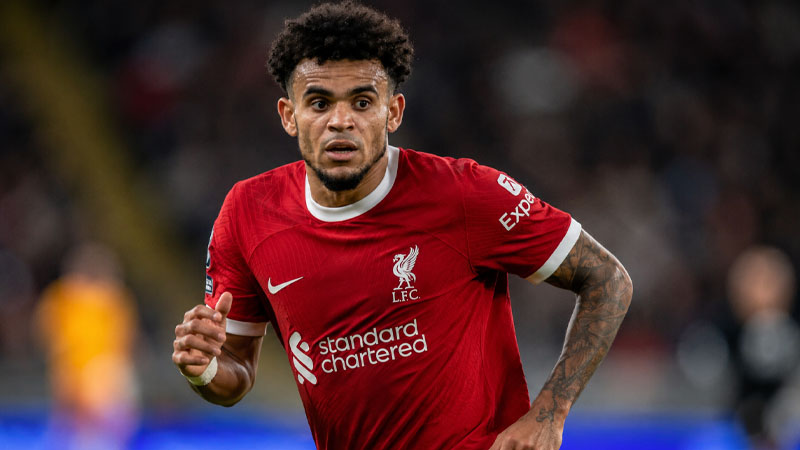
In July 2025, Luis Díaz completed a landmark €75 million transfer from Liverpool to Bayern Munich. This move followed a stellar season where he helped secure a Premier League title.
However, underlying tensions regarding wages and career goals led to this departure. Fans and analysts continue to debate whether the decision prioritized long-term financial health over immediate on-field success.
Understanding this transition requires a deep dive into the business and personal factors that ended his tenure at Anfield.
The Financial Standoff: Wages and Contract Disputes
Financial disagreements served as the primary catalyst for the Colombian winger’s exit from the Premier League. Liverpool’s rigid salary structure ultimately clashed with the player’s market value.
The Massive Salary Discrepancy
Díaz was reportedly earning a modest £70,000 per week during his time at Anfield. His representatives sought an increase to approximately £200,000 per week to reflect his status as a top-tier performer.
This demand was aimed at securing his financial future as he approached his thirties. Negotiations eventually stalled because the gap between the two parties was too wide to bridge effectively.
Liverpool’s Strategic Age Policy
The club leadership views significant contract boosts for players in their late twenties as high-risk investments. They often compare these long-term deals to paying a “pension” early.
Only established superstars typically receive exceptions to this strict financial rule. Consequently, Liverpool chose to monetize his value rather than commit to a heavy financial burden for an aging winger.
The Personal Desire for a Fresh European Challenge
Beyond finances, Díaz felt a strong internal drive to test himself in a different footballing environment. He believed his “cycle” at Liverpool had reached a natural conclusion.
Seeking Horizons Beyond England
The winger had long been clear about his intention to seek new challenges outside of the United Kingdom. This was not a sudden decision but one that had been developing for some time.
While he initially preferred a move to Barcelona, their financial constraints made that path impossible. Bayern Munich emerged as a superior alternative that could meet both his professional and financial ambitions.
The Allure of the Allianz Arena
Bayern Munich offered a sporting project that promised Díaz a central and leading role. In Munich, he could escape being secondary to other major stars like Mohamed Salah.
The Colombian found the Bundesliga’s style of play highly appealing for his attacking characteristics. He has since described joining the German giants as the “right choice” for his family and career.
Tactical Shifts and the Rise of Successors
The arrival of Arne Slot introduced new tactical considerations for the Liverpool squad. While Slot appreciated Díaz’s energy, the club’s recruitment philosophy favored younger, long-term assets.
The Cody Gakpo Factor
Internal discussions at Liverpool suggested a shift in priority toward Cody Gakpo. Gakpo received a significant contract extension in 2025, reportedly reaching £250,000 per week.
This decision indicated that the club saw more long-term value in the younger Dutch forward. Some supporters felt this was an error, believing Díaz remained the superior individual talent.
Identifying Long-Term Replacements
Liverpool utilized the funds from the Díaz sale to reinvest in younger attacking prospects. Players like Florian Wirtz and Hugo Ekitike were integrated into the club’s long-term vision.
These signings aligned with the club’s goal of maintaining sustainability while refreshing the squad. However, replacing Díaz’s unique ability to create a “nightmare” for defenders has proven difficult.
Analyzing the Business Logic of the Transfer
From a corporate perspective, the sale of a 29-year-old for €75 million is often viewed as “smart business”. It allowed Liverpool to avoid a potential decline in market value.
Maximizing Market Value
Díaz had two years remaining on his contract, which is a critical window for maximizing transfer fees. Entering the final year without a renewal would have diminished Liverpool’s leverage.
By selling in 2025, the club secured a highly lucrative offer they found difficult to refuse. This capital was essential for funding the next phase of the team’s evolution.
Avoiding Performance Burnout
There were concerns that Díaz’s high-intensity style might lead to a rapid physical decline. Comparisons were made to former players whose “legs went” suddenly in their late twenties.
Investing heavily in a player whose game relies on pace and agility carries inherent risks. Liverpool chose to exit the investment while the player was at his absolute peak performance level.
Life After Liverpool: A Record-Breaking Transition
Since moving to Germany, the Colombian has experienced an unprecedented surge in his goal-scoring statistics. His form has validated Bayern Munich’s aggressive pursuit of his signature.
Dominating the Bundesliga
Díaz netted an incredible 26 goals in his debut season with the German champions. This total surpassed any single-season tally he achieved during his five years at Anfield.
The tactical freedom in the Bundesliga has allowed him to flourish under Vincent Kompany. He currently averages nearly a goal every two matches across all major competitions.
Impact on Champions League Aspirations
His performance in European competition has been equally impressive. He recently scored the opening goal in a vital Champions League quarterfinal against Real Madrid.
Díaz credits this success to the “close-knit” nature of the Bayern squad and their clear tactical plan. He appears physically stronger and more settled than in his final months in England.
Comparative Analysis: Performance and Impact
The following data illustrates the shift in production levels following the player’s high-profile move to the Bundesliga.
| Performance Metric | Liverpool (2024–25) | Bayern Munich (2025–26) |
|---|---|---|
| Total Goals Scored | 17 Goals | 26 Goals |
| Total Assists | Not Specified | 19 Assists |
| Transfer Valuation | Market Rate | €75 Million |
| Weekly Wage (Est.) | £70,000 | £200,000+ |
Frequently Asked Questions About the Diaz Departure
Did Luis Díaz have a conflict with Arne Slot?
There is no evidence of a personal conflict between the player and the head coach. Slot publicly expressed a desire to keep the winger in his squad.
Why did Liverpool choose Gakpo over Díaz?
The decision was largely driven by age and long-term financial sustainability. Gakpo is younger and fit the club’s future wage structure more comfortably.
Was the transfer fee considered fair?
Most analysts view the €75 million fee as excellent business for a player nearing 30. However, some fans believe his current form suggests Bayern secured a bargain.
Strategic Conclusion: A Mutually Beneficial Exit
While the departure of a fan favorite is always difficult, the move appears successful for all parties involved. Liverpool maintained their financial integrity and reinvested in youth, while Díaz achieved the elite status and salary he desired.
His record-breaking start in Munich proves that a change of environment was the necessary catalyst for the next stage of his career.
For more deep-dive analyses on elite football transfers and strategic squad building, subscribe to our newsletter today. Stay updated on the latest market trends and tactical shifts shaping the beautiful game across Europe’s top leagues.