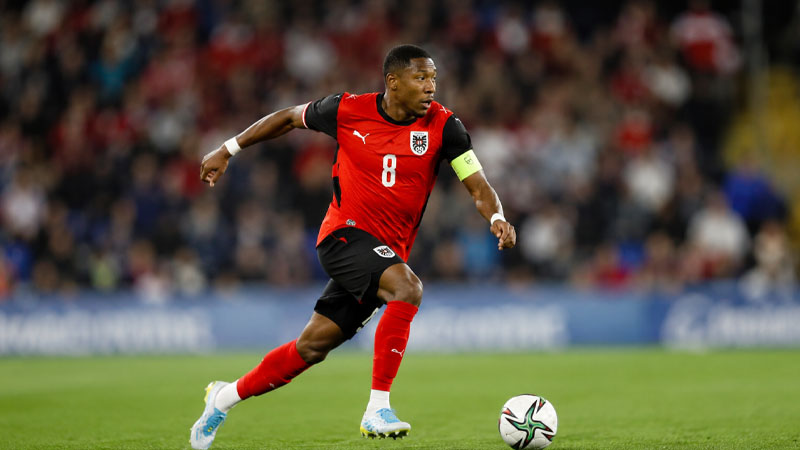
In the modern era of professional sports, few athletes embody the complexities of global identity as seamlessly as David Alaba.
While his achievements on the football pitch with elite clubs and the Austrian national team are well-documented, his personal history offers a profound case study in the intersection of African, Asian, and European cultures.
To understand the man who has become a symbol of Austrian sports, one must look beyond the borders of Europe and toward the regional histories of Nigeria and the Philippines.
The Nigerian Foundation: Yoruba Roots and a Pioneer Spirit
The story of David Alaba’s heritage begins with his father, George Alaba. A Yoruba Nigerian hailing from Ogere in Ogun State, George immigrated to Austria in the 1980s.
His journey was not merely one of relocation but of significant cultural integration and pioneering achievement.
George Alaba’s presence in Austria was marked by a series of trailblazing roles. He established himself in the creative and civic sectors, working as a rapper and a DJ, which brought a unique African rhythmic influence to the Viennese music scene.
Perhaps more significantly, he broke historical barriers by becoming the first Black member of the Austrian Armed Forces.
This background of resilience and public service in a foreign land provided a foundational blueprint for his son’s future career as a high-profile public figure.
The Yoruba heritage, known for its rich oral traditions and strong emphasis on community and achievement, remains a primary pillar of the family’s identity.
The Filipino Connection: Visayan Resilience and Care
Complementing the Nigerian influence is the heritage of David’s mother, Gina Alaba. A Visayan Filipino, Gina emigrated from the Philippines to Austria with a clear professional mission: to serve as a nurse. The Visayan region of the Philippines is celebrated for its hospitality, cultural depth, and the industrious nature of its people.
Gina’s move to Vienna mirrors a broader global movement of Filipino healthcare professionals who have become essential pillars of international medical systems.
In the Alaba household, this meant that David was raised under the influence of the Filipino values of hard work, empathy, and service.
The combination of his father’s public-facing creative energy and his mother’s disciplined commitment to healthcare created a balanced environment that favored both high-performance and grounded character.
The Austrian Synthesis: A Viennese Upbringing
Despite his deep roots in Nigeria and the Philippines, David Alaba is a product of Vienna. Born in the Austrian capital, he is an Austrian national who has spent his entire professional life representing the country on the international stage.
This triple-cultural legacy—bringing together Austrian, Nigerian, and Filipino cultures—is what makes his profile unique in the world of elite athletics.
In Vienna, Alaba navigated the nuances of being a person of color in a historically traditional European society.
His success has served as a powerful narrative for the “New Austria,” a country that is increasingly defined by its diverse, multicultural population. He does not simply represent one of these cultures; he is the physical manifestation of their convergence.
The Impact of a Triple-Cultural Heritage
For a world-class athlete, identity is often reduced to the flag on their jersey. However, Alaba’s background suggests that his versatility on the pitch—his ability to adapt to multiple positions and tactical requirements—may well be a reflection of his cultural adaptability.
Growing up at the intersection of three distinct world regions requires a high level of emotional and social intelligence.
- Cultural Intelligence: Navigating the social expectations of a Yoruba father, a Visayan mother, and a Viennese public has likely contributed to his reputation as a leader and a unifying figure in the locker room.
- Global Appeal: Alaba’s ethnicity makes him a relatable figure across three continents. In Nigeria, he is seen as a son of the Yoruba people; in the Philippines, he is a point of pride for the Visayan diaspora; and in Austria, he is a national hero.
- Paving the Way: Following in his father’s footsteps as a pioneer, David has become a role model for young athletes of immigrant backgrounds across Europe, proving that multiculturalism is an asset rather than a barrier to national representation.
Frequently Asked Questions Regarding David Alaba’s Background
What is David Alaba’s specific ethnic mix?
He is of mixed Nigerian and Filipino descent, specifically with Yoruba roots from his father’s side and Visayan roots from his mother’s side.
Is David Alaba a Nigerian citizen?
While he has deep Nigerian heritage through his father, George Alaba, David was born in Vienna and is an Austrian national.
Where did his parents originate?
His father is from Ogere, Ogun State, Nigeria, and his mother emigrated from the Philippines.
What were his parents’ professions?
His father was a DJ, a rapper, and served in the Austrian Armed Forces; his mother was a professional nurse.
Conclusion: A Legacy of Inclusion
David Alaba’s identity is a testament to the richness of the modern immigrant experience. By blending the artistic and pioneering spirit of his Nigerian father with the dedicated and resilient nature of his Filipino mother, all within the framework of an Austrian upbringing, Alaba has created a legacy that transcends sports.
He stands as a reminder that heritage is not a zero-sum game. One can be fully Austrian while remaining deeply connected to Yoruba and Visayan roots.
As professional sports continue to become more globalized, Alaba remains a gold standard for how athletes can carry the weight of multiple histories with grace, using their platform to celebrate the diversity that defines the 21st century.