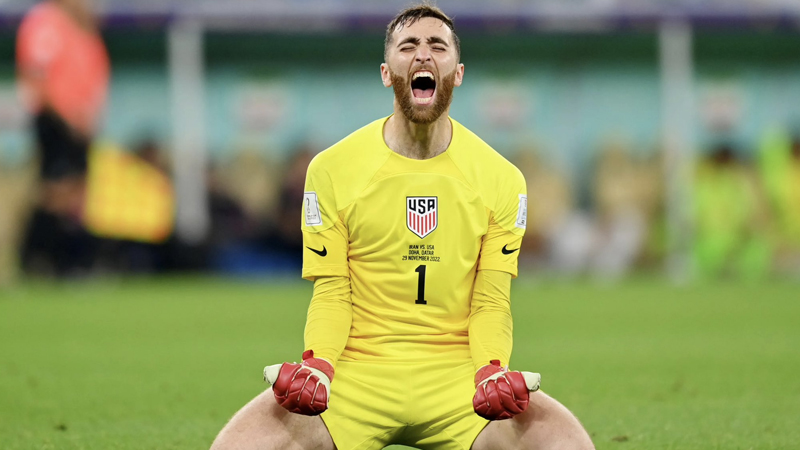
Matt Turner has emerged as a cornerstone of American soccer, captivating fans with his shot-stopping ability and leadership.
While his presence on the United States Men’s National Team is undeniable, many fans and analysts often inquire about the deeper layers of his background.
Born and raised in New Jersey, Turner’s identity is rooted in the American dream, yet his professional trajectory has been significantly shaped by his European ties.
By exploring the nuances of Matt Turner’s nationality, we uncover a strategic blend of heritage and professional foresight that defines the modern elite athlete navigating the global soccer landscape.
Matt Turner Nationality and Early American Roots
The foundation of Matt Turner’s identity is firmly planted in the United States, where his journey into the world of professional sports began. Understanding his American upbringing is essential to grasping his role as a leader within the national team setup.
Born in Park Ridge, New Jersey
Matt Turner was born in Park Ridge, New Jersey, a location that provided the initial backdrop for his development as a professional athlete.
Growing up in the United States, he was immersed in the American sports culture, eventually gravitating toward soccer as his primary calling.
This American birthright is the primary component of his nationality, granting him immediate citizenship and the opportunity to represent his home country on the international stage.
Rise Through the American Soccer System
Before becoming a household name in the Premier League or a starter for the national team, Turner’s development followed a traditional American path.
His progression from local New Jersey youth programs to the collegiate level and eventually into Major League Soccer (MLS) highlights his deep-seated connection to the U.S. sporting infrastructure.
His nationality is not just a legal status but a reflection of the coaching, competition, and community that fostered his rise to the pinnacle of the sport.
The Lithuanian Connection: A Heritage Uncovered
While his American roots are well-documented, the “Lithuanian” aspect of Matt Turner’s nationality often sparks curiosity. This dual heritage is not merely a footnote in his biography but a vital part of his family history and professional utility.
Tracing Ancestry Through Great-Grandparents
The secondary layer of Turner’s dual nationality is derived from his family lineage, specifically through his great-grandparents. This ancestral link allowed him to apply for and secure a Lithuanian passport, officially recognizing his ties to the Baltic nation.
This process of reclaiming heritage through jus sanguinis (right of blood) is common among professional athletes looking to honor their family’s past while securing their own professional future.
The Legal Process of Dual Citizenship
Securing a second passport is often a rigorous legal undertaking involving the verification of birth records, marriage certificates, and immigration documents spanning multiple generations.
For Turner, obtaining Lithuanian citizenship was a formal acknowledgment of his roots that existed long before his professional career took flight.
While he does not represent Lithuania on the pitch, the legal recognition of this nationality serves as a bridge between his American reality and his European ancestry.
Why Matt Turner’s Dual Nationality Matters for His Career
In the high-stakes world of professional soccer, a player’s passport can be just as influential as their performance on the field. For Matt Turner, holding Lithuanian citizenship provided a massive strategic advantage during his transition to the European leagues.
The Power of the EU Passport
One of the most significant benefits of Matt Turner’s Lithuanian nationality is the acquisition of European Union (EU) status. In many European domestic leagues, clubs are restricted by quotas regarding the number of “non-EU” players they can register in their squads.
By possessing a Lithuanian passport, Turner is classified as an EU player, making him a much more attractive prospect for clubs across the continent.
Strategic Advantages of Dual Nationality in Professional Soccer
| Advantage Category | Impact for Matt Turner |
|---|---|
| Squad Quotas | Exempt from non-EU player limits in leagues like La Liga or Serie A. |
| Work Permits | Facilitates easier movement between European nations without complex visa hurdles. |
| Marketability | Increases his value to European clubs by saving “International” roster spots. |
| Ease of Transfer | Simplifies the administrative process for transfers between EU-based clubs. |
Navigating the European Club Market
When Turner made the move from MLS to the English Premier League, his dual nationality played a supportive role in his transition.
In the context of his career, the EU status granted by his Lithuanian passport simplifies the logistical and regulatory challenges that often hinder American players.
It allowed him to integrate into the European market with fewer bureaucratic obstacles, ensuring his focus remained entirely on his performance between the posts.
Representing the United States Internationally
Despite the professional advantages of his Lithuanian passport, Matt Turner’s athletic allegiance has never wavered. His commitment to the United States Men’s National Team (USMNT) is the defining characteristic of his international career.
Commitment to the USMNT
Matt Turner represents the United States internationally as a goalkeeper for the USMNT. Choosing which country to represent is a major milestone for any dual-national player.
For Turner, the decision was straightforward, as he has consistently expressed his pride in wearing the U.S. crest.
His American nationality is what he displays on the global stage during the World Cup and continental championships, solidifying his status as a premier American athlete.
The Role of a “Dual-Nat” in the National Team
Turner is part of a growing trend of “dual-nationals” within the USMNT squad. This diversity of background brings a wealth of experience and a global perspective to the locker room.
While he represents the U.S., his understanding of his European heritage and his experience navigating the legalities of his dual status contribute to the sophisticated, modern identity of the national team.
He serves as a role model for young American players who may also have complex ancestral backgrounds.
The Impact of Global Heritage in Modern Soccer
Matt Turner’s story is a microcosm of the modern soccer world, where borders are fluid and heritage is often rediscovered for both personal and professional reasons.
The intersection of his American upbringing and Lithuanian roots illustrates the complexity of identity in the 21st century.
A New Era of International Athletes
Gone are the days when an athlete’s identity was strictly tied to a single geography. Today, the elite level of the sport demands a global mindset.
Turner’s ability to leverage his great-grandparents’ history to facilitate a career in Europe is a testament to the strategic thinking required in modern sports.
It highlights how players can honor their past while using every available tool to succeed in an increasingly competitive market.
Balancing Professionalism and Identity
For Matt Turner, his nationality is a dual-layered asset. Professionally, his Lithuanian passport opened doors in the European club circuit. Personally, it connects him to a family history that might have otherwise remained in the shadows.
This balance of being a “Jersey kid” at heart while holding a European passport defines his unique path in the world of soccer, proving that one can be deeply American while embracing a global identity.
Frequently Asked Questions About Matt Turner’s Background
Is Matt Turner a citizen of Lithuania?
Yes, Matt Turner holds dual citizenship in the United States and Lithuania. He secured his Lithuanian passport through his great-grandparents, which formally recognizes his Lithuanian nationality alongside his American birthright.
Can Matt Turner play for the Lithuanian National Team?
While Turner is a Lithuanian citizen, he currently represents the United States internationally. Under FIFA eligibility rules, once a player has represented a country in a competitive senior international match (as Turner has with the USMNT), they are generally tied to that nation.
Therefore, his athletic allegiance is firmly with the U.S., even though he holds a Lithuanian passport.
Why did Matt Turner get a Lithuanian passport?
The primary reason for obtaining the passport was to secure European Union (EU) status.
This status is highly beneficial for professional soccer players in Europe, as it allows them to be registered as domestic or EU players rather than “international” players, who are often subject to strict squad limits.
Where was Matt Turner born?
Matt Turner was born in Park Ridge, New Jersey, in the United States. This makes him an American citizen by birth, and it is the country he has called home for the majority of his life and career development.
How many nationalities does Matt Turner have?
Matt Turner has two nationalities: American and Lithuanian. This dual status is a result of his birth in the U.S. and his ancestral ties to Lithuania through his great-grandparents.
Conclusion: A Global Athlete for a Global Game
Matt Turner’s nationality is a fascinating case study in how heritage and professional strategy intersect.
By embracing his Lithuanian roots, he didn’t just honor his ancestors; he unlocked a world of professional opportunity that has seen him compete at the highest levels of club soccer in Europe.
Simultaneously, his unwavering commitment to the United States Men’s National Team reaffirms his identity as a proud American athlete.
As the world of soccer continues to evolve, the stories of players like Matt Turner will become increasingly common.
His dual heritage serves as a reminder that our backgrounds are multifaceted and that embracing every part of our history can provide the foundation for a successful and impactful career.
Whether he is defending the goal for the USMNT or navigating the rigors of European club football, Turner’s dual nationality remains a key component of his remarkable journey.