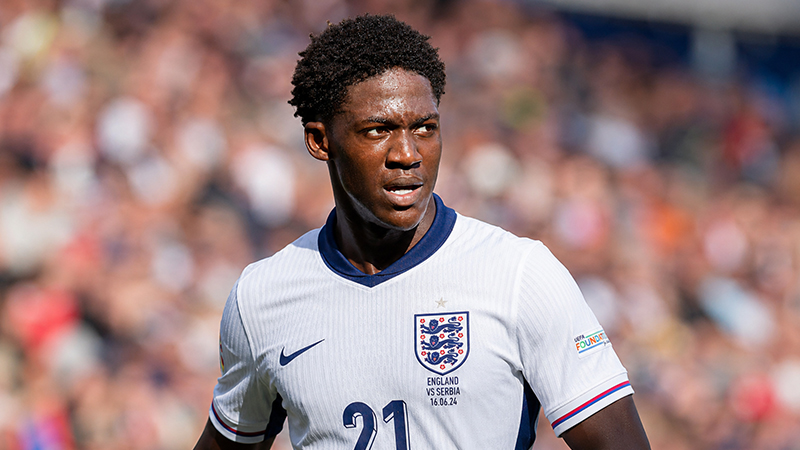
Kobbie Mainoo has rapidly ascended from a Manchester United academy prospect to a cornerstone of the England national team’s midfield.
His emergence represents a new era for English football, characterized by technical proficiency and a deep connection to international roots.
As fans and analysts look to understand the man behind the jersey, the discussion surrounding Kobbie Mainoo nationality becomes central to his narrative.
This post explores his English upbringing, his deep-seated Ghanaian heritage, and the professional decisions that led him to represent the Three Lions on the world stage, offering a comprehensive look at this generational talent.
The Biography of Manchester United’s Rising Midfielder
Understanding the trajectory of this young athlete requires a close examination of his early life and his rapid progression through the ranks of professional football. His story is one of consistent growth within the Manchester United ecosystem.
Early Years and Birthplace in Stockport
The foundations of his career were laid in the North West of England. Kobbie Boateng Mainoo was born on April 19, 2005, in Stockport, Greater Manchester.
Born under the zodiac sign of Aries, his early life in Stockport provided the geographic and cultural backdrop for his development as a footballer.
Growing up in Greater Manchester allowed him to remain close to the Manchester United scouting network, eventually leading to his integration into one of the most prestigious academies in world sports.
Professional Breakthrough and Club Status
His rise at Manchester United has been nothing short of meteoric. By the age of 21, he had already established himself as a vital component of the first team, with managers and coaches describing him as “untouchable” in the starting eleven.
His presence in the Manchester United midfield, specifically noted in matches against teams like Charlton, highlighted his readiness for the physical and tactical demands of the Premier League.
His current professional status as an English midfielder for Manchester United is the primary lens through which the global audience views his nationality.
Understanding Kobbie Mainoo Nationality and Identity
The question of nationality for high-profile athletes is often multi-layered, involving legal status, place of birth, and cultural allegiance. For Mainoo, these factors align to create a dual identity that honors both his home country and his ancestral roots.
| Category | Detail |
|---|---|
| Full Name | Kobbie Boateng Mainoo |
| Primary Nationality | English, |
| Birthplace | Stockport, England, |
| Date of Birth | April 19, 2005 |
| Current International Team | England, |
| Ancestral Heritage | Ghanaian |
While his formal nationality is English due to his birth in the United Kingdom, his identity is significantly shaped by the heritage of his parents.
This dual-identity is common among modern Premier League stars, but Mainoo has handled the public discourse surrounding his choice with remarkable maturity for his age.
The Ghanaian Heritage: Roots and Resilience
Beyond the statistics and the English flag on his profile, there is a deep connection to the African continent. This heritage is not merely a footnote in his biography but a living part of his personal and family life.
Family Background: Felix and Abena
The cultural identity of the Manchester United midfielder is deeply rooted in the history of his parents. Both his mother, Abena Herold, and his father, Felix Mainoo, are originally from Ghana.
The influence of his parents has been a guiding force in his life, and his middle name, “Boateng,” serves as a permanent and proud acknowledgment of his Ghanaian lineage.
This familial connection provided him with the opportunity to choose his international path early in his career.
Cultural Connection and Travel
Mainoo’s relationship with Ghana extends far beyond his eligibility for their national team. He maintains a strong and active bond with his heritage, frequently traveling to Ghana during the off-season or breaks in the football calendar.
These visits are focused on spending time with his extended family, ensuring that the connection to his roots remains a tangible part of his life rather than just a historical fact.
This ongoing relationship highlights that while his professional allegiance is with England, his personal identity remains closely tied to his Ghanaian ancestry.
The Decision: Choosing the Three Lions over the Black Stars
One of the most discussed aspects of his career has been his international eligibility. Given his talent, both the English and Ghanaian footballing authorities were keen to secure his long-term commitment.
Recruitment by the Black Stars
Because both of his parents are Ghanaian citizens, Mainoo was fully eligible to represent the Ghana national football team, famously known as the Black Stars.
The Ghana Football Association was highly aware of his potential and actively attempted to recruit him to join their ranks.
For a period, there was significant speculation in the sports media regarding which nation he would ultimately choose, as representing Ghana would have made him a focal point of their national sporting project.
Committing to the England National Team
Despite the strong interest from Ghana and his clear pride in his roots, Mainoo ultimately made the decision to represent England.
He has publicly stated that while he is “incredibly proud” of his Ghanaian heritage, playing for the “Three Lions” has been his lifelong dream.
This decision was solidified as he progressed through the youth levels and into the senior England squad, where he is now recognized as a key player for the national team.
His choice reflects a growing trend of players who feel a deep connection to multiple cultures but choose to represent the country of their birth and professional development.
Physical Attributes and Professional Profile
A player’s physical presence and technical style often complement their national identity on the pitch. Mainoo possesses a specific athletic profile that has allowed him to thrive in the high-intensity environment of English football.
- Height: Standing at 5′ 9″ (1.75m), he possesses a low center of gravity that aids his balance and ball retention.
- Position: He primarily operates as a midfielder, where his vision and composure are most effective.
- Work Rate: His development in the Manchester United academy has instilled a work ethic that aligns with the traditional expectations of the England national team.
- Tactical Intelligence: Analysts often point to his ability to read the game, a trait that has made him a favorite for both club and country.
These physical and tactical traits have made him a modern prototype for the English midfielder—someone who is technically secure under pressure and physically capable of handling the rigors of the Premier League and international tournaments.
Frequently Asked Questions About Kobbie Mainoo
What is Kobbie Mainoo’s official nationality?
His official and primary nationality is English. He was born in Stockport, England, and has committed his international career to the England national football team.
Is Kobbie Mainoo Ghanaian?
He is of Ghanaian heritage through his parents, Abena Herold and Felix Mainoo, who are both from Ghana. While he holds English nationality, his cultural and ancestral roots are firmly Ghanaian.
Why does he have the name “Boateng”?
“Boateng” is his middle name, which is a traditional Ghanaian name. It serves as a tribute to his family’s roots and his heritage from his parents’ home country.
Could he have played for Ghana?
Yes, he was fully eligible to represent the Ghana national team (the Black Stars) because of his parents’ nationality. The Ghana Football Association did attempt to recruit him before he officially committed to England.
How old is Kobbie Mainoo and where was he born?
As of 2026 reports, he is 21 years old. He was born on April 19, 2005, in Stockport, Greater Manchester, England.
Conclusion: A Symbol of Modern English Football
The story of Kobbie Mainoo nationality is a modern narrative of integration, heritage, and the pursuit of professional dreams.
By choosing to represent England while simultaneously celebrating his Ghanaian roots, Mainoo has become a role model for young athletes navigating dual identities.
His commitment to the England national team has provided the Three Lions with a world-class midfield talent, while his regular visits to Ghana and his middle name ensure that his family’s history is never forgotten.
As he continues to develop at Manchester United, his identity as a proud Englishman of Ghanaian descent will remain a core part of his public persona.
He proves that one can be fully committed to their nation of birth while remaining deeply connected to their ancestral home.
For fans of Manchester United and England, Mainoo represents the future—a future that is technically gifted, culturally aware, and exceptionally talented.