On March 2, 2017, the football world witnessed one of the most harrowing moments in modern sports history during a La Liga clash between Atlético Madrid and Deportivo La Coruña.
In the 85th minute, the iconic striker Fernando Torres was involved in a violent aerial collision that left him motionless on the pitch.
While headlines immediately claimed he had “swallowed his tongue,” the reality is a complex medical phenomenon involving a traumatic head injury.
This event sparked a global conversation about pitch-side safety, player education, and the anatomical myths surrounding unconsciousness in contact sports.
The 2017 Incident: A Match That Changed Football Safety
The match at the Riazor stadium was a standard league fixture until a singular moment of impact transformed the atmosphere into one of collective trauma.
As Atlético Madrid defended a late attack, Torres retreated to assist his teammates, leading to a fateful challenge for an aerial ball.
The ensuing collision was so severe that players from both sides were visibly distraught, with some seen weeping as the medical emergency unfolded. Understanding the mechanics of this impact is essential to debunking the myths that followed the event.
The 85th Minute at Riazor Stadium
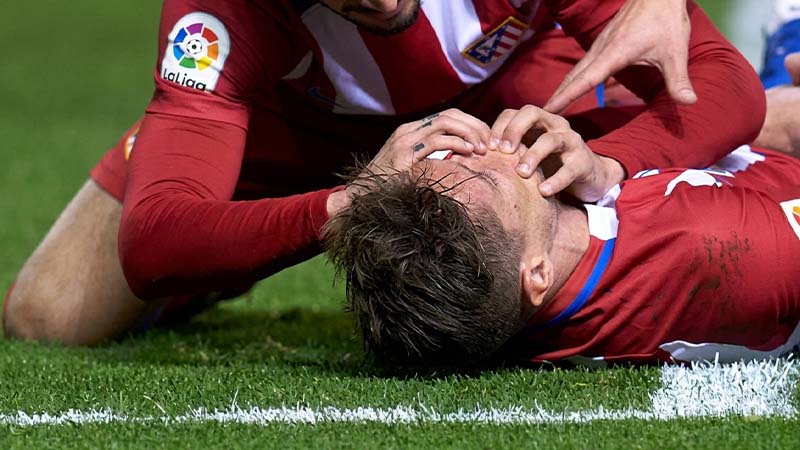
In the closing stages of the game, Torres contested a high ball with Deportivo’s Alex Bergantiños. Bergantiños struck Torres from behind in a severe clash of heads that appeared to render the Spanish striker unconscious before he even hit the ground.
Falling unbraced, Torres landed face-first on the turf, a “thud” that was described as sickening by those near the touchline.
The medical reports later confirmed that he suffered a “traumatismo craneoencefálico,” or traumatic head injury, which triggered the immediate loss of consciousness.
Immediate Response and On-Pitch Panic
The reaction of the players was instantaneous and visceral. Gabi and Šime Vrsaljko were the first to reach Torres, recognizing the severity of his condition as he appeared to be convulsing or struggling for air. The game was halted for nearly ten minutes as the stadium fell into a stunned silence.
This specific moment highlighted a gap in professional player training, as teammates acted on instinct and common folklore rather than standardized medical protocols, leading to a rescue that was both heroic and controversial.
Debunking the Myth: Can You Actually Swallow Your Tongue?
The phrase “swallowing your tongue” is a staple of sports commentary, yet it is medically inaccurate and anatomically impossible.
The tongue is a massive muscle firmly attached to the floor of the mouth by the lingual frenulum, preventing it from ever traveling down the throat into the stomach.
However, the mechanical obstruction that occurs during unconsciousness is a legitimate life-threatening emergency that requires rapid intervention to prevent asphyxiation.
The Anatomical Reality of Airway Obstruction
When a person suffers a traumatic knockout, their muscles lose all tone and relax completely. In a supine position (lying on the back), gravity causes the base of the tongue to fall backward against the posterior wall of the pharynx.
This does not mean the tongue is swallowed; rather, it acts as a physical plug that blocks the airway. This often results in “snoring” respirations or a complete lack of breathing, which observers frequently misidentify as the player “choking” on their own tongue.
Traumatic Head Injuries vs. Mechanical Choking
The danger Torres faced was twofold: the primary brain injury from the collision and the secondary risk of hypoxia due to airway blockage. Medical experts emphasize that the priority in these scenarios is to restore oxygen flow while protecting the cervical spine.
In Torres’s case, the impact with Bergantiños caused his brain to move violently within the skull, leading to the “traumatismo craneoencefálico” noted by Atlético’s medical staff.
The “swallowing” was merely a symptomatic relaxation of the muscular structures following that trauma.
The Heroics of Gabi and Vrsaljko: A Critical Analysis
While the medical staff eventually took over, the initial seconds were managed by Torres’s teammates, Gabi and Šime Vrsaljko.
Their actions were later praised by the Deportivo club doctor as “perfect” given the circumstances, though they represent a style of first aid that is often debated in modern medicine.
The table below outlines the specific interventions taken by the players during those critical first seconds on the pitch.
| Player | Action Taken | Intended Outcome | Result |
|---|---|---|---|
| Gabi | Forced Torres’s jaw open and cleared the mouth. | To prevent the tongue from blocking the airway. | Successfully cleared the airway but was bitten in the process. |
| Šime Vrsaljko | Assisted in stabilizing Torres’s head and body. | To manage convulsions and ensure stability. | Provided critical support until medical staff arrived. |
| Medical Staff | Stabilized neck and used a stretcher for transport. | To prevent spinal damage and provide professional care. | Torres was taken to the hospital for two days of observation. |
Emergency Protocols: Best Practices for Sports Head Injuries
The Torres incident serves as a primary case study for why sports organizations must prioritize first-aid education. While Gabi’s intervention was successful, many doctors argue that putting fingers into the mouth of an unconscious person is hazardous.
The risk of the rescuer being bitten or the patient suffering further spinal damage during the struggle is high. Modern protocols emphasize non-invasive ways to clear the airway while maintaining the integrity of the neck and spine.
The Head Tilt-Chin Lift vs. The Jaw Thrust
Medical professionals recommend two primary maneuvers for opening an airway. The “head tilt-chin lift” is effective for non-traumatic cases, but when a spinal injury is suspected—as it was with Torres—the “jaw thrust” is the gold standard.
By placing the fingers behind the angles of the lower jaw and pushing it forward, the tongue is lifted off the back of the throat without moving the neck.
This maneuver is designed to be painful to perform correctly, which can also help assess the patient’s level of consciousness.
Why Experts Advise Against Putting Fingers in the Mouth
The instinct to reach into a player’s mouth to “grab the tongue” is a dangerous practice. Not only can it lead to severe injury for the rescuer, but it can also inadvertently push the tongue further back or cause the player to gag and vomit, leading to aspiration.
Furthermore, the frantic movement associated with “clawing” at a player’s face can exacerbate underlying cervical spine fractures, potentially leading to permanent paralysis.
The Recovery of El Niño and His Lasting Legacy
Fortunately, the “Miracle of A Coruña” ended with a positive outcome. Torres regained consciousness shortly after the incident and was able to communicate with staff at the hospital. His recovery was swift, but the psychological impact on the football community remained significant.
The event highlighted the fragility of even the most elite athletes and the necessity for robust medical response teams at every level of the game.
Hospital Observation and Medical Clearance
Torres spent two days in the hospital under close observation to ensure there was no internal bleeding or long-term neurological damage. He was released after tests showed “no real damage” beyond the initial concussion.
His return to the pitch was celebrated as a triumph of spirit, though it also marked the beginning of the final chapter of his playing career. The incident remains a viral reminder of the physical risks inherent in professional football.
Retirement and the Evolution of the Modern Athlete
Two years after the crash at Riazor, Fernando Torres officially hung up his boots. In his later reflections, he noted that football had evolved into a game where technical skill must be matched by extreme physical athleticism.
He observed that “nowadays, it’s very difficult for footballers who aren’t athletes to play,” suggesting that the intensity of the modern game increases the risk of high-impact collisions like the one he suffered.
His legacy is now defined not just by his goals for Liverpool and Chelsea, but by his resilience and the lessons his injury taught the world about sports safety.
Essential FAQ: Understanding Soccer Head Traumas
What was the official diagnosis of Torres’s injury?
Atlético Madrid officially diagnosed Torres with a “traumatismo craneoencefálico”. This is a clinical term for a traumatic brain injury or severe concussion resulting from physical impact.
While the airway obstruction was the most immediate life-threat, the brain trauma was the underlying cause of his collapse.
How long was Fernando Torres unconscious?
Reports from the pitch and subsequent sports analysis indicate that Torres was unconscious for approximately three minutes.
This period of “blackout” is a clear indicator of a significant concussion, requiring immediate medical protocol to ensure no lasting damage to the brain’s motor skills or cognitive functions.
Did this injury lead to his retirement?
While Torres retired two years after the 2017 incident, there is no direct evidence that this specific injury forced him out of the game.
However, he has spoken extensively about the increasing physical demands of football, noting that the evolution of the sport requires players to be “athletes” first and foremost to survive the modern pace and impact levels.
Conclusion: Prioritizing Life Over the Game
The Fernando Torres tongue incident is more than just a shocking video clip; it is a vital lesson in human anatomy and emergency response.
By debunking the “swallowed tongue” myth and examining the rapid actions of Gabi and Vrsaljko, we see a bridge between heroic instinct and medical necessity.
Torres’s recovery serves as a testament to the importance of having trained professionals and educated teammates on the pitch.
As football continues to evolve into an even more physical and athletic pursuit, the lessons learned from the Miracle of A Coruña will remain essential in protecting the lives of the players who make the “beautiful game” possible.