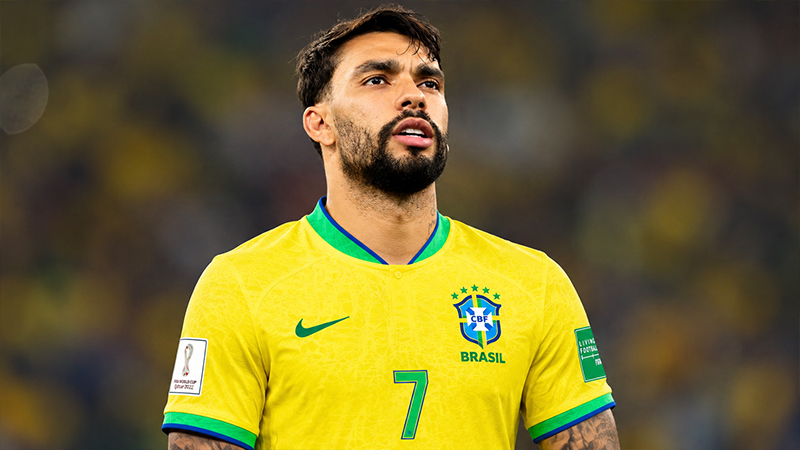
The global football economy witnessed a significant realignment in early 2026 with the high-profile return of Lucas Paquetá to Brazilian domestic competition.
As a 28-year-old athlete in his professional prime, the financial metrics surrounding his career offer a masterclass in modern asset valuation, personal branding, and strategic career planning.
When analyzing how much is Lucas Paquetá worth, we must evaluate the intersection of tangible transfer fees, contractual earnings, and a robust portfolio of global endorsements.
The Core Valuation: Market Price vs. Utility Value
As of mid-2026, Lucas Paquetá’s worth is defined by a dichotomy between standardized market assessments and his specific utility to high-spending organizations.
While traditional valuation models provide a baseline, his actual transaction history reflects a premium for his technical versatility and international pedigree.
| Financial Indicator | Value (EUR/GBP/USD) | Data Context |
|---|---|---|
| Personal Net Worth | $10 Million – $15 Million | Cumulative career earnings and assets |
| Current Market Value | €35.00 Million | Transfermarkt benchmark as of late 2025 |
| Estimated Utility Value (ETV) | €50.2 Million – €61.3 Million | Advanced analytical modeling of on-field impact |
| 2026 Transfer Fee Paid | €42.00 Million | Actual fee paid for permanent transfer |
| Net Worth (GBP) | £8 Million – £12 Million | Currency conversion of personal equity |
The transfer fee of €42 million (£35.5 million) paid by CR Flamengo in January 2026 is particularly significant.
It represents a rare instance where a Brazilian club has outperformed European market expectations to secure a player currently ranked in the top 200 globally.
This transaction underscores a shift in global purchasing power, where the “worth” of a player is increasingly dictated by regional strategic goals rather than just European resale potential.
Global and Regional Market Rankings
Paquetá’s financial stature is validated by his standing across multiple competitive brackets. His value is not merely a reflection of his salary, but his position as a “Blue Chip” asset within the Brazilian Série A and the wider international football community.
| Ranking Category | Current Standing | Statistical Significance |
|---|---|---|
| Série A (Brazil) | #2 Overall | Second most valuable player in the league |
| CR Flamengo | #1 Overall | Most valuable asset at his current club |
| Global Midfielders | #23 (Attacking Midfield) | Top-tier ranking for his specific position |
| Worldwide Ranking | #198 Overall | Top 1% of all professional footballers |
| National Standing | #19 in Brazil | Among all Brazilian nationals playing globally |
| Age Bracket (1997) | #15 Worldwide | Ranked 15th for all players born in 1997 |
These rankings demonstrate that while he has moved outside of the “Big Five” European leagues, his market relevance remains elite.
Holding the #1 rank at Flamengo and the #2 rank in the entire Série A provides him with massive domestic leverage for local endorsements, which supplements his base salary.
The Economics of the 2026 Homecoming
The transition from the English Premier League to the Brazilian Série A is often viewed through a lens of financial sacrifice, but a deeper analysis of Paquetá’s 2026 move reveals a strategic long-term play.
By returning to Rio de Janeiro, Paquetá traded a higher weekly wage for long-term security and a central role in a massive commercial market.
Salary Evolution: London vs. Rio
During his tenure with West Ham United, Paquetá reached his peak liquid earning potential. As the club’s highest earner, he commanded a gross base salary of £150,000 per week, totaling approximately £7.8 million annually.
| Salary Component | West Ham United (EPL) | CR Flamengo (Série A) |
|---|---|---|
| Weekly Wage | £150,000 | ~£60,000 |
| Annual Club Earnings | £7.8 Million | ~$4.6 Million (£3.6 Million) |
| Weekly Reduction | N/A | £90,000 (Reported) |
| Contract Duration | Variable | Until December 31, 2030 |
The reported pay cut of £90,000 per week allowed the permanent transfer to be finalized in January 2026.
While the raw numbers show a decrease in annual club pay, the five-year contract extension through December 2030 provides a level of financial predictability that is rarely afforded to players as they enter their thirties.
Diversified Wealth: Endorsements and Assets
A professional athlete’s true net worth is often found in their ability to generate income independent of their physical performance. Lucas Paquetá has built a robust commercial engine through global partnerships and tangible asset acquisitions.
1. Global Sponsorships
His status as a mainstay for the Brazilian National Team—with 61 caps and 12 goals—makes him a high-priority target for international brands. His representation by Roc Nation Sports further enhances his ability to secure “Fortune 500” level partnerships.
- Nike: A multi-year apparel and footwear deal that capitalizes on his visibility in both South American and European markets.
- Pepsi: Involvement in global marketing campaigns alongside other elite sports icons.
2. Real Estate Portfolio
Unlike many athletes who focus on a single region, Paquetá has hedged his wealth across two of the world’s most stable luxury real estate markets.
- London: Retention of high-value property from his years in England.
- Rio de Janeiro: Luxury holdings in his birthplace, serving as both a primary residence and a capital asset.
Statistical Drivers of Valuation
The technical foundation of his market value is rooted in his consistent availability and high-level production for the Seleção. A player’s worth is frequently tied to their “international ceiling”—the ability to perform on the world stage.
| Performance Metric | Career Total (2026) |
|---|---|
| International Caps | 61 |
| International Goals | 12 |
| Height | 1.80 m |
| Primary Position | Attacking Midfield |
| Agent | Roc Nation Sports |
These metrics act as a safety net for his valuation. Even if his domestic form fluctuates, his established role as a top 20 attacking midfielder globally ensures that his commercial and market value remains resilient against short-term performance dips.
Enhanced FAQ: Financial Insights and Market Reality
What exactly is the difference between his market value and his transfer fee?
Market value, such as the €35 million cited by Transfermarkt, is a benchmark based on age, position, and performance. The €42 million transfer fee is the “transactional reality”—the amount a club was willing to pay to acquire his services immediately.
In Paquetá’s case, Flamengo paid a premium to secure a player whose utility value was modeled as high as €61.3 million.
How much did his salary change when moving to Brazil?
He accepted a significant reduction to facilitate his return home. He moved from a £150,000 per week contract in England to a deal worth approximately $4.6 million annually in Brazil. This represents a weekly drop of about £90,000.
Is he the most valuable player in South America?
He is currently the #1 ranked player at Flamengo and the #2 ranked player in the Brazilian Série A. While he is not the #1 in the league, his global rank of 198 puts him in the upper echelon of all active professionals.
Does his age affect his long-term worth?
At 28 years old, he is in his “peak value” window. By signing a contract that expires in December 2030, he has effectively locked in his highest possible career earnings for the next five years, protecting his net worth as he moves toward the latter stages of his career.
The Future of the Paquetá Economy
The financial profile of Lucas Paquetá in 2026 reflects a sophisticated approach to wealth management in professional sports.
By balancing a multi-million-dollar salary with high-end real estate and global sponsorships from Nike and Pepsi, he has created a diversified net worth of $10 million to $15 million.
His move to Flamengo is not a step down in value, but rather a pivot toward becoming the marquee face of a burgeoning market.
With a contract secured through 2030 and a steady presence in the Brazilian National Team, Paquetá’s worth is defined by more than just a transfer fee; it is defined by his status as a global ambassador for Brazilian football excellence.
As the Brazilian league continues to close the financial gap with Europe, players like Paquetá—worth €42 million on the open market—will increasingly become the standard-bearers for a new era of domestic investment and commercial growth.