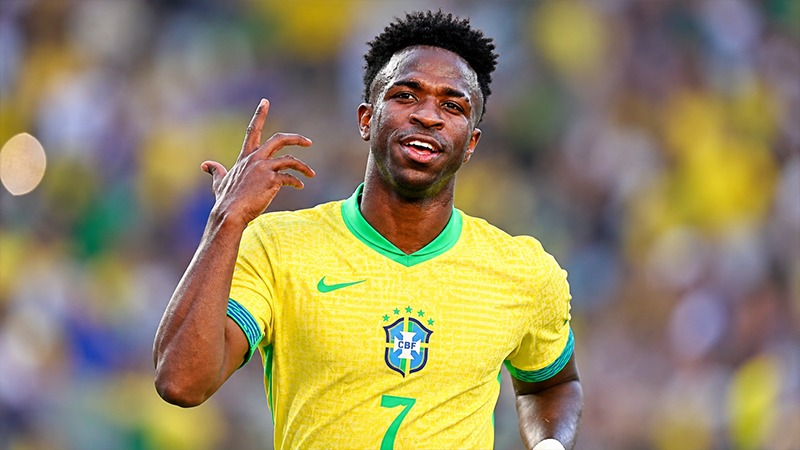
Vinícius Júnior has ascended to the pinnacle of global football, becoming a defining figure for both Real Madrid and the Brazilian national team.
As his star continues to rise, fans across the globe frequently find themselves asking a simple yet intriguing question: why is he called “Junior”?
While the name has become a legendary brand on the back of his jersey, the answer is rooted in deep-seated Brazilian cultural traditions and a heartfelt tribute to his family lineage.
This article explores the precise naming conventions that shaped his identity and how he transformed a family suffix into a worldwide trademark.
The Core Reason: Sharing a Legacy with His Father
The fundamental reason behind the name is a matter of direct lineage and family honor. Vinícius Júnior is called “Junior” because he shares the exact same legal name as his father: Vinícius José Paixão de Oliveira.
In many Lusophone cultures, particularly in Brazil, the bond between a father and son is often immortalized through the sharing of a name, signifying a continuation of the father’s legacy through the next generation.
A Mirror of Vinícius José Paixão de Oliveira
The player’s full legal name is Vinícius José Paixão de Oliveira Júnior. By including the “Júnior” suffix, the family ensures that while the son carries the weight and pride of his father’s identity, there is a clear distinction between the two in legal and social contexts.
This practice is less about creating a nickname and more about maintaining a formal genealogical record that honors the patriarch of the family.
The Emotional Connection to His Roots
For the Real Madrid forward, carrying his father’s name is a constant reminder of his beginnings in São Gonçalo. In numerous interviews throughout his career, he has expressed deep gratitude for the sacrifices his parents made to support his footballing dreams.
Retaining “Junior” as part of his professional identity serves as a public acknowledgment of the man who gave him both his name and his foundation in life.
Understanding Brazilian Naming Conventions
To fully grasp why “Junior” is so prevalent in Brazilian sports, one must look at the broader linguistic and cultural framework of the country. Brazil utilizes a specific set of suffixes to denote familial relationships when names are repeated across generations.
This system is not merely a preference but a standard protocol for birth certificates and official identification.
The Role of Suffixes: Junior, Filho, and Neto
In Brazil, adding a suffix is the primary method used to distinguish a child named after a relative. These suffixes are used as follows:
- Júnior: Used when a son is named after his father.
- Filho: Also translates to “son” and is used interchangeably with Junior to signify the son-father relationship.
- Neto: Translates to “grandson” and is used when a child is named after his grandfather.
- Sobrinho: Occasionally used when a child is named after an uncle.
The Practicality of Identification
Beyond the sentimental value, these suffixes serve a vital practical purpose. In a country where long, multi-part surnames are the norm—often combining both maternal and paternal family names—having a specific marker like “Júnior” prevents administrative confusion within the household.
It allows the son to share the prestige of the father’s name while remaining an individual entity in the eyes of the law.
From Vinícius José to “Vini Jr.”: A Branding Masterclass
While his legal identity is extensive, his professional identity is a calculated blend of tradition and modern marketing.
The transition from the formal “Vinícius José Paixão de Oliveira Júnior” to the concise “Vini Jr.” represents a strategic move that aligns with the requirements of the high-stakes world of European football.
Choosing the Professional Jersey Name
When it came time to decide what would appear on the back of his kit, the player made a conscious choice to use “Vini Jr.”. This selection was intended to honor his family roots while ensuring the name remained short and punchy for fans and media alike.
A shorter name is more than just a convenience; it is a necessity for jersey real estate and brand recognition in a fast-paced digital era.
| Name Component | Origin/Significance |
|---|---|
| Vinícius | His primary given name, shared with his father. |
| José | A traditional middle name, common in Portuguese-speaking regions. |
| Paixão de Oliveira | The combination of paternal and maternal family surnames. |
| Júnior | The essential suffix denoting he is the second of his name. |
| Vini | The affectionate diminutive used by fans and teammates. |
The Global Impact of the Mononym
In the tradition of Brazilian greats like Pelé, Ronaldo, and Kaká, Vinícius has embraced the power of a singular, recognizable identity. However, by retaining the “Jr.” suffix even in his shortened moniker, he distinguishes himself from other players named Vinícius.
It creates a unique “Vini Jr.” brand that is instantly identifiable on social media, in commercial endorsements, and during match broadcasts.
Navigating the History of Brazilian Football Mononyms
The phenomenon of “Junior” in football is part of a much larger historical context regarding how Brazilian players represent themselves. For decades, Brazil has been famous for players who go by a single name or a shortened version of their full title.
This practice often stems from childhood nicknames or, as in this case, a simplified version of a complex family name.
Why Brazilian Players Use One Name
Brazilian names are often long, sometimes consisting of four or five distinct parts. For a commentator or a fan, shouting “Vinícius José Paixão de Oliveira Júnior” after a goal is impractical.
The use of mononyms or shortened names like “Vini Jr.” allows for better engagement. This cultural quirk has turned Brazilian footballers into some of the most marketable athletes in the world, as their names often sound like distinct, iconic brands rather than just strings of text.
The “Junior” Precedent: Neymar and Beyond
Vinícius is not the first global superstar to carry this suffix into the spotlight. Neymar da Silva Santos Júnior, known worldwide as Neymar Jr., set a modern precedent for how the “Junior” suffix could be integrated into a high-value personal brand.
Following this path, Vini Jr. has shown that the suffix doesn’t just mean “the second”—it has come to represent a new generation of excellence that respects the past while dominating the present.
The Rise of a Superstar: Why the Name Matters Now
The curiosity surrounding his name is a direct result of his meteoric rise in the footballing world. As he continues to win Champions League titles and contend for the Ballon d’Or, every detail of his life, including his naming history, becomes a point of interest for millions of followers.
From Flamengo to the World Stage
Starting his journey at Flamengo, the name “Vinícius Júnior” was already being whispered in scouting circles as the “next big thing.” By the time he moved to Real Madrid, the world was ready for a new icon.
His name represents the bridge between the raw talent found in the streets of Brazil and the refined, elite performance required at the Santiago Bernabéu.
The Responsibility of the Name
Carrying the name of his father into the most famous stadiums in the world is a responsibility that the player takes seriously. Every goal scored and every trophy lifted is a tribute to the “Vinícius Sr.” back home.
This connection provides an emotional depth to his professional persona, making him more relatable to fans who value family and heritage as much as athletic prowess.
Enhanced FAQ: Everything You Need to Know
Is “Junior” his last name?
No, “Junior” is not a surname. It is a suffix used to indicate that he has the same name as his father. His actual surnames are Paixão de Oliveira.
Why don’t all Brazilian players use their full names?
Full Brazilian names are often too long for jerseys and media use. Players choose nicknames or shortened versions (like Vini Jr.) to create a more memorable and marketable professional identity.
What is the difference between “Filho” and “Junior”?
In the context of Brazilian naming, there is no functional difference; both indicate that the son is named after the father. “Junior” is a more modern and internationally recognized term, whereas “Filho” is the direct Portuguese word for “son.”
Does he prefer being called Vinícius or Vini?
While his legal name is Vinícius, he has embraced “Vini Jr.” as his primary professional brand. Most fans and media outlets use the shortened version out of affection and brevity.
Conclusion: A Name That Represents a Journey
The story of why Vinícius is called Junior is more than a simple linguistic trivia point; it is a window into the soul of Brazilian culture and the importance of family legacy.
By choosing to wear “Vini Jr.” on his jersey, the star forward ensures that his father’s name is celebrated on the world’s grandest stages. It is a name that honors the past while carving out a unique, legendary future in the annals of football history.
As he continues to dazzle on the pitch, “Vini Jr.” stands as a symbol of how tradition and modern stardom can coexist in perfect harmony.