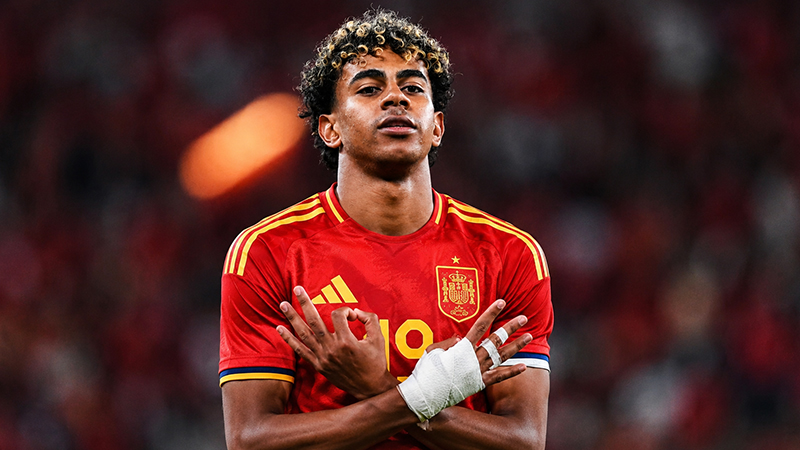
Lamine Yamal has rapidly ascended to become one of the most electrifying figures in global football, captivating audiences with his precocious talent and poise.
However, beyond his record-breaking performances on the pitch, there is a profound interest in the spiritual foundation that guides his life.
As a visible symbol of Spain’s evolving cultural landscape, Yamal’s adherence to his Islamic faith has become a significant point of discussion.
By openly embracing his religious identity, he provides a unique lens into the intersection of elite sports and personal belief, challenging traditional norms while inspiring a new generation of fans globally.
The Public Confirmation of Lamine Yamal’s Religion
The question of Lamine Yamal’s religion has become a major point of search intent among football enthusiasts and cultural analysts. Unlike many athletes who keep their spiritual lives private, Yamal has been transparent about his identity as a practicing Muslim.
This transparency is not merely a personal choice but a public statement in an era where professional athletes are often scrutinized for their off-field beliefs.
His faith is a central pillar of his persona, influencing how he carries himself both in the locker room and under the bright lights of international stadiums.
The Powerful Instagram Declaration
One of the most defining moments in Yamal’s young career occurred following a match where his faith was used as a tool for mockery.
Following an international friendly between Spain and Egypt in Barcelona, where anti-Muslim chants were heard from the stands, Yamal took to social media to clarify his stance.
He posted a direct and powerful statement on his Instagram account, stating, “I am a Muslim, thank God,” using the Arabic phrase Alhamdulillah (praise be to God) to emphasize his pride and devotion.
Condemning Religious Mockery in Sports
In that same public statement, Yamal addressed the “lack of respect” shown by sections of the crowd. He argued that while he understood the chants might have been directed at the opposing team, using religion as a punchline is unacceptable.
By labeling such behavior as “ignorant and racist,” he established himself as a leader who refuses to let his identity be marginalized.
This stance has elevated his status from a mere sports star to a significant cultural figure who advocates for dignity and respect within the beautiful game.
Core Practices: How Faith Influences His Game
Lamine Yamal’s commitment to Islam is evidenced through tangible practices that have become part of his professional routine. These rituals serve as a bridge between his spiritual duties and his responsibilities as a high-performance athlete.
Observers have noted that these practices are not performed for show but are deeply ingrained habits that provide him with the mental and spiritual fortitude required to compete at the highest levels of the sport.
| Practice | Description | Significance |
|---|---|---|
| Dua (Supplication) | Raising hands with open palms before the match. | Seeking divine guidance and success. |
| Ramadan Fasting | Observing the holy month while on national duty. | First Spain player to fast during international duty. |
| Mosque Visits | Documented visits to the Sheikh Zayed Grand Mosque. | Finding “immense inner peace” and spiritual grounding. |
| Lifestyle Choices | Abstaining from alcohol and avoiding tattoos. | Adherence to Islamic principles of purity and modesty. |
Pre-Match Supplication and Mental Clarity
Before stepping onto the pitch, Yamal is frequently seen performing dua, a traditional Islamic act of supplication. By raising his hands with open palms facing upward, he connects with his faith in the moments of highest pressure.
For Yamal, this ritual is a source of strength, allowing him to enter the game with a clear mind and a sense of purpose that transcends the scoreboard.
The Physical Discipline of Ramadan
Perhaps the most challenging aspect of Yamal’s faith is his commitment to fasting during the holy month of Ramadan.
In a sport where physical conditioning and nutrition are scrutinized to the smallest detail, choosing to abstain from food and water during daylight hours is a testament to his discipline.
Remarkably, he became the first player in the history of the Spanish National Team to observe the Ramadan fast while actively participating in international duty, proving that religious devotion and elite athleticism can coexist successfully.
The Family Roots of Yamal’s Islamic Identity
The religious identity of Lamine Yamal is not an isolated development but is deeply rooted in his multicultural family heritage. Born in Spain to parents of diverse backgrounds, his upbringing was a blend of different traditions that converged around his Islamic faith.
His father, Mounir Nasraoui, hails from Morocco—a country with a profound Islamic history—while his mother, Sheila Ebana, is from Equatorial Guinea.
This intersection of cultures has shaped Yamal into a globally connected individual who represents the modern face of Spanish football.
The Influence of His Grandmother
A significant figure in Yamal’s spiritual journey is his grandmother, who played a pivotal role in his upbringing in Spain.
She has spoken publicly about her efforts to ensure he remained connected to his roots, including teaching him the Arabic language and raising him within the tenets of Muslim traditions.
This familial support system has provided him with a stable foundation, ensuring that as his fame grows, his core values remain unchanged.
Gestures of Gratitude and Success
Yamal’s success is often shared with his family as an expression of his faith-based values regarding honoring one’s elders.
For instance, he famously gifted his grandmother a house, a gesture of appreciation for the sacrifices she made during his youth.
This act aligns with the Islamic emphasis on family and gratitude, showcasing how his professional earnings are used to fulfill personal and religious obligations.
Navigating Challenges: Faith on the International Stage
Despite his success, Yamal’s journey as a Muslim athlete in Spain has not been without its challenges. The religious fault lines in Spanish football have become more apparent as diversity increases on the national team.
The incident in Barcelona against Egypt highlighted a stark disconnect between the talent on the field and the attitudes of some fans in the stands.
While Yamal is a national hero when he scores, his faith remains a target for those who struggle with the changing demographics of the country.
Addressing Islamophobia and Xenophobia
Yamal is not the only player to face such adversity; others, like Real Madrid’s Vinícius Junior, have also been subjected to targeted abuse.
However, Yamal’s specific experience with anti-Muslim chants has forced a broader conversation about Islamophobia in European sports.
His refusal to stay silent and his decision to affirm his faith on a global platform have pressured organizations like FIFA and the Spanish soccer federation to take these incidents more seriously.
A Symbol for the 2030 World Cup
As Spain prepares to co-host the 2030 World Cup alongside Morocco and Portugal, Yamal stands as a vital bridge between these nations.
His Moroccan heritage and his status as a Spanish superstar make him the ideal ambassador for a tournament marketed as a celebration of global unity.
However, the realization of this vision depends on the ability of the sport to address the underlying tensions that players like Yamal face daily.
Professional Standards and Personal Boundaries
Beyond the major rituals, Yamal’s faith dictates his daily lifestyle choices in ways that set him apart from the stereotypical image of a young, wealthy footballer.
These boundaries are not seen as restrictions but as a framework for maintaining professional excellence and spiritual integrity.
In an industry where off-field distractions can often derail a promising career, his adherence to these principles provides a level of maturity that is rare for his age.
- Abstaining from Alcohol: Yamal strictly follows Islamic guidance regarding intoxicants, which also happens to align perfectly with the peak physical requirements of a top-tier athlete.
- Avoiding Tattoos: Unlike many of his peers who use their bodies as canvases for art, Yamal chooses to keep his skin clear, adhering to traditional Islamic views on tattoos.
- Seeking Inner Peace: His public documentation of visiting major religious sites, such as the Sheikh Zayed Grand Mosque, highlights a commitment to mental health through spirituality.
Strategic Insights: Why This Identity Matters for the Future
From a broader perspective, Lamine Yamal’s religious identity is a significant case study in how modern icons navigate the complexities of faith and fame. For the soccer industry, he represents a shift toward a more inclusive and globalized sport.
For the Muslim community, he is a source of immense pride, demonstrating that one can reach the pinnacle of professional success without compromising their beliefs.
The Competitive Advantage of Faith
While some might see religious practice as a potential physical hurdle, for Yamal, it appears to be a source of psychological resilience.
The inner peace he describes finding at the mosque and the discipline required for Ramadan fasting likely contribute to his legendary composure on the field.
In the high-stakes environment of professional soccer, having a spiritual anchor can provide a player with the mental edge needed to stay grounded amidst the noise of sudden fame.
Redefining the Modern Athlete
As Yamal continues to break records, his influence will only grow globally. He is not just a player for Barcelona or Spain; he is a global icon whose every move is watched by millions.
By choosing to be vocal about his religion, he is paving the way for future athletes to be their authentic selves.
The story of Lamine Yamal is one where talent meets tradition, proving that the most powerful thing a player can bring to the field is their true identity.
Enhanced FAQ: Lamine Yamal and Islam
Is Lamine Yamal actually a Muslim?
Yes, he has publicly confirmed his faith on multiple occasions, most notably with his “I am a Muslim, thank God” statement.
What are his pre-match rituals?
He is frequently seen performing dua by raising his hands with open palms toward the sky before the opening whistle.
How does he manage Ramadan during matches?
He is the first player in Spanish national history to maintain his fast during international duty, demonstrating extreme physical and spiritual discipline.
Does he have any tattoos?
No, he avoids tattoos in accordance with his religious beliefs.
What is his ethnic background?
He has a Moroccan father and a mother from Equatorial Guinea, giving him a rich, multicultural identity.
Conclusion: A Legacy Beyond the Pitch
Lamine Yamal’s religion is not merely a background detail of his life; it is the very essence of who he is as a person and a competitor.
From his pre-match prayers to his stand against Islamophobia, he has shown that his faith is a source of strength rather than a limitation.
As he leads Spain toward the 2030 World Cup, his journey will continue to inspire those who believe that football should be a space for everyone, regardless of their background.
By staying true to his roots while conquering the world stage, Lamine Yamal is redefining what it means to be a modern sporting legend.