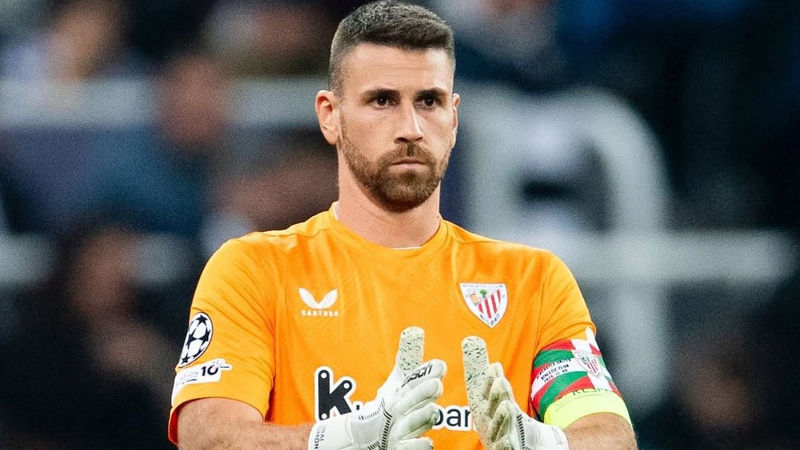
Unai Simón Mendibil stands as one of the most distinguished figures in modern European football, serving as the definitive last line of defense for both his club and country.
While his reflexes and composure on the pitch are widely celebrated, many fans and analysts frequently inquire about the specific heritage and origins that shaped his professional journey.
As the primary goalkeeper for the Spanish national team and a loyal servant to Athletic Club, his identity is deeply rooted in a specific regional tradition.
Understanding his nationality provides essential context for his career trajectory and his unwavering commitment to his sporting roots.
The Identity of Unai Simón: A Professional Profile
To understand the athlete, one must first look at the core data that defines his professional existence. Unai Simón is not merely a player; he is a symbol of a very specific footballing philosophy that prioritizes local development and long-term loyalty over the transient nature of the modern transfer market.
The following table summarizes the essential biographical information that defines his current professional standing:
| Feature | Detail |
|---|---|
| Full Name | Unai Simón Mendibil |
| Nationality | Spanish |
| Place of Birth | Vitoria-Gasteiz, Álava, Spain |
| Current Club | Athletic Club (Bilbao) |
| Primary Position | Goalkeeper |
| International Team | Spain National Football Team |
This data confirms that Unai Simón holds Spanish nationality, a fact that allows him to represent the national team at the highest levels of FIFA and UEFA competition.
His birth in the Basque Country is particularly significant given the recruitment policies of his current employer.
Unai Simón’s Nationality and Roots in Spain
Exploring the geographical and cultural origins of Unai Simón reveals why he is considered a cornerstone of the Spanish defensive line. His nationality is inextricably linked to the region of Álava, which has a long history of producing resilient and technically gifted athletes.
Born in Vitoria-Gasteiz: The Basque Connection
Unai Simón was born in Vitoria-Gasteiz, located in the province of Álava, Spain. This city is the seat of government and the capital of the Basque Autonomous Community.
For a professional footballer in this region, nationality and regional identity often overlap in a way that dictates their entire career path.
Being born in the Basque Country is a prerequisite for playing for Athletic Club, a team famous for its “Cantera” policy, which only employs players who were born in or trained in the Basque regions.
Simón’s Spanish nationality and Basque birthplace were the fundamental “keys” that opened the doors to the San Mamés stadium.
The Significance of Spanish Nationality in Elite Football
While his regional identity is strong, his status as a Spanish national is what projected him onto the global stage. Representing Spain means competing for one of the most successful footballing nations in history.
For Simón, holding Spanish nationality has meant following in the footsteps of legendary figures like Iker Casillas and Andoni Zubizarreta.
It requires a specific blend of traditional shot-stopping and modern ball-distribution skills that the Spanish national team demands of its goalkeepers.
His progression through the youth ranks of the national setup into the senior team is a testament to the high standards of the Spanish football federation.
Athletic Club and the One-Club Man Philosophy
In an era where players frequently move between leagues for higher salaries, Unai Simón’s career at Athletic Club (Bilbao) stands as a rare example of professional stability. His nationality and regional roots are the primary reasons this relationship has flourished.
Why His Nationality Matters to Bilbao
Athletic Club’s distinctive recruitment policy, which limits the squad to players of Basque origin, transforms Unai Simón’s birthplace into a fundamental professional asset. Since he was born in Vitoria-Gasteiz, he is part of the exclusive group eligible to represent the club.
This philosophy fosters a profound connection between the stands and the pitch; when fans watch Simón, they are viewing a direct representative of their own culture and community.
This alignment provides him with a level of credibility and respect that transcends his performance on the field, positioning him as a true guardian of the club’s historical identity rather than just a professional athlete.
Loyalty in the Modern Era
Simón has frequently demonstrated his commitment to his club by signing long-term contracts without release clauses, a move almost unheard of at the elite level. This level of loyalty reinforces his brand as a reliable and principled professional.
By staying at Athletic Club, he maintains his status as a local hero while still starting for the national team, proving that one does not need to move to a global “super-club” to be recognized as a world-class talent.
Rising to Prominence with the Spain National Team
The transition from a club standout to a national icon requires consistent performance under extreme pressure. Unai Simón’s role in the Spain National Football Team has been defined by his ability to remain calm during high-stakes penalty shootouts and major tournament matches.
The following milestones highlight his journey with the national side:
- Debut Period: He quickly moved from the U-21 setup to the senior squad, earning the trust of various managers.
- Euro 2020/21 Impact: He became a national hero during the knockout stages, particularly for his performances in penalty situations.
- The De la Fuente Era: Under the current management, his role as the undisputed “Number One” has been solidified, aligning with a style that emphasizes starting attacks from the defensive third.
- Major Tournament Success: His presence in the squad for the UEFA Nations League and European Championships has made him one of the most decorated active Spanish goalkeepers.
The Technical Evolution of Spain’s Premier Goalkeeper
Beyond his nationality, the technical reasons behind Simón’s success are worthy of analysis. The Spanish style of play, often referred to as “Tiki-Taka” or its modern derivatives, requires a goalkeeper who is essentially an eleventh outfield player.
Shot-Stopping and Reflexes
At his core, Simón is an elite shot-stopper. His height and wingspan, combined with the explosive power developed during his time in the Athletic Club academy, allow him to cover the goal effectively.
His ability to read the striker’s body language has made him particularly effective at saving close-range efforts and penalties.
Playing from the Back: The Modern Spanish Style
Perhaps the most challenging aspect of being the Spanish national goalkeeper is the requirement to be proficient with the ball at one’s feet. Simón has evolved significantly in this area.
He is tasked with inviting pressure from opposing attackers to create space further up the pitch. This “high-risk, high-reward” strategy requires immense mental fortitude, a trait Simón has demonstrated repeatedly throughout his career in La Liga.
Cultural Impact and Public Perception
The public perception of Unai Simón is one of a “humble professional.” In Spain, he is often praised for his lack of ego and his focus on the sport rather than the celebrity lifestyle. This aligns with the traditional values of Vitoria-Gasteiz and the broader Basque region.
His nationality also makes him a unifying figure. In a country where regional tensions can sometimes manifest in sport, Simón represents both the unique identity of the Basque people and the collective goals of the Spanish nation.
He is a bridge between two worlds, proving that one can be fiercely proud of their local roots while being a dedicated servant to the national cause.
Frequently Asked Questions About Unai Simón
Is Unai Simón purely of Spanish descent?
Yes, Unai Simón Mendibil was born in Spain and holds Spanish nationality. His family roots are firmly established in the Basque Country, specifically in the province of Álava.
Can he play for any other national team?
Under current FIFA eligibility rules, having represented Spain at the senior competitive level, he is tied to the Spanish national team. There is no public record of him holding dual citizenship that would allow him to represent another nation.
Why does he only play for Athletic Club?
His career at Athletic Club is a result of both his talent and the club’s unique recruitment policy. Since he was born in Vitoria-Gasteiz, he meets the criteria to play for the club, and he has expressed a personal desire to remain a “one-club man.”
What makes his role in the Spanish team unique?
Simón is often noted for his mental resilience. He has recovered from high-profile errors to deliver match-winning performances, a quality that Spanish national team coaches value highly in the pressurized environment of international tournaments.
Conclusion: A Legacy Beyond the Pitch
Unai Simón’s nationality is more than just a line on a passport; it is the foundation of his professional identity. By embracing his roots in Vitoria-Gasteiz and remaining loyal to Athletic Club, he has carved out a unique space in the footballing world.
He represents a blend of traditional loyalty and modern technical excellence that is increasingly rare in the sport today.
As he continues to defend the goal for both Bilbao and Spain, his legacy will likely be defined by his role as the “Athletic Guardian”—a player who proved that staying true to one’s origins is the surest path to global respect.
Whether he is lifting trophies with the national team or leading his club at the San Mamés, Unai Simón remains a shining example of Spanish footballing excellence.