In the modern landscape of elite professional football, the value of a player is no longer measured solely by individual skill, but by tactical flexibility and the ability to occupy multiple functional zones.
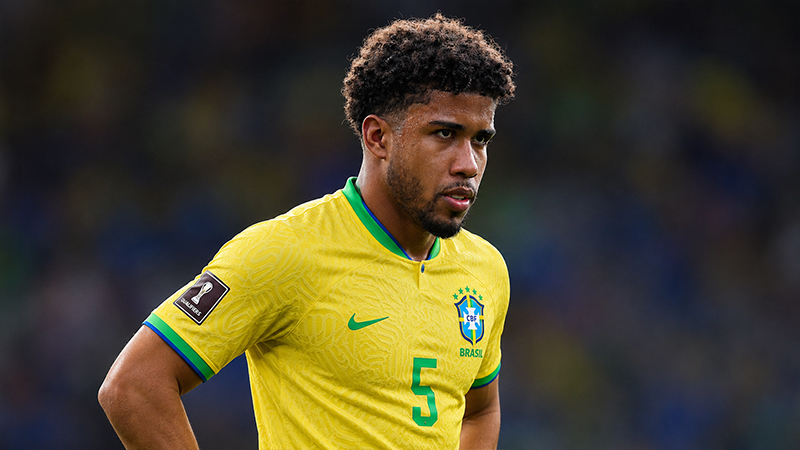
Chelsea FC’s acquisition and integration of Andrey Santos represents a calculated move toward building a more resilient, multi-dimensional midfield.
Currently wearing the number 17 shirt for the London-based club, the Brazilian professional is emerging as a critical asset in the Premier League’s most demanding environment.
This analysis explores the strategic implications of Santos’s playing style, his physical profile, and how his ability to alternate between specialized roles provides the club with a distinct competitive advantage.
The Anatomy of a Hybrid Midfielder
The traditional distinction between a defensive specialist and an attacking playmaker is rapidly dissolving in high-level European competition.
Today’s managers demand “complete” players who can transition between phases of play without requiring a change in personnel. Santos epitomizes this shift, operating effectively as both a central midfielder and a defensive midfielder.
In tactical terms, this dual-role capability allows a team to maintain structural integrity while increasing its offensive output. When Santos is deployed in a deeper role, he functions as a shield for the backline.
When pushed forward, he acts as a box-to-box engine, driving the team toward the final third. This fluidity is not merely a preference but a necessity in a league where tactical systems are constantly being adjusted in real-time.
Defining the “Number 5” and “Number 8” Duality
A core component of Santos’s profile is his frequent rotation between the “number 5” (deep-lying holding midfielder) and the “number 8” (advanced central midfielder) roles. This versatility serves as a force multiplier for the squad’s tactical options.
The Deep-Lying Holding Role (Number 5)
In this capacity, the focus is on stability. The primary responsibilities include:
- Interception and Disruption: Utilizing high-level spatial awareness to cut off passing lanes.
- First-Phase Progression: Collecting the ball from the central defenders and initiating the buildup play.
- Physical Deterrence: Using strength to win 50/50 duels in the defensive third.
The Advanced Central Role (Number 8)
When operating as a box-to-box asset, the focus shifts toward dynamism. The key attributes required for this role—and which Santos demonstrates—include:
- Vertical Ball Progression: Carrying the ball through the midfield to break opposition lines.
- Offensive Support: Making late runs into the box to provide a goal-scoring threat.
- High-Intensity Pressing: Leading the transition from attack to defense by pressuring opponents immediately after a loss of possession.
Physicality and Technical Proficiency: The Performance Metrics
Success in the Premier League is often predicated on a player’s ability to withstand the physical rigors of the game while maintaining technical precision. Santos’s game is built upon three primary pillars that align with the requirements of a “world-class engine.”
1. Elite Tackling
Defensive efficiency is a non-negotiable trait for any Chelsea midfielder. Santos is highly regarded for his tackling ability, which allows him to regain possession in high-stakes areas.
This is not just about the act of tackling, but the timing and the recovery that follows, ensuring the team can immediately launch a counter-attack.
2. Commanding Physical Presence
The transition from South American football to the Premier League often poses a challenge in terms of intensity. However, Santos’s physical presence has allowed him to adapt quickly.
His strength enables him to protect the ball under pressure (shielding) and dominate aerial or ground duels, which is essential for maintaining control of the central zones.
3. Strategic Ball Progression
Modern data analytics prioritize ball progression as a key indicator of midfield impact. Santos excels at moving the ball into more dangerous areas, whether through precise long-range passing or by driving forward with the ball at his feet.
This reduces the burden on the creative attackers and ensures that the team’s movement is always forward-facing.
Tactical Implementation: Why This Profile Matters to Chelsea
From a strategic standpoint, having a player like Santos allows for “in-game optimization.” Many teams are forced to make substitutions to change their formation or tactical approach.
With a hybrid midfielder, the manager can shift the team’s shape—for instance, from a 4-3-3 to a 4-2-3-1—simply by instructing Santos to drop deeper or push higher.
This flexibility also provides a layer of protection against injuries. In a long season involving domestic cups and European competition, having a player who can cover two distinct positions at a high level is an invaluable asset for squad depth and rotation.
Strategic Outlook and Long-Term Value
The investment in Andrey Santos is a reflection of a broader trend toward identifying “Swiss Army Knife” players. By securing a young professional with such a mature understanding of both the holding and box-to-box roles, Chelsea has stabilized its midfield core for the foreseeable future.
As he continues to develop his game within the Premier League ecosystem, his ability to balance physicality with technical progression will likely make him one of the most influential midfielders of his generation. For the club, he represents the perfect blend of traditional defensive grit and modern offensive utility.
Frequently Asked Questions (FAQ)
What is Andrey Santos’s primary position?
He is a versatile central midfielder who frequently alternates between playing as a holding “number 5” and an advanced box-to-box “number 8”.
Which shirt number does he wear for Chelsea?
He currently wears the number 17 shirt.
What are the standout features of his playing style?
His game is defined by tackling, a strong physical presence, and excellent ball progression.
How does he contribute to the team’s defense?
As a defensive midfielder, he provides stability by operating as a holding presence, using his physicality to disrupt opposition attacks and win back possession.
Can he contribute to the attack?
Yes. His ability to function as a box-to-box midfielder allows him to drive forward and support the team’s offensive transitions through effective ball progression.
Conclusion: A New Standard for the Central Engine
Andrey Santos is more than just a talented prospect; he is a tactical solution to the complexities of modern football. His arrival at Chelsea marks a commitment to a midfield that is as physically imposing as it is technically gifted.
By mastering the nuances of both the central and defensive midfield roles, Santos has positioned himself as a foundational piece of the club’s future strategy.
In a world where specialized roles are being replaced by total-pitch competency, Santos stands as a prime example of the next generation of footballing excellence.