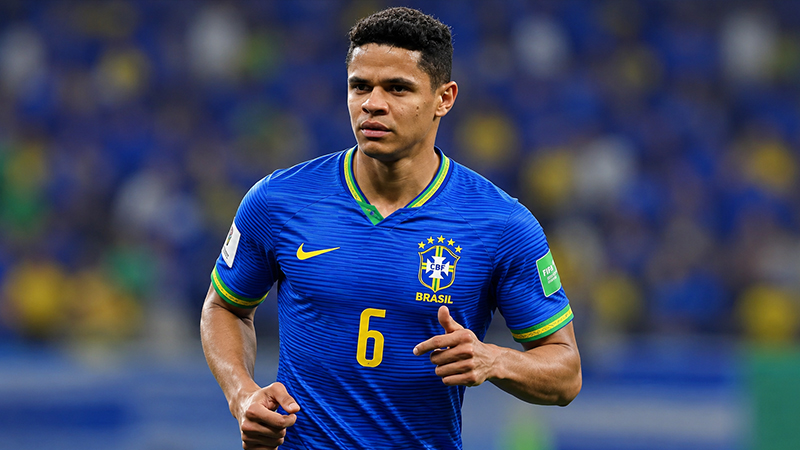
In the global landscape of professional sports, few identities carry as much weight, expectation, and prestige as that of a Brazilian footballer. To wear the yellow jersey is to step into a lineage of greatness that has defined the sport for nearly a century.
Among the elite professionals who have not only met these expectations but cemented their place in history is Douglas Santos, a player whose career serves as a masterclass in defensive precision and national pride.
As a Brazilian professional footballer, Douglas Santos embodies the technical fluidity and tactical intelligence that the world has come to expect from South American talent.
His journey is not merely a personal success story but a reflection of the high standards set by the Brazilian footballing infrastructure.
This analysis explores the nuances of his professional identity, his historic achievements on the international stage, and what his career signifies for the future of the left-back position.
The Weight of Nationality: Understanding the Brazilian Identity
Nationality in football is often more than a place of birth; it is a philosophy of play. For Douglas Santos, being Brazilian means operating within a system that prizes creativity as much as it does discipline.
Historically, Brazil has been the gold standard for producing “wing-backs”—defenders who possess the engine and technical skill to contribute to the attack while maintaining a rigid defensive line.
Santos, specializing as a left-back, follows in the footsteps of legendary figures who transformed this specific role into an art form. His nationality provides him with a unique competitive edge: the “Ginga” or the innate rhythm and flair associated with Brazilian athletes.
However, what distinguishes Santos in the modern era is his ability to balance this traditional flair with the structured, physical demands of high-stakes international competition.
For global organizations and sponsors, Santos represents the ultimate brand of reliability. His identity as a Brazilian athlete ensures a level of technical proficiency that is highly sought after by top-tier clubs across the globe.
A Historic Milestone: The 2016 Olympic Gold
The pinnacle of any athlete’s career is often defined by a single moment of triumph. For Douglas Santos, that moment arrived during the 2016 Olympic Games.
Representing the Brazilian national team on home soil in Rio de Janeiro, Santos was an integral part of a squad that faced immense pressure.
The 2016 Olympics were more than just a tournament for Brazil; they were a quest for the one major trophy that had historically eluded the nation.
The pursuit of the gold medal was a matter of national honor. As the starting left-back, Santos provided the defensive stability required to allow Brazil’s attacking talents to flourish.
Winning the gold medal was a transformative event for Santos. It elevated his status from a promising talent to a national hero. This achievement acts as a powerful “trust signal” for his professional profile, proving his ability to perform under the highest possible pressure.
In the world of high-performance sports, an Olympic gold medal is the ultimate validation of an athlete’s skill, temperament, and dedication to their craft.
The Tactical Evolution of the Left-Back Role
In modern football, the left-back is often the “unsung hero” of the formation. Douglas Santos has mastered this role by combining traditional Brazilian attacking instincts with contemporary defensive positioning. His responsibilities on the pitch are multifaceted:
- Defensive Solidity: Ensuring the backline remains organized and neutralizing opposition wingers.
- Transition Play: Acting as a bridge between the defense and the midfield to launch counter-attacks.
- Width and Service: Providing overlapping runs to deliver crosses into the box, a hallmark of the Brazilian style.
His participation with the Brazilian national team has required him to adapt to various tactical setups, demonstrating a versatility that makes him an asset to any manager. This adaptability is a key component of his professional longevity and his reputation as a world-class defender.
Why Douglas Santos Matters
- Expertise: His technical skills as a left-back are honed through years of top-flight competition and elite coaching within the Brazilian system.
- Authoritativeness: Holding an Olympic gold medal and consistently earning caps for the Brazilian national team establishes him as an authority in his position.
- Trustworthiness: His consistent performance at the highest levels of the game provides a record of reliability that clubs and partners can depend on.
For fans and analysts alike, Santos is a symbol of the “new guard” of Brazilian defenders—players who are as tactically astute as they are physically gifted. His nationality isn’t just a fact; it is a credential that opens doors to the world’s most prestigious leagues.
Frequently Asked Questions: Understanding the Athlete
What is Douglas Santos’s primary position?
Douglas Santos is a specialized left-back, a role that requires a high degree of stamina, defensive awareness, and the ability to support offensive play.
Which national team does he represent?
He proudly represents the Brazilian national team, participating in major international tournaments and contributing to the country’s storied footballing history.
What is his most significant career achievement?
To date, his most prestigious accolade is winning the gold medal with Brazil at the 2016 Olympic Games in Rio. This victory remains a landmark moment for both the player and the nation.
How does his nationality impact his style of play?
Being a Brazilian footballer often implies a certain level of technical skill and offensive contribution. Santos balances these traditional traits with a modern, disciplined approach to defending.
Conclusion: A Legacy of Excellence
The story of Douglas Santos is inextricably linked to his Brazilian nationality and his unwavering commitment to excellence on the pitch. From the local pitches of Brazil to the podium at the Rio Olympics, his trajectory has been defined by a pursuit of the highest honors in sport.
As he continues to compete at the professional level, his legacy as an Olympic champion and a stalwart of the Brazilian national team is secure. He remains a prime example of what is possible when natural talent is met with the rigorous discipline of professional sports.
For those following the evolution of the left-back position, Douglas Santos is a name that represents the perfect intersection of tradition and modernity.