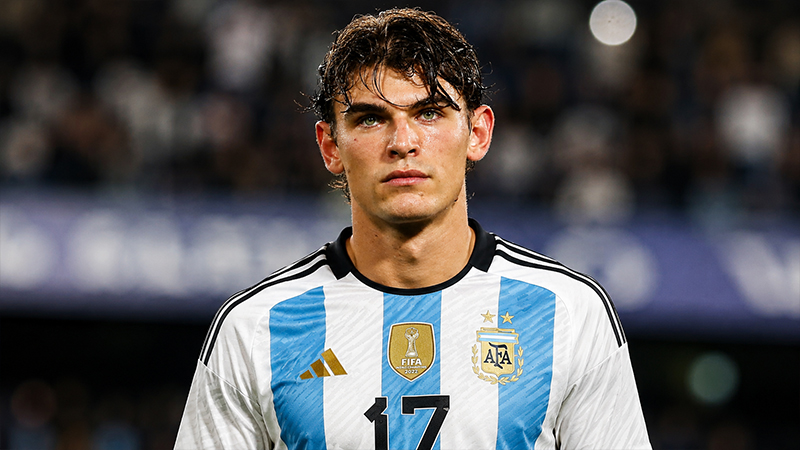
The meteoric rise of Nico Paz has captured the attention of the global footballing elite, shifting from a promising talent in Real Madrid’s youth system to a standout performer in Italy’s Serie A.
As his market value continues to climb, the central question for analysts and supporters alike revolves around the specific financial mechanisms Real Madrid utilized to maintain control over his future.
Specifically, the buy-back clause embedded in his transfer to Como 1907 represents a masterclass in modern football asset management.
The Strategic Valuation of a Generational Midfielder
When Nico Paz departed the Santiago Bernabéu for Como in the summer of 2024, the transaction was not a simple sale but a calculated strategic partnership.
Real Madrid has long perfected the “La Fábrica” export model, allowing young players to gain top-flight experience while retaining a significant stake in their development.
The transfer was finalized for a reported fee of approximately €6 million, but this figure is deceptive when viewed in isolation. Real Madrid retained 50% of the player’s future sale rights, ensuring they benefit from his eventual appreciation.
However, the most critical component for the Spanish giants is the buy-back clause. While official figures are rarely publicized by the clubs, multiple high-level reports suggest that Real Madrid can trigger a return for Paz at a tiered rate. In the first year, the buy-back is estimated at €9 million, rising slightly to €12 million by the second year.
This structure provides Real Madrid with an insurance policy. If Paz continues his current trajectory, the club can reacquire a world-class asset for a fraction of his true market value, which many analysts already project to be in the €30–€40 million range.
A Dual Identity: The Choice of the Albiceleste
To understand why Nico Paz is so highly valued, one must look at his unique footballing DNA. Paz possesses a rare blend of European tactical discipline and South American creative flair, a result of his dual heritage. Born in Santa Cruz de Tenerife, Canary Islands, Spain, Paz holds both Argentine and Spanish citizenship.
His father, Pablo Paz, was a respected defender who represented Argentina at the 1998 World Cup. Despite being born and raised in the Spanish football system, Nico’s household was an enclave of Argentine tradition. This cultural background became a deciding factor when it came time to choose his international path.
The decision to represent Argentina over Spain was driven by a combination of emotional connection and administrative proactive scouting.
Paz has noted that Argentina is the nation that represents him most, largely due to his father’s influence and the intense, emotional way football is experienced in the country.
Furthermore, a significant gap in communication played a role; while the Spanish national team did not contact him during his developmental years, the Argentine federation showed interest early and consistently.
The Messi Influence and the “Euro-Pibe” Strategy
The opportunity to share a pitch with Lionel Messi acted as a final, irresistible catalyst in Paz’s decision to commit to Argentina. This commitment was officially cemented on October 15, 2024, during a World Cup qualifying match against Bolivia.
Paz’s senior debut was nothing short of cinematic. Coming off the bench in the second half, he displayed the composure of a veteran. His impact was immediate, as he provided a clinical assist for a Messi goal, a moment that felt like a passing of the torch.
For Real Madrid, seeing their former ward thrive alongside the greatest player in history only validates their desire to keep the buy-back clause active.
The “Messi factor” has not only improved Paz’s confidence but has also exponentially increased his brand value on the global stage.
Financial Analysis: Why the Buy-Back Clause is a Bargain
From a corporate and financial perspective, the Nico Paz deal is a low-risk, high-reward scenario for Real Madrid.
- Market Inflation Protection: As transfer fees for elite creative midfielders continue to skyrocket, having a fixed buy-back price protects the club from market volatility. If Paz becomes a €70 million player in Serie A, Real Madrid can still bring him back for roughly €12 million.
- Cash Flow Management: By selling 50% of his rights, Madrid generated immediate revenue while offloading his wages and providing him with the guaranteed playing time necessary for growth—something the congested Real Madrid midfield could not offer.
- The Sell-On Upside: Should Real Madrid decide not to trigger the buy-back, they still stand to pocket 50% of whatever fee Como receives from a third-party club (such as a Premier League suitor).
Performance Metrics at Como 1907
Under the guidance of Cesc Fàbregas at Como, Paz has evolved into a centerpiece of the team’s attacking transition.
His ability to operate in the “half-spaces,” combined with his vision and ball retention, makes him a statistical outlier in Serie A for his age group. He isn’t just a passenger in the Italian league; he is a primary creator.
His physical development has also caught the eye of scouts. Standing at roughly 1.86 meters, he possesses the frame to withstand the physicality of top-tier European football, a trait that makes him even more attractive for a return to the high-intensity environment of the Bernabéu.
Frequently Asked Questions
Can any other club trigger the buy-back clause?
No. The buy-back clause is an exclusive contractual agreement between Real Madrid and Como 1907. Other clubs must negotiate directly with Como, and even then, Real Madrid typically holds a “right of first refusal,” allowing them to match any incoming offer.
Why did Spain lose out on Nico Paz?
According to his father, the Spanish federation never reached out during his formative years in the Real Madrid academy. Argentina’s scouting department, led by the “Euro-Pibes” initiative, was much more aggressive in recruiting dual-national talents living in Europe.
What happens to the 50% sell-on fee if Madrid buys him back?
If Real Madrid triggers the buy-back clause, the 50% sell-on fee typically becomes moot, as the club is essentially buying the other half of the player’s rights that they don’t already own.
Is Nico Paz eligible to change his international team again?
Following his appearance in a competitive World Cup qualifier against Bolivia in 2024, his commitment to Argentina is now virtually permanent under current FIFA eligibility rules.
Conclusion: The Future of the “Tenerife-Born Argentine”
Nico Paz is the prototype for the modern elite footballer: technically gifted, tactically flexible, and strategically managed. His journey from the Canary Islands to the heart of the Argentine national team serves as a testament to the power of heritage and proactive recruitment.
For Real Madrid, the €9m-€12m buy-back clause is one of the most valuable assets currently in their portfolio. As Paz continues to provide assists for legends like Messi and dominate midfields in Italy, the likelihood of him returning to the Spanish capital seems not just possible, but inevitable.
He is a player who chose his heart over convenience, and in doing so, has set the stage for a career that could define the next decade of international football.