If you’ve ever looked at a baseball roster, a scouting report, or a pregame graphic, you’ve probably seen the letters “RHP” next to a pitcher’s name.
Longtime fans read it without a second thought. Newer fans often wonder what it means and why it shows up so often.
The answer is simple, but it opens the door to some of the most important strategy in the game.
In this guide, you’ll learn what RHP means in baseball, where the abbreviation appears, how right-handed pitchers differ from left-handers, and why managers, hitters, and fantasy players pay such close attention to a pitcher’s throwing arm.
What Does RHP Mean in Baseball?
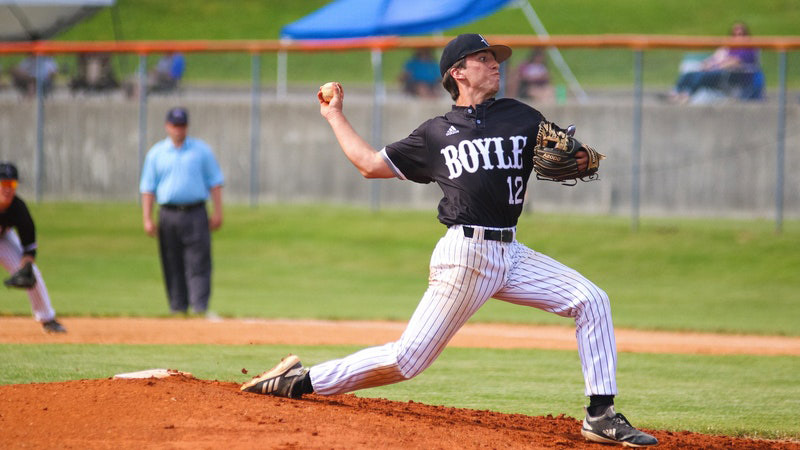
RHP stands for right-handed pitcher: a pitcher who throws the ball with his right arm. The label describes only the arm a pitcher uses to deliver the ball to home plate.
That also means RHP leaves a lot unsaid. It doesn’t tell you how the pitcher bats, whether he starts games or pitches in relief, how hard he throws, or which pitches he relies on.
A right-handed pitcher can bat left-handed, switch-hit, or rarely bat at all now that the designated hitter is used throughout Major League Baseball. Shohei Ohtani is a famous example of the mix: he pitches right-handed but hits from the left side.
The opposite label is LHP, which stands for left-handed pitcher. Together, RHP and LHP are two of the most common abbreviations in baseball, because a pitcher’s throwing arm affects lineups, matchups, and strategy from the first pitch to the last out.
Where You’ll See the RHP Abbreviation
RHP appears almost anywhere baseball information is shared. Here are the most common places you’ll run into it:
- Team rosters and depth charts: Pitchers are typically listed as RHP or LHP, so you can see the balance of a staff at a glance.
- Probable pitchers: Game previews usually name each team’s starter along with his throwing arm.
- Scouting reports and draft rankings: Prospect lists identify pitchers as RHP or LHP before describing their velocity, pitch mix, and potential.
- Split statistics: A hitter’s numbers are often divided into performance “vs. RHP” and “vs. LHP,” which shows how he handles each type of pitcher.
- Fantasy baseball: Daily fantasy players check handedness before setting lineups to find the best matchups.
Once you start noticing RHP, you’ll realize it’s part of the everyday language of baseball.
RHP vs. LHP: What’s the Difference?
The basic difference between a right-handed and a left-handed pitcher is which arm throws the ball. But that one detail changes the angle, movement, and feel of nearly every pitch.
A right-hander releases the ball from the third-base side of the mound, while a left-hander releases it from the first-base side. That changes the path the ball takes to the plate and how it looks to the hitter.
Breaking pitches also move in opposite directions. A right-hander’s slider or curveball usually breaks away from a right-handed hitter and in toward a left-handed hitter. A lefty’s breaking ball does the reverse.
Handedness matters with runners on base, too. When a left-handed pitcher comes set, he faces first base, which makes it easier to watch runners and throw over.
A right-hander has his back to first base, so he relies more on a quick delivery and a well-timed pickoff move to control the running game.
Why Pitcher Handedness Matters: The Platoon Advantage
The main reason baseball tracks RHP and LHP so closely is the platoon advantage. In general, hitters do better against pitchers who throw from the opposite side, and pitchers do better against hitters who bat from the same side.
How Right-Handed Pitchers Attack Right-Handed Hitters
When a right-handed pitcher faces a right-handed hitter, the ball seems to come from behind the batter, or even right at him. Sliders and curveballs then break away toward the outside corner.
That combination makes it harder for the hitter to pick up the ball early and to stay in against pitches that look like they’re headed for his body. It’s a big reason right-handed batters often post weaker numbers against right-handed pitching.
Why Left-Handed Hitters Often Have the Edge
When a right-hander faces a left-handed hitter, the matchup flips. The hitter gets a clearer view of the ball out of the pitcher’s hand, and breaking balls move in toward him rather than away.
Because of this, many right-handers develop a changeup or splitter, pitches that tend to fade away from lefties, to keep opposite-side hitters off balance.
How Managers Use the Platoon Advantage
Managers build countless decisions around these matchups. A team might start a left-handed hitter against an RHP and bench him against a lefty.
Late in close games, managers send up pinch hitters and call on relievers to gain the more favorable side.
Major League Baseball’s three-batter minimum, introduced in 2020, limited some of the most extreme one-batter moves, but handedness still shapes bullpen strategy every night.
Not every player follows the usual pattern. Some hitters and pitchers show “reverse splits,” performing better in same-side matchups. Still, the platoon advantage remains one of the most reliable trends in the sport.
How Common Are Right-Handed Pitchers?
Right-handed pitchers are the clear majority in baseball. Roughly three out of every four big-league pitchers throw right-handed, while lefties make up the rest. Interestingly, that still means lefties are overrepresented compared with the general population, where only about one in ten people is left-handed.
Because right-handers are so common, hitters face them far more often. A batter’s “vs. RHP” numbers usually cover the bulk of his plate appearances, which makes them a reliable picture of his everyday ability.
The same scarcity explains why teams value left-handed pitchers so highly, especially in the bullpen, where a well-timed lefty can neutralize a dangerous left-handed bat.
RHP Roles: Starters, Relievers, and Closers
RHP describes a pitcher’s throwing arm, not his job. A right-hander can fill any role on a pitching staff:
- Starting pitcher (SP): Begins the game and tries to work deep into it.
- Relief pitcher (RP): Comes out of the bullpen to replace the starter or another reliever.
- Closer: The reliever trusted to protect a lead in the final inning.
You’ll sometimes see these labels combined in scouting reports and depth charts, such as RHSP for a right-handed starter or RHRP for a right-handed reliever. Either way, the “RH” part simply confirms that he throws with his right arm.
Related Baseball Abbreviations Worth Knowing
RHP rarely appears alone. These related terms will help you read rosters and stat sheets with confidence:
- LHP: Left-handed pitcher, often nicknamed a “southpaw.”
- RHH and LHH: Right-handed hitter and left-handed hitter.
- B/T: Bats/Throws. A player listed as “R/R” bats and throws right-handed, while “L/R” means he bats left and throws right.
- Switch-hitter: A batter who hits from either side of the plate, usually choosing the side opposite the pitcher’s throwing arm.
- vs. RHP / vs. LHP: Split stats showing how a hitter performs against each type of pitcher.
Famous Right-Handed Pitchers in Baseball History
Some of the greatest pitchers ever have been right-handed. A few names every fan should know:
- Cy Young: Baseball’s all-time wins leader with 511 victories. The award for each league’s best pitcher is named after him.
- Walter Johnson: An early-era star who won 417 games and threw a record 110 shutouts.
- Nolan Ryan: The career strikeout king with 5,714 strikeouts and a record seven no-hitters.
- Bob Gibson: Posted a 1.12 ERA in 1968, one of the most dominant seasons ever.
- Greg Maddux: Won four straight Cy Young Awards with pinpoint control.
- Roger Clemens: Won a record seven Cy Young Awards.
- Pedro Martinez: Overpowered hitters during one of the highest-scoring eras in baseball history.
Modern aces such as Justin Verlander, Max Scherzer, and Gerrit Cole have carried that right-handed tradition forward.
What About Pitchers Who Throw With Both Arms?
A handful of pitchers have been able to throw with either arm. The best-known modern example is Pat Venditte, a switch-pitcher who reached the major leagues in 2015 and used a special glove that fit on either hand.
His rare skill led to a rule for what happens when a switch-pitcher faces a switch-hitter. The pitcher must declare which arm he’ll use before the at-bat, and the hitter then picks his side of the plate. Players like Venditte are rare exceptions, which is why nearly every pitcher is simply listed as RHP or LHP.
How to Use RHP Information as a Fan
Knowing a pitcher’s handedness makes watching baseball more fun and more informed:
- Check probable pitchers: Before a game, see whether each starter is an RHP or LHP and predict how the lineups might change.
- Compare split stats: Look at a favorite hitter’s numbers vs. RHP and vs. LHP to see where he thrives.
- Set smarter fantasy lineups: Left-handed hitters facing a right-handed starter are often strong daily plays.
- Follow the late-game chess match: Watch how managers use pinch hitters and relievers to win key matchups.
Final Thoughts
So, what does RHP mean in baseball? It stands for right-handed pitcher, a pitcher who throws with his right arm.
The abbreviation is simple, but it carries a lot of weight. A pitcher’s handedness affects how the ball moves, how hitters see it, how runners are held, and how managers build their lineups and bullpens.
The next time you spot RHP on a roster or a pregame graphic, you’ll know exactly what it means and why it matters. Paying attention to small details like this is one of the easiest ways to understand the strategy behind every pitch.