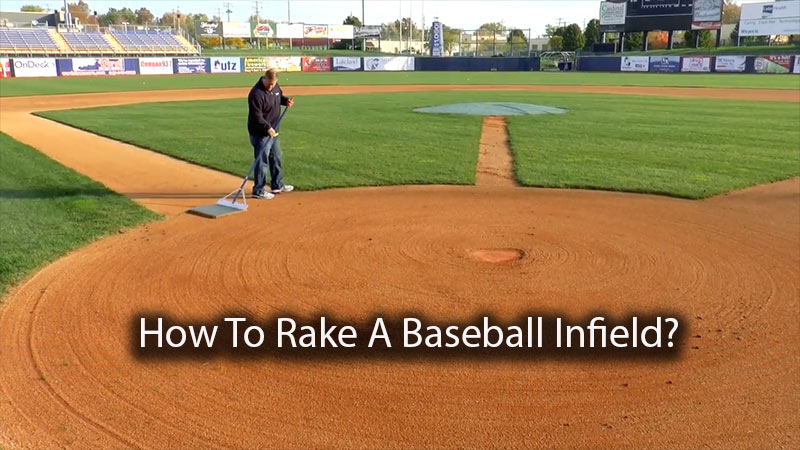
Good infield care helps make each game safe and fair. A smooth dirt field gives the ball a more even bounce. It also gives players firm ground to run, stop, and turn on. This can help cut the risk of trips, falls, and other harm.
Poor field care can cause many issues. Dirt may wear away fast. Deep holes can form in busy spots. Dirt can also build up near the grass and form unsafe lips. These issues can lead to more work and high repair costs.
Good infield care does not have to be hard. You need the right tools, a clear plan, and good work habits. This guide shows you how to care for busy dirt areas, rake the base paths, keep dirt out of the grass, and drag the field the right way.
1. Pre-Raking Setup and Tool Selection
Before you care for the field, know what each tool does. You should also get the dirt ready before you start.
Moisture Before Field Work
The dirt should be damp before you rake or fix it. Spray a light mist of water over the dirt first.
This helps keep dust down. It also makes the dirt soft and easy to work with. Damp clay will hold its shape better as you fix the field.
Do not soak the dirt. A light mist is enough.
Tools and Their Uses
Each field tool has its own job. Using the wrong tool in the wrong spot can harm the field.
The main tools are:
- Hand Rakes: Use a wide metal rake to fix worn spots and level the base paths. You can also use it to pull loose dirt away from the edge of the grass.
- Hand Tampers: Use a tamper to break up hard bits of clay. It can also pack loose dirt into low spots and holes.
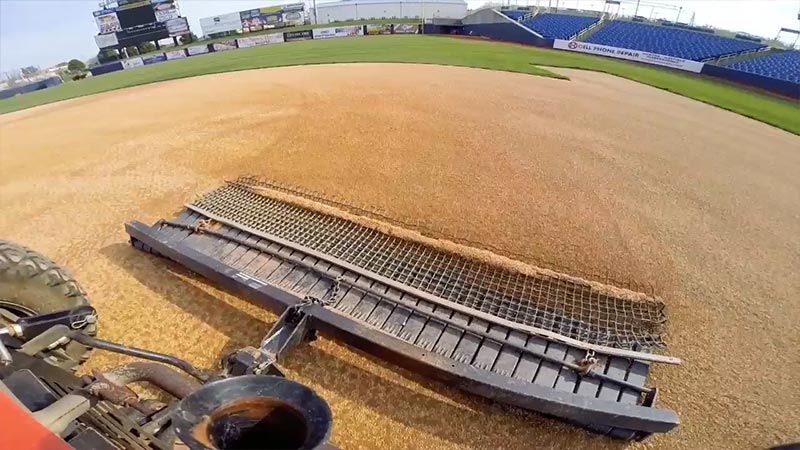
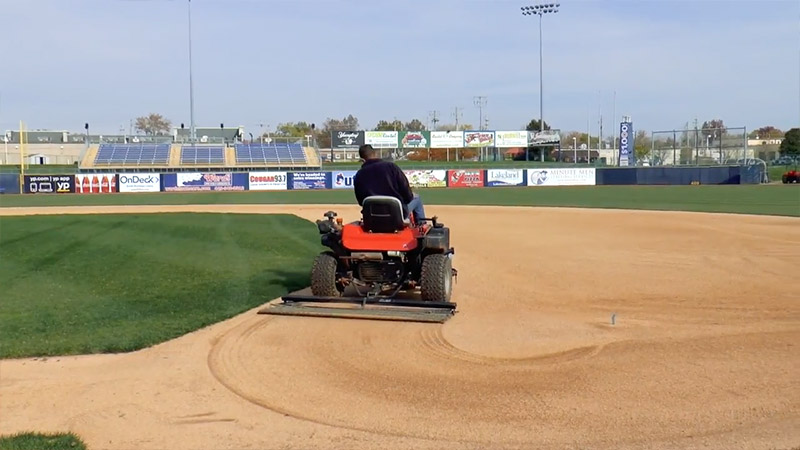
- Drag Mats and Drag Boards: Use these tools to smooth large, open dirt areas. You can pull them by hand or with a field machine.
Key Rule: Use drag mats only on the open dirt part of the infield. Do not drag them on the base paths, over the home plate area, or across the edge of the grass.
2. High-Wear Zone Repair & Hole Management
The areas near home plate, the batter’s boxes, the mound, and the bases get a lot of foot traffic. These spots wear down fast. Hand raking and tamping are key to keeping them in good shape. In these areas, hand work is more useful than using a large drag mat.
The Risk of Holes and Soft Dirt
High-use areas should be raked after each game. They should also be raked after each practice. Practice can cause even more wear due to the same drills being done many times.
Small holes can soon turn into deep holes if they are not fixed. Filling a deep hole all at once can also cause a problem. It may leave a soft dirt pocket that is up to three inches deep.
Soft spots can make it hard for players to keep their footing. They can also change how the ball moves or bounces. This may make the field less safe.
Main Areas to Repair
Crews should check these high-use spots first:
- Batter’s Boxes: The box for right-handed hitters often gets the most wear. Rake loose dirt back into low spots. Then tamp it down well.
- Pitcher’s Mound: Check the push-off and landing spots. Deep holes can form near the rubber and where the front foot lands. Fill and pack these spots with care.
- Second Base Area: Players can move a lot of dirt when they slide into second. Rake the loose dirt back into low spots around the base.
- Third Base: Deep holes may form near third base. Slides and field play can move dirt away from the bag. Fill these holes before they get worse.
                     [ Pitcher's Mound ]
                       (Rake to Rubber)
                              |
    [ 3rd Base ] <------------+------------> [ 1st Base ]
      (Fill Holes)                           (Rake Longways)
                              |
                      [ Home Plate / Box ]
                        (Tamp & Level)
How to Rake and Tamp the Soil?
The main rule is simple: move loose dirt from high spots back into low spots.
- Fill Holes: Rake loose dirt back into holes near home plate, the mound, and the bases.
- Pack the Dirt: Use a hand tamper to press the dirt down. A strong metal rake can also help break up hard clay chunks before the dirt is packed.
- Reuse Extra Clay: Save extra clay that builds up during field work. Use it to repair deep holes near third base, the mound, or other worn spots.
3. Baseline Raking and Turf Edge Protection
Poor care of base paths and grass edges can harm a field. New field workers often make this mistake. Bad raking can make paths uneven. It can also push dirt into the grass and kill the turf.
Rake Base Paths the Right Way
Never rake a base path from side to side. This can harm the shape of the path.
- Rake Lengthwise: Walk along the base path. Rake up and down the path between the bases. Pull loose dirt toward the middle of the path.
- Do Not Rake Side to Side: This pushes dirt into the grass. It can also make a low groove in the middle of the path.
Base paths do not need as much raking as busy spots. But when you rake them, always work along the length of the path.
Keep Dirt Off the Grass
Loose dirt and clay can harm grass. A layer of dirt can cover the grass and stop it from growing well. It can also make the field edge rough and hard to care for.
- Pull Dirt Away From Grass: Stand on the dirt path. Pull loose dirt away from the grass. Never rake dirt into the turf.
- Care for the Mound Edge: If grass is around the mound, stand near the middle. Pull loose dirt toward the pitching rubber. Do not push it toward the grass.
- Use a 45-Degree Stroke: Near a grass edge, rake at about a 45-degree angle. This helps pull loose dirt away from the turf.
- Stop Turf Lips: Keep clay and sand off the grass. Keep the dirt level with the lawn. This helps stop raised edges from forming.
Good raking keeps base paths smooth and grass edges clean. It also helps protect the field from long-term damage.
4. Strategic Infield Dragging & Weather Management
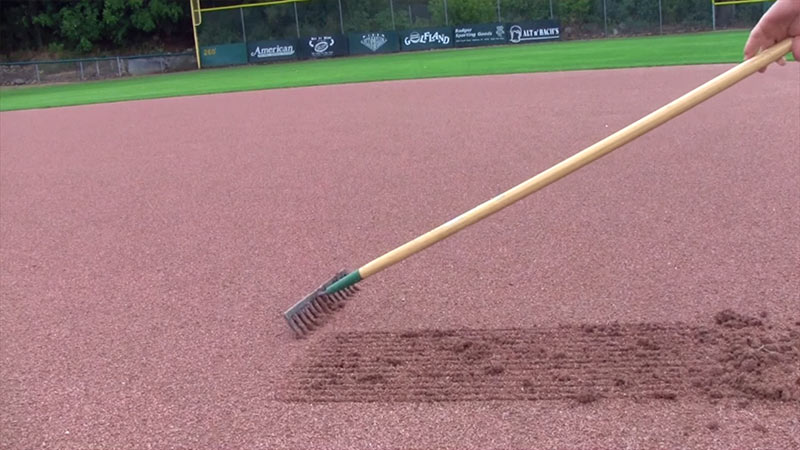
Dragging the main dirt area with a steel screen or drag board helps make the field smooth and even. It also gives the field a clean look. But do not drag the field too soon. First, rake and tamp all worn spots by hand.
Proper Drag Pattern and Safe Zones
Use the right path when you drag the field. This helps keep the dirt smooth and protects the grass.
- Stay Away From Grass: Keep the drag mat 6 to 12 inches away from all grass edges. This keeps loose dirt from getting into the grass.
- Drag in Circles: Start near the outer edge of the dirt area. Move in wide circles around the field. Make each circle a bit smaller as you move toward the middle.
- End Near Third Base: Try to finish near third base. The drag mat may pick up extra dirt as you work. You can use this dirt to fill low spots near third base.
- Move Extra Dirt Back: Do not leave piles of dirt near the grass. Rake any extra dirt back into the open infield.
Dragging and Rain
Weather can change how and when you should drag the field. Good timing can help protect the dirt and keep the field smooth.
- Drag When the Dirt Is Dry: Drag the field when the dirt is fairly dry. Do not drag it during rain. Wet dirt can stick to the screen. It can form clumps and leave the field rough.
- Drag Before Heavy Rain: If heavy rain is coming and the dirt is dry, drag the field first. This will smooth out small bumps, lines, and low spots. Rain can then fall on a flat surface. The water can settle the dirt in a more even way. After the field dries, the surface may be smooth and ready for play.
5. Workload Delegation & Maintenance Schedules
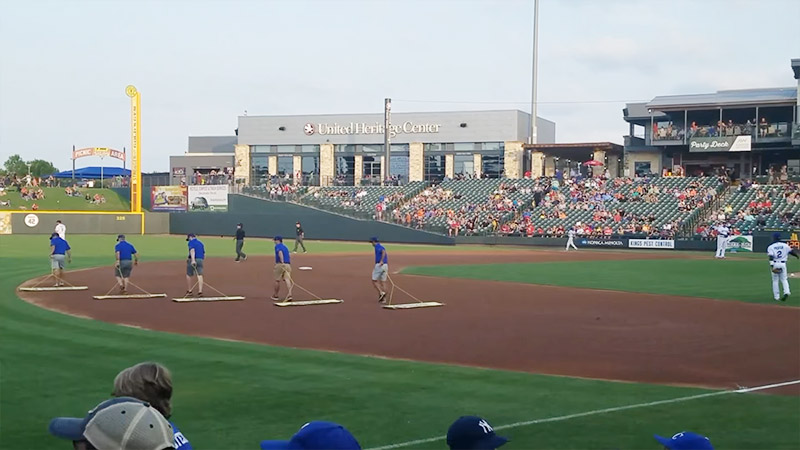
Keeping a baseball field in good shape is a team job. Coaches, players, and parents should all help. Sharing the work keeps the field safe and stops a few people from doing all the work.
Youth Divisions: Tadpole, Mosquito, and Pee Wee
For young teams, coaches should make a simple work plan for parents. Parents can take turns raking the field after each game.
A set plan makes the work fair. It also stops the same parents from doing the job after every game.
Older Divisions: Bantam, Midget, and Senior
Older players should help care for their home field. This also teaches them to respect the field they use.
Infield players have a strong reason to help. A rough field can cause bad hops and make it hard to field the ball.
Field care jobs can be split by player group:
- Infielders: Rake and pack the dirt near the bases. They can also help smooth the main dirt area.
- Pitchers: Fix and pack the pitcher’s mound. Pitchers who did not play in the game can take this job.
- Outfielders: Care for home plate, the batter’s boxes, and the area near the backstop.
- Catchers: Catchers can skip field care after the game. Their role takes a lot of work and can leave them tired.
When each group has a clear job, field care is faster and fairer. It also helps keep the field smooth, safe, and ready for the next game.
Complete Step-by-Step Maintenance Routine
Follow this standardized workflow after every game and practice session:
Step 1: Surface Dampening
- Lightly spray a water mist across dry dirt areas to suppress dust and improve compaction.
Step 2: High-Wear Zone Hand Repairs
- Hand-rake home plate, batter’s boxes, the pitcher’s mound, and base areas.
- Fill all depressions with displaced soil or excess clay from prior drags.
- Tamp down filled depressions using a hand tamper or rake head until dense and firm.
Step 3: Baseline Maintenance
- Rake baselines lengthwise (up and down along the path), pulling loose material toward the center.
- Never rake side-to-side across base paths.
Step 4: Turf Edge Clearance
- Use a 45-degree angled stroke to pull loose sand away from all grass borders.
- Keep soil flush with grass lines to eliminate border lips.
Step 5: Main Skin Dragging
- Drag the main infield skin using a drag mat only when soil is dry.
- Maintain a 6 to 12-inch buffer away from grass borders.
- Circle inward from the outer perimeter, finishing near third base, and redistribute excess clay back into field depressions.
Action Plan for Field Managers & Coaches
Good field care keeps players safe. It also helps the field last longer.
- Keep Tools at Each Field: Store strong metal rakes, hand tampers, water hoses, and drag mats near each field.
- Post Simple Field Rules: Put clear care rules in each dugout. Show how to rake base paths the right way. Also show how to keep dirt away from grass.
- Share the Work: For youth games, give parents a set work plan. For older teams, give field care jobs to groups of players.
Good field care takes teamwork. It keeps the grass and dirt in good shape. It also helps stop costly damage. With regular care, each field can stay safe and ready for every game.