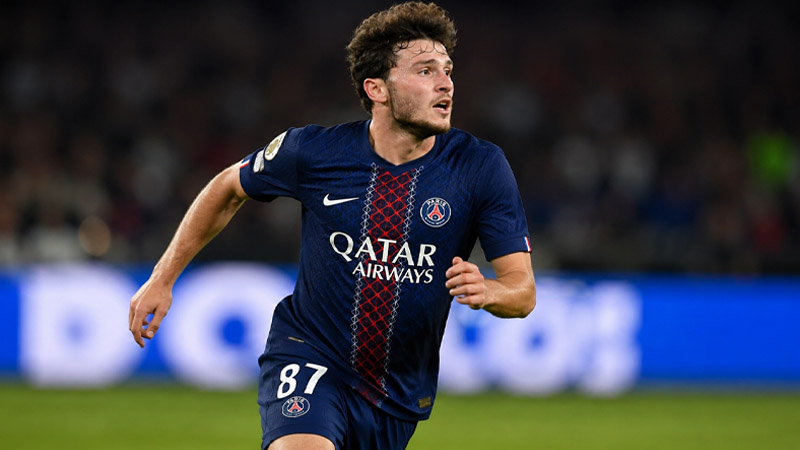
João Neves has rapidly ascended from the prestigious youth ranks of Benfica to become a pivotal figure in the Paris Saint-Germain midfield.
While his technical proficiency and tireless work rate often dominate headlines, fans frequently question the specific personal branding that sets him apart: his choice of the number 87 jersey and his signature tucked-in shirt.
These aesthetic decisions are not mere coincidences but represent a journey of discipline and professional evolution.
By maintaining these unique identifiers, Neves has cultivated a distinct identity in a sport often dominated by traditional single-digit designations, signaling a new era of individual player branding.
The Origins of the Number 87 at Benfica
The professional journey of João Neves began at SL Benfica, a club renowned for its rigorous development of world-class talent.
When a player transitions from the youth academy to the senior squad, the selection of a squad number is often a milestone moment. For Neves, this choice was dictated more by circumstance than a lifelong obsession with the specific digits.
A Matter of Limited Availability
When Neves first broke into the Benfica first team, he was not presented with the wide array of choices typically available to established veterans. Instead, the club offered him a very small pool of available and vacant squad numbers.
In a high-stakes environment like the Primeira Liga, youth players often take what is available to signify their readiness to serve the team in any capacity. The number 87 was essentially a product of what was left on the shelf during his breakthrough period.
Choosing From the Remaining Pool
Despite the limited selection, Neves found an immediate affinity for the number 87. Out of the available options presented to him by the Lisbon club, he identified 87 as the one he liked most.
This decision was straightforward and devoid of the complex numerology or birth-year references often seen in modern football.
By selecting a number that stood out from the typical midfield choices, Neves unintentionally began the process of building a unique visual brand that would eventually follow him to the highest levels of European competition.
From Random Selection to a Lucky Charm
What began as a choice of necessity soon evolved into a symbol of success. As Neves established himself as a regular starter for Benfica and earned a place in the Portuguese national team, the number 87 became synonymous with his rapid rise in the footballing world.
Early Success in the Senior Squad
The transition from a youth prospect to a senior mainstay happened with remarkable speed for Neves.
While wearing the number 87, he displayed a maturity beyond his years, anchoring the Benfica midfield in both domestic league play and the UEFA Champions League.
This period of high performance solidified his connection to the number, as it was the digit on his back during his most formative professional moments.
The Psychological Edge of a Lucky Charm
In professional sports, psychological anchors and routines often play a significant role in a player’s confidence. Over time, Neves began to view the number 87 as a personal lucky charm.
Because his career blossomed so effectively while wearing it, he saw no reason to change to a more “prestigious” number even when opportunities arose. This mindset aligns with the classic athletic philosophy: if it is not broken, do not fix it.
Making History at Paris Saint-Germain
In August 2024, João Neves completed a high-profile move to Paris Saint-Germain for a fee of 60 million euros plus 10 million in bonuses.
This transfer marked a significant step in his career, but rather than rebranding himself for the French giants, Neves chose to double down on his established identity.
A Transfer Breaking Traditional Norms
Top-tier midfielders often vie for the numbers 7, 8, or 10 when joining a new club, as these are historically associated with playmakers and icons. Neves, however, arrived at the Parc des Princes with a different objective.
He expressed immense pride in joining an ambitious club with a focus on young talent and chose to carry his “old school” high number into this new chapter.
The First Number 87 in PSG History
By choosing to retain his number, Neves achieved a unique milestone: he became the first player in the history of Paris Saint-Germain to wear the number 87.
This distinction further separates him from the long line of legends who have passed through the club. It serves as a statement that he is there to write his own history rather than live in the shadow of traditional numbering conventions.
Comparing Football Numbering Traditions
To understand why Neves’ choice is so distinctive, one must look at the broader context of squad numbers in global football.
Unlike American sports leagues like the NFL or NBA, where high numbers are standard across various positions, professional soccer has a deeply ingrained tradition of low, position-specific numbers.
| Number Category | Typical Positions | Historical Significance |
|---|---|---|
| 1 | Goalkeeper | The undisputed starter’s number. |
| 2 – 5 | Defenders | Traditionally assigned to the backline. |
| 7, 8, 10 | Midfielders/Playmakers | Reserved for the most creative or influential players. |
| 9, 11 | Forwards | Associated with primary goal-scorers. |
| High Numbers (70+) | Youth/Reserve Players | Usually seen as temporary or “nothing” numbers. |
Neves has effectively elevated a “youth” or “reserve” number into a symbol of elite midfield play. His refusal to switch to a single digit at PSG demonstrates a level of professional security and brand consistency that is rare among players in their early twenties.
Beyond the Number: The Tucked-In Jersey Tradition
The visual identity of João Neves is not limited to the digits on his back. He is also widely recognized for his strictly tucked-in jersey, a stylistic choice that contrasts sharply with the loose, modern fit favored by most of his contemporaries.
The Disciplined Roots of CFT Algarve
This aesthetic choice is not a fashion statement but a remnant of his early training. Neves has explained that playing with a tucked-in shirt was a non-negotiable rule during his development years at the CFT Algarve youth academy.
This strict requirement was designed to instill a sense of order and discipline in young athletes, ensuring they represented the club with a neat and professional appearance at all times.
Comfort as a Professional Identity
Over years of training and matches, what started as a mandatory requirement evolved into a permanent comfort habit. For Neves, the sensation of a tucked-in shirt is part of his “game mode” routine.
It has become his ultimate trademark, providing a visual cue of his disciplined approach to the game. While other players may adjust their kits throughout a match, Neves remains consistent, mirroring the steady and reliable nature of his playstyle on the pitch.
The Strategic Value of Personal Branding
From an analytical perspective, Neves’ commitment to his “non-traditional” look provides significant value in terms of marketability and fan engagement.
In a digital age where players are often judged by their social media presence and unique traits, having an “unconventional” look helps in several key areas.
Personal Branding in a Saturated Market
The footballing world is saturated with talented young midfielders. By keeping the number 87 and the tucked-in shirt, Neves makes himself instantly recognizable to both casual viewers and hardcore scouts.
This “visual shorthand” allows him to stand out in highlights and broadcasts, reinforcing his brand every time he steps onto the field.
Fan Engagement and Identity
For fans, particularly those of PSG and Benfica, Neves’ choices provide a narrative they can latch onto. Supporters enjoy the “lucky charm” aspect of the number 87 and the disciplined backstory of the tucked-in shirt.
This connection often leads to increased jersey sales for non-traditional numbers, as fans want to own a piece of a unique history rather than a generic number 10.
Frequently Asked Questions About João Neves
Why did João Neves choose the number 87?
He chose it because it was the best available option from a limited pool of numbers when he was promoted to the Benfica senior team.
Is there a special meaning behind the number 87 for him?
Initially, no. However, due to his immense success while wearing it, he now considers it a lucky charm and a symbol of his professional journey.
Why does he always tuck in his shirt?
This was a mandatory rule at his youth academy, CFT Algarve. Over time, it became a habit that he finds comfortable and has since become his signature look.
Has anyone else worn 87 for PSG?
No, João Neves is the first player in the history of Paris Saint-Germain to be assigned the number 87.
The Future of the Neves Identity
As João Neves continues his five-season tenure at Paris Saint-Germain, the number 87 is expected to grow in prominence.
His story serves as a reminder that professional identity is not always about following established paths but about embracing the unique circumstances of one’s own rise to the top.
Whether he is controlling the tempo of a Ligue 1 match or representing Portugal on the international stage, his tucked-in jersey and unconventional number will remain symbols of a player who values consistency, discipline, and the “lucky” traditions that brought him to greatness.
By rejecting the traditional lure of the number 10, Neves has proven that the player makes the number, not the other way around.
His trajectory suggests that we may see more young stars choosing to retain their “academy” numbers as a badge of honor, forever changing how we perceive the digits on a football kit.