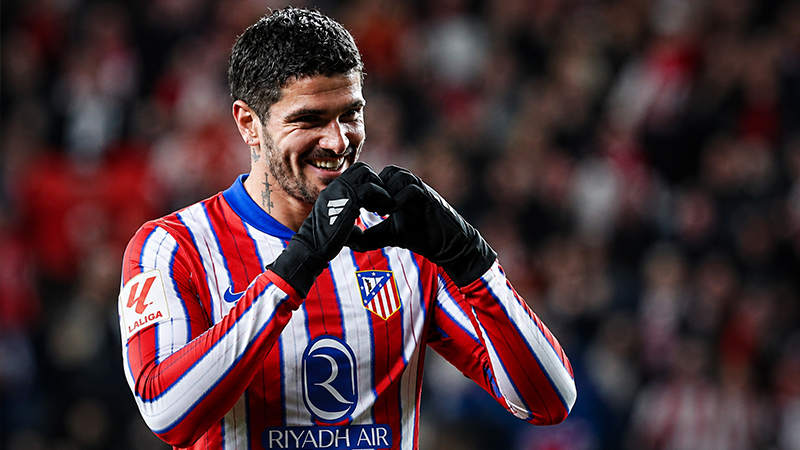
In the landscape of international football, few moves capture the intersection of professional strategy and personal legacy as poignantly as Rodrigo de Paul’s transfer from Atlético Madrid to Inter Miami CF.
In July 2025, the football world witnessed a significant shift when the 31-year-old Argentine midfielder, a cornerstone of both his club and national team, opted to trade the rigorous defensive structures of the Metropolitano for the burgeoning project in South Florida.
This move was not merely a transaction; it was a calculated step in a broader evolution of the sport.
For a player often described as the “engine” of the pitch, the decision to join Major League Soccer (MLS) represents a sophisticated alignment of career longevity, brand building, and personal fulfillment.
1. The Catalyst of Connection: The Messi Factor and Family Legacy
At the heart of this transition lies a narrative of reunion. The opportunity to play alongside Lionel Messi in a club environment acted as a primary driver for the move.
For De Paul, who has served as a vital lieutenant to Messi on the international stage, the prospect of extending that partnership to the domestic level offered a unique professional incentive that few European clubs could replicate.
However, the motivations extended beyond the pitch. De Paul characterized the move as a “personal decision” rather than an admission of physical decline or “burnout”.
By choosing Miami, he prioritized a lifestyle that brings him closer to his family, addressing the human element that often gets overlooked in high-stakes sports management.
This choice underscores a growing trend among elite athletes who are increasingly valuing “fresh, long-term projects” that offer a higher quality of life without sacrificing the competitive spirit.
2. The Strategic Pivot at Atlético Madrid
To understand why this transfer occurred in 2025, one must analyze the internal dynamics at Atlético Madrid. The club was undergoing a profound “strategic shift” in its midfield composition.
The arrival of Johnny Cardoso provided the Madrid hierarchy with a younger, high-potential alternative, essentially catalyzing the restructuring of their central ranks.
From a management perspective, the timing of the sale was impeccable. De Paul’s contract was slated to expire in 2026.
In the high-pressure world of European football finance, allowing a player of De Paul’s caliber to enter the final year of his deal creates the risk of losing a valuable asset for no return.
By securing a €15 million fee in 2025, Atlético Madrid successfully mitigated this risk, turning a potential liability into capital that assisted in their broader “financial restructuring”.
3. Building a Global Powerhouse in Miami
Inter Miami CF has transitioned from a new expansion team to a global brand in record time. De Paul’s arrival is a testament to the club’s ambition to build a “growing club” that can compete with established giants.
Unlike the “retirement league” trope that plagued the MLS in previous decades, the acquisition of a 31-year-old starter from a top-tier European club signals a new era of recruitment.
De Paul brings a specific tactical profile—resilience, high work rate, and ball progression—that complements the existing talent in Miami.
His presence provides the tactical stability necessary for creative players like Messi to operate with freedom.
For Inter Miami, this was not just about buying a star; it was about investing in a long-term project that solidifies their status as the premier destination for South American talent.
4. The Financial Logic of the €15 Million Valuation
In today’s inflated market, a €15 million fee for a World Cup-winning midfielder might seem conservative, but it reflects a sophisticated understanding of player aging curves and contract value.
For Inter Miami, this represents a high-value investment in a player who still has several years of peak performance ahead. For Atlético, it was a necessary move to balance the books and make room for the next generation of talent.
This transaction demonstrates a “win-win” scenario in the sports business:
- The Player achieves personal happiness and a new professional challenge.
- The Selling Club recoups investment and accelerates a necessary squad rebuild.
- The Buying Club acquires an elite-level “motor” to drive their brand and on-field success.
Deep Dive: Frequently Asked Questions
Was Rodrigo de Paul’s departure from Madrid due to poor performance?
No. The documents indicate that the move was a “personal decision” and part of a “strategic shift” within Atlético Madrid’s midfield, particularly following the signing of Johnny Cardoso.
De Paul remained a high-value player, but the club prioritized a sale over the risk of his contract expiring in 2026.
Is De Paul considering the move to Miami as a retirement?
Quite the opposite. De Paul has explicitly stated that he is seeking a “fresh, long-term project”. He joined Inter Miami to help build a growing club and continue his career alongside Lionel Messi, rather than as a reaction to “burnout”.
What was the financial impact on Atlético Madrid?
The €15 million fee assisted Atlético Madrid with its “financial restructuring”. By selling him before his contract entered its final year, the club avoided the risk of a “free transfer” departure in 2026, ensuring they received a return on their asset.
How does this move affect De Paul’s international career?
While the materials do not explicitly detail his future with the Argentine national team, playing in the same league and club as his captain, Lionel Messi, likely facilitates a continued understanding between the two key players.
Conclusion: A New Standard for Career Transitions
Rodrigo de Paul’s migration to the United States marks a pivotal moment for the sport. It challenges the traditional narrative that elite players only move to the Americas when their European utility has vanished.
By prioritizing a fresh challenge and a “long-term project” while still in a position to contribute at the highest level, DePaul has set a new precedent for how modern athletes manage their careers.
For fans and analysts alike, this move serves as a masterclass in balancing personal fulfillment with professional pragmatism.
As Inter Miami continues to evolve, the “Motorcito” will undoubtedly be at the center of their engine room, driving the club toward new heights in the global game.