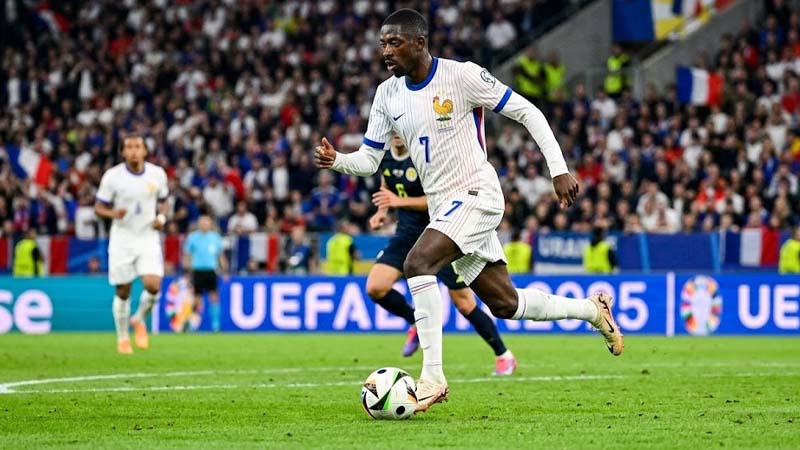
Ousmane Dembélé is one of the most electrifying talents in modern football, renowned for his incredible pace, technical dribbling, and rare dual-footed ability.
While his presence on the global stage with Paris Saint-Germain and the France National Team is undeniable, many fans and analysts often ask: where is Ousmane Dembélé from?
This question invites a journey through the landscapes of northern France and the deep cultural heritage of West Africa.
Understanding his origins reveals a rich tapestry of identity that blends his French upbringing with his Malian, Mauritanian, and Senegalese ancestry, making him a symbol of contemporary multiculturalism.
The Birthplace and Early Life of Ousmane Dembélé
The story of Ousmane Dembélé begins in the northern regions of France, where the foundations of his footballing career were laid.
His journey is a testament to the robust youth development systems found within the French football infrastructure, particularly in the Normandy region.
Vernon: The Starting Point in Normandy
Ousmane Dembélé was born in Vernon, a commune situated in the Eure department of the Normandy region in northern France.
Vernon is known for its historic architecture and its position along the Seine, providing a quiet but culturally rich environment for his early childhood.
Being born in this region meant that Dembélé was a French citizen from birth, fully immersed in the language and culture of the Republic from his very first days.
Growing Up in Évreux: The First Footballing Steps
Shortly after his birth, his family’s journey took them to the nearby city of Évreux, France. It was here that Dembélé spent the majority of his formative years and where his passion for the game truly ignited.
Évreux has a reputation for being a fertile ground for athletic talent, and it was in this urban setting that he took his initial footballing steps, honing the skills that would eventually take him to the biggest stadiums in Europe.
His upbringing in Évreux was central to his development, as the local pitches served as the laboratory for his experimental and highly creative playing style.
Understanding Ousmane Dembélé’s West African Heritage
While Dembélé is a product of the French environment, his identity is deeply rooted in the African continent.
His family background provides a multi-layered connection to three distinct West African nations, contributing to the diverse profile that many modern French athletes share.
Malian Roots: The Paternal Connection
A significant portion of Dembélé’s heritage comes from his father, who is originally from Mali.
Mali is a nation with a storied history and a deep-seated love for football, and this paternal link provides Ousmane with a direct connection to Malian culture and traditions.
Although he chose to represent France internationally, his Malian roots remain a vital part of his personal history and family narrative.
Mauritanian and Senegalese Lineage: The Maternal Influence
The complexity of his background is further enriched by his mother’s lineage. She is of Mauritanian-Senegalese heritage, linking Ousmane to two more prominent West African nations.
This dual heritage from his mother’s side highlights the migratory patterns and interconnectedness of families within the West African region.
This blend of Malian, Mauritanian, and Senegalese ancestry makes Dembélé a representative of a vast and diverse cultural landscape that extends far beyond the borders of Europe.
Professional Career: Representing France and PSG
Dembélé’s professional life is firmly rooted in the country of his birth. His career trajectory has seen him move from local French clubs to the pinnacle of international football, always maintaining a strong connection to his home nation.
The France National Football Team Journey
Despite the various options his heritage might have provided, Ousmane Dembélé has always remained committed to the country where he was raised.
He represents the France National Football Team on the international stage. He was a key part of the squads that competed in major tournaments, including the FIFA World Cup.
His decision to play for “Les Bleus” is a common path for many French players of African descent, showcasing how the national team serves as a melting pot of different cultural backgrounds.
Playing for Paris Saint-Germain in His Homeland
In a move that felt like a true homecoming for many fans, Dembélé currently plays club football for Paris Saint-Germain (PSG).
After successful stints in Germany with Borussia Dortmund and in Spain with FC Barcelona, his move to the French capital brought him back to the league and the country where his journey began.
Playing for the premier club in France allows him to compete at the highest level of European football while being physically close to the regions of Normandy and Évreux that shaped his youth.
Key Facts About Ousmane Dembélé’s Background
For a clear and concise look at the various locations and nations that contribute to Ousmane Dembélé’s identity, the following table summarizes the essential details of his origins.
| Category | Specific Detail | Location/Nation |
|---|---|---|
| Place of Birth | Vernon | Normandy, France |
| Primary Upbringing | Évreux | Normandy, France |
| International Allegiance | France National Team | France |
| Current Club Team | Paris Saint-Germain | Paris, France |
| Paternal Heritage | Father’s Origin | Mali |
| Maternal Heritage | Mother’s Origin | Mauritania & Senegal |
The Cultural Significance of His Multicultural Identity
The story of “where Ousmane Dembélé is from” is more than just a list of coordinates on a map; it is a narrative about the modern European experience. His life reflects the intersection of colonial history, migration, and the unifying power of sport.
A Symbol of the “Rainbow” National Team
The French national team has long been praised for its “Black-Blanc-Beur” (Black, White, Arab) identity, a term coined after the 1998 World Cup triumph. Players like Dembélé continue this legacy.
By embracing his French nationality while acknowledging his Malian, Mauritanian, and Senegalese roots, he becomes a role model for millions of young people across Europe and Africa who navigate similar multi-layered identities.
Impact on Global Football Scouting
Dembélé’s rise from Évreux to PSG also underscores the importance of local scouting in French suburbs and regional communes. The fact that a world-class talent can emerge from a place like Vernon highlights the depth of the talent pool in France.
It also shows how the blending of different physical and technical traits—often attributed to diverse ancestral backgrounds—can produce unique players who defy traditional positional logic.
Frequently Asked Questions About Ousmane Dembélé
Is Ousmane Dembélé actually from Africa?
While Ousmane Dembélé has deep ancestral ties to Africa, he was born and raised in France. He is of West African descent through his parents—his father from Mali and his mother from a Mauritanian-Senegalese background.
Therefore, he is culturally connected to Africa but is nationally and legally French.
What language does Ousmane Dembélé speak?
As someone born and raised in Normandy and currently living in Paris, Ousmane Dembélé is a native French speaker.
Throughout his career in Germany and Spain, he has also picked up elements of other languages, but French remains his primary language and the one he uses most frequently in his professional and personal life.
Why does he play for France instead of Mali or Senegal?
Under FIFA eligibility rules, a player can represent the country of their birth or the country of their ancestors. Dembélé, being born and trained in France, was integrated into the French youth systems from an early age.
His choice to represent the France National Football Team reflects his upbringing and his development within the French footballing pyramid.
Has Ousmane Dembélé ever played for an African club?
No, Ousmane Dembélé’s entire professional career has been spent in Europe. He started his development in Évreux, moved to Rennes, then to Borussia Dortmund, Barcelona, and finally to Paris Saint-Germain.
His connection to African football is purely through his heritage and his support for the sport on the continent.
Conclusion: A Legacy Built on Diverse Foundations
Ousmane Dembélé’s identity is not defined by a single location but by a collection of influences that span continents.
He is a son of Normandy, a product of Évreux, a star in Paris, and a descendant of Mali, Mauritania, and Senegal. This multifaceted background is exactly what makes him such a compelling figure in the world of sports.
His journey reminds us that in an increasingly globalized world, “home” can be many places at once. Whether he is sprinting down the wing at the Parc des Princes or celebrating a goal with the French national team, the echoes of his West African roots and his French upbringing are always present.
For fans looking to understand the man behind the highlights, knowing where he is from is the first step in appreciating the depth of his talent and the significance of his success.