In the modern landscape of professional football, the route to becoming an elite quarterback is often highly sanitized.
Elite prospects are frequently identified in middle school, funneled through prestigious private academies, and courted by powerhouse collegiate programs in major athletic conferences.
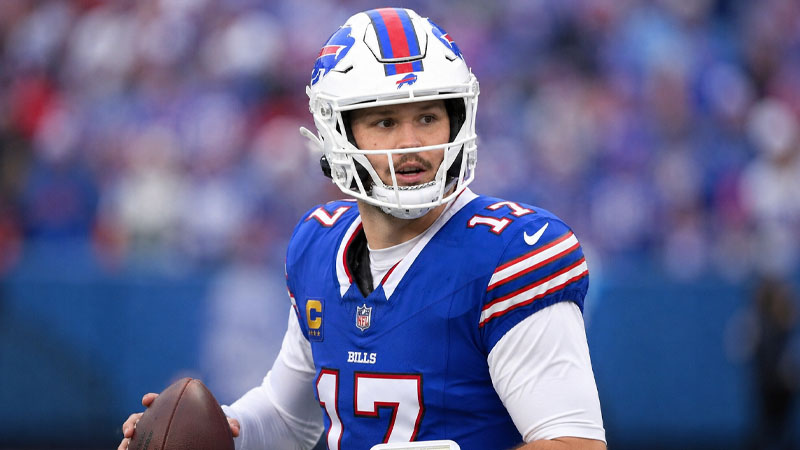
The story of the starting quarterback for the Buffalo Bills, however, defies this conventional template.
His path to the highest tier of football stands as a remarkable case study in athletic development, personal resilience, and the strategic navigation of non-traditional pathways.
Understanding where he played his college football requires examining a multi-stage journey that took him from a small farming town in California to a junior college program, and eventually to the high plains of Laramie, Wyoming.
This comprehensive analysis details every phase of his collegiate career, providing deep insights into his physical maturation, statistical achievements, and the lessons his rise offers to athletes and talent evaluators alike.
The High School Foundation: Firebaugh, California
To fully comprehend his collegiate journey, one must first look at his origins in Central California. He grew up in Firebaugh, a small agricultural community located in the San Joaquin Valley.
Attending Firebaugh High School, he was far removed from the primary recruiting hubs that major college football programs regularly monitor.
Despite possessing raw physical traits and multi-sport athleticism, he graduated from high school with zero scholarship offers from four-year collegiate programs. Several factors contributed to this recruiting omission:
- Geographic Isolation: Firebaugh was not on the standard travel path for major college recruiters, limiting his natural exposure.
- Late Physical Development: While he eventually matured into a towering professional frame, his physical development was still ongoing during his early high school years.
- Lack of Camp Exposure: He did not participate heavily in the national quarterback camp circuit, which often serves as the primary marketplace for elite recruiting stars.
Faced with a complete absence of collegiate scholarship offers, he had to make a strategic decision.
Rather than abandoning his athletic ambitions, he chose to leverage the junior college system to prove his capabilities and gain the attention of major football programs.
The JUCO Catalyst: Reedley College (2014)
In 2014, he enrolled at Reedley College, a junior college located in Reedley, California. The junior college path—often referred to as JUCO—is notoriously demanding.
It features limited budgets, minimal media coverage, and intense competition among athletes who are all fighting for a highly coveted transfer opportunity to a four-year institution.
For him, Reedley was the perfect laboratory to refine his game and showcase his arm talent. He spent just one season there, but it was highly impactful.
               [ Firebaugh High School ]
                          │
                          ▼ (Zero Scholarship Offers)
               [ Reedley College (2014) ]
                          │
                          ▼ (26 TD Passes / JUCO Exposure)
            [ University of Wyoming (2015-2017) ]
                          │
                          ▼ (Famous Idaho Potato Bowl Victory)
                 [ Buffalo Bills (NFL) ]
During his lone year at Reedley, his performance on the field began to match his physical potential. He took over the quarterback duties and delivered highly productive results:
- Passing Performance: He threw 26 touchdown passes during his single season at Reedley, demonstrating his ability to operate an offense productively.
- Physical Growth: His frame began to fill out, catching up with his natural height and laying the groundwork for his eventual professional build.
- Recruiting Visibility: The production at the junior college level finally generated the film necessary to capture the interest of Division I coaching staffs.
His time at Reedley serves as a reminder of the value of competitive game repetitions.
Rather than sitting on the bench at a major program, he played valuable downs, faced real pressure, and built the resume required to take the next step in his career.
The Cowboy Era: University of Wyoming (2015–2017)
His performance at Reedley College caught the attention of the coaching staff at the University of Wyoming.
Located in Laramie, Wyoming, the university offered him the opportunity to compete at the Football Bowl Subdivision (FBS) level as a member of the Mountain West Conference.
He transferred to Wyoming in 2015, beginning a three-year tenure with the Cowboys that would completely alter his career trajectory.
The Early Challenges in Laramie (2015)
His transition to Division I football was not without adversity. His initial season in 2015 was cut short due to a severe collarbone injury. This setback limited his playing time and delayed his emergence on the national stage.
However, the period of rehabilitation allowed him to deeply study the offensive system and prepare for a healthy return to the field.
The National Breakout (2016–2017)
Upon returning to full health, he secured the starting quarterback job and rapidly became one of the most intriguing players in college football.
Playing under a coaching staff that valued pro-style concepts, he was tasked with making complex defensive reads, managing protections, and executing throws across the entire field.
His statistical footprint at Wyoming reflects both his consistency and his big-play capability. Over his career with the Cowboys, he accumulated over 5,000 passing yards and registered 44 touchdowns.
He became known for his ability to make off-platform throws, escape pressure using his athleticism, and deliver deep passes with exceptional velocity.
Collegiate Progression: A Comparative Breakdown
To understand how his physical traits and statistical profiles evolved, it is useful to view his progression across the different levels of his amateur career.
| Collegiate Phase | Institution | Tenure | Key Metric / Achievement | Physical Profile |
|---|---|---|---|---|
| Junior College | Reedley College | 2014 | Threw 26 touchdown passes in a single season | Developing frame, raw athletic mechanics |
| Division I (FBS) | University of Wyoming | 2015–2017 | Accumulated over 5,000 passing yards and 44 touchdowns | Matured to 6’5″ and 237 lbs |
| Postseason Success | University of Wyoming | 2017 | Led team to a Famous Idaho Potato Bowl victory | Confirmed elite professional draft status |
The Postseason Climax: The 2017 Famous Idaho Potato Bowl
The culmination of his collegiate career came in December 2017 at the Famous Idaho Potato Bowl.
Facing a decision on whether to participate in the postseason game or preserve his health for the upcoming professional draft, he chose to play alongside his teammates one final time.
This decision paid off handsomely, resulting in a dominant postseason victory:
- The Matchup: Wyoming faced off against Central Michigan in Boise, Idaho.
- The Performance: He delivered a highly efficient and explosive performance, showcasing his elite arm strength with multiple touchdown passes early in the game.
- The Outcome: He led the Cowboys to a decisive Famous Idaho Potato Bowl victory in 2017, ending his collegiate career on a high note and solidifying his reputation as a big-game competitor.
This bowl victory was more than just a trophy; it was the final validation of his decision to transfer to Laramie. It proved that he could lead a program to postseason success and perform at a high level under national scrutiny.
Scouting Profile: Why His College Tenure Translated to NFL Stardom
Following the 2017 season, he declared for the professional draft, where he would eventually be selected in the first round by the Buffalo Bills.
Professional talent evaluators were enamored by the unique combination of physical traits and developmental upside that he displayed during his time at Wyoming.
Several key characteristics from his college career directly projected to his professional success:
- Elite Physical Stature: Standing at 6’5″ and weighing 237 lbs, he possessed the ideal size to withstand the physical demands of professional football. This size allowed him to shrug off defenders in the pocket and absorb hits when running.
- Exceptional Arm Talent: His ability to throw through high winds and cold weather in Laramie demonstrated that his arm strength was elite. Evaluators knew that if he could drive the ball through the challenging Wyoming climate, he could succeed in any cold-weather professional environment.
- Athletic Mobility: In addition to his passing arm, his ability to gain yards on the ground was highly apparent in college. He was not merely a pocket passer; he was a dual-threat weapon capable of picking up critical first downs with his legs.
- Resilience and Leadership: His path through the junior college ranks and his decision to stay and play in his final bowl game spoke volumes about his character, competitive drive, and locker-room leadership.
Strategic Lessons from an Unconventional Rise
His journey from an unrated high school prospect to a dominant collegiate star offers several critical insights for modern sports organizations, talent scouts, and developing athletes:
- Avoid Early Talent Categorization: Traditional recruiting models often write off athletes who do not mature early. His journey proves that physical development is non-linear, and late-blooming athletes can surpass early-reputed prospects if given the proper environment to grow.
- Valuing Repetitions Over Prestige: Choosing to play immediately at a junior college (Reedley) rather than sitting on the bench at a prestigious program allowed him to develop the necessary game feel and decision-making skills under real-game conditions.
- Environmental Adaptability: Playing in Laramie, Wyoming—characterized by altitude, cold temperatures, and shifting weather—forced him to develop a level of physical and mental toughness that directly prepared him for the elements of professional football.
Ultimately, where he went to college is not just a trivia answer; it is the foundation of his identity as an athlete.
His time at Reedley College and the University of Wyoming forged the physical tools, mental resilience, and competitive edge that define his status as one of the premier quarterbacks in professional football today.
His career remains a powerful testament to the fact that the destination matters far more than where the journey begins.