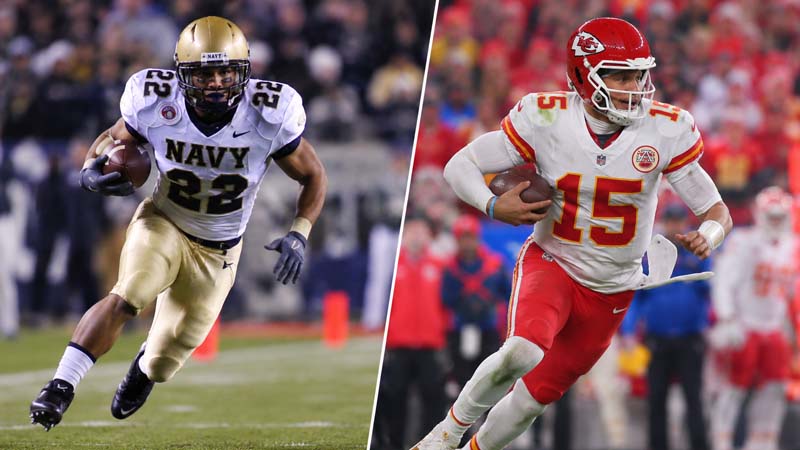
For over a century, American football has captivated millions of spectators, developing into a multi-billion-dollar cultural phenomenon.
Yet, while the fundamental objective of advancing an oblong ball across a hundred-yard field remains identical, the execution of the game diverges sharply between Saturdays and Sundays.
The distinction between professional football and collegiate football is not merely a matter of athletic compensation; it is a fundamental variance in design, philosophy, and execution.
To the casual observer, the games might appear interchangeable. However, a deeper inspection reveals that different regulations, roster constraints, and geographic geometries dictate entirely different tactical systems.
One operates as a clinical display of razor-thin margins and optimized precision; the other exists as an expansive, highly volatile spectacle driven by strategic asymmetry and deep-seated traditions.
The Technical Rules: Field Geometry and Mechanical Differences
The structural differences between the professional and collegiate levels are encoded directly into their respective rulebooks.
These regulations do not merely change individual outcomes; they alter the entire defensive and offensive architecture of the sport.
1. The Boundary of Play: One Foot vs. Two Feet
In the professional ranks, the requirements for a legal reception are uncompromising. To secure a catch, a receiver must maintain control of the ball while ensuring that both feet—or any body part other than the hands—make contact within the field boundaries before stepping out.
This two-feet-in rule demands an extraordinary level of body control, sideline awareness, and coordination from professional athletes.
Conversely, the collegiate rulebook adopts a more liberal standard, requiring only a single foot to be established in bounds for a completion to be ruled valid.
This single difference dramatically expands the vertical and horizontal passing windows for collegiate quarterbacks.
Defensive backs in college must defend a wider functional area, as passes thrown closer to the boundary lines are far easier for collegiate receivers to bring in than their professional counterparts.
2. Down by Contact: The Physicality of the Whistle
Perhaps no rule alters play continuity as much as the regulation governing when a play is officially dead. In the professional league, a player who slips, stumbles, or falls to the turf without being touched by a defender is not considered down.
They are fully permitted to stand back up, regain their balance, and continue advancing the ball until an opponent physically touches them to halt the play. This “down by contact” rule rewards continuous awareness and keeps plays alive when defenders fail to finish a tackle.
In the collegiate system, however, the play is ruled dead immediately when any part of the ball-carrier’s body—aside from their hands or feet—makes contact with the ground.
Even if a player slips completely unprompted, their knee, elbow, or hip touching the turf immediately halts progression.
This eliminates the possibility of self-recovery, prioritizing player safety and simplified officiating over extended physical sequences.
3. The Geometry of the Turf: Hash Marks and Spacing
To understand the strategic landscape of a football field, one must examine the hash marks—the parallel lines running down the center of the field that designate where the ball is spotted for the start of each play.
- Collegiate Spacing: The hash marks in college football are spaced significantly wider apart. Because the ball is spotted where the previous play ended (within the boundaries of the hash marks), a ball spotted on a wide collegiate hash mark creates an asymmetrical field. The “short side” (or boundary) becomes extremely cramped, while the “wide side” (or field) opens up vast expanses of grass. This encourages collegiate offenses to run wide sweeps, screens, and space-based passing games designed to isolate defenders in open territory.
- Professional Spacing: Professional hash marks are much narrower, aligned closely with the uprights of the goalposts. This tighter spacing ensures the ball is almost always spotted near the center of the field, regardless of where the previous play concluded. This symmetry forces professional offenses to attack the field vertically and execute with absolute precision, as they cannot rely on the natural spatial imbalances created by wider hash marks.
4. Penalties and Consequences: The Spot Foul vs. The Fifteen-Yard Cap
The penalty structure for pass interference highlights another significant divergence in game management and risk-reward calculation. In the professional league, defensive pass interference is a spot foul.
If a defender commits an infraction forty yards down the field, the ball is placed at the exact spot of the foul, granting the offense a massive gain.
This makes pass interference incredibly punishing and discourages defensive players from committing intentional penalties to prevent deep completions.
In college football, defensive pass interference is generally capped at a maximum of fifteen yards, regardless of where the physical contact occurred downfield.
This structural cap creates a unique tactical scenario: if a collegiate defender realizes they have been beaten on a deep throw, it is often strategically advantageous to deliberately commit an interference penalty, surrendering a mere fifteen yards rather than allowing a massive touchdown play.
Tactical Pace: Rosters, Game Speed, and Clock Management
Beyond the physical boundaries of the turf, the systems of roster construction and game management dictate the velocity and scoring profiles of both formats.
1. Roster Composition and the Talent Gap
The professional league operates with a strict, highly regulated 53-player active roster limit. This narrow margin means every single athlete on a professional sideline represents the absolute elite tier of the global talent pool.
Because there is virtually no drop-off in athletic capability from the primary starter to the reserve backup, the professional game is characterized by blinding speed, exceptional physical alignment, and lower-scoring, defensive struggles. The margin of error is practically nonexistent.
College football programs operate on a vastly different scale, maintaining massive rosters that often exceed one hundred players.
This expansive volume of personnel leads to substantial talent disparities, not only between different programs but within individual rosters themselves.
High-resource powerhouse schools can field lineups stacked with future professional prospects, while smaller or lower-funded schools struggle to match that depth.
These wide talent gaps frequently result in highly asymmetrical matchups, runaway offensive performances, and highly volatile scoreboard swings.
2. Physical Specifications of the Ball
Even the primary tool of the trade—the football itself—varies between the two tiers:
- The Professional Ball: The ball utilized in the professional league is slightly larger, features a smoother leather surface, and is meticulously prepared with a specialized mud-rubbing process to optimize grip and control for elite quarterbacks.
- The Collegiate Ball: Collegiate footballs are designed with distinct white tracking stripes painted on both ends. These stripes are not merely aesthetic; they are designed to provide quarterbacks, receivers, and officials with increased visual tracking and rotation visibility against the varied stadium backdrops of the college landscape.
3. The Temporal Framework: Managing the Clock
How time is managed in the final minutes of a game dictates the drama and strategy of late-game drives.
In the professional league, the clock is designed to maintain a swift, relentless pace, continuing to run after almost every first down throughout the entire contest.
This demands impeccable organizational efficiency, structured play-calling, and rapid communication from coaching staffs.
In college football, the clock operates with a critical interruption: it stops briefly following any first down achieved within the final two minutes of either half.
This stoppage allows the chain crew to reset the yardage markers before the game clock resumes.
Consequently, collegiate offenses have a distinct advantage when attempting two-minute drills, as they can systematically march down the field and pause the clock through physical progression without being forced to burn precious timeouts.
Extratemporal Drama: Resolving Tie Games
When four quarters of regulation fail to determine a victor, the contrasting systems of overtime highlight the differing priorities of the two leagues.
+---------------------------------------------------------------------------------+
|                           OVERTIME COMPARISON MATRIX                            |
+--------------------------+------------------------------------------------------+
| PROFESSIONAL LEVEL (NFL) | • 10-minute extra period                         |
|                          | • Sudden-death hybrid rules                      |
|                          | • First-drive touchdown wins immediately         |
|                          | • Opponent gets possession if first drive is a FG |
+--------------------------+------------------------------------------------------+
| COLLEGIATE LEVEL         | • No clock; alternating possessions              |
|                          | • Drives begin at the opponent's 25-yard line    |
|                          | • High-scoring, rapid-fire sequence              |
|                          | • Designed to guarantee a decisive winner        |
+---------------------------------------------------------------------------------+
The professional overtime period is a ten-minute frame that retains the traditional kickoffs and field-position dynamics of regulation. If the team that wins the coin toss scores a touchdown on their opening possession, the game is instantly over.
If they score a field goal, the opposing team is granted a single drive to either tie the game with a field goal of their own or win it with a touchdown. This system values field position, defensive endurance, and strategic conservation.
Collegiate overtime completely discards the traditional clock, transition, and kickoff structures. Instead, teams take turns receiving the ball directly at the opponent’s 25-yard line, alternating offensive possessions in a sudden-death format until a clear winner emerges.
Because field position is guaranteed, this system strips away the defensive advantages of punting and deep kicks, transforming the extra period into a high-scoring, rapid-fire shootout that keeps fans on the edge of their seats.
The Atmosphere: Cultural and Environmental Dynamics
The structural and mechanical differences of these two formats ultimately manifest in the environments they cultivate.
The professional environment is a highly managed, premium entertainment industry. With franchises representing major metropolitan areas, the atmosphere is professional, polished, and structured.
Because the game speed is so fast and the athletes are so precise, professional games often resemble high-stakes games of physical chess, where a single misstep or minor defensive breakdown can decide a multi-million-dollar season.
In contrast, college football is fueled by student-athletes, collegiate pride, and deep regional traditions. Because college rosters are larger and the talent gap between teams is wider, the on-field product is naturally more volatile.
This volatility—combined with rule structures like the single-foot catch, wider hash marks, and collegiate clock stoppages—results in higher-scoring games, unexpected upsets, and a passionate, rowdy stadium culture.
On any given Saturday, the sheer unpredictability of collegiate matchups creates an emotional resonance that is difficult to replicate in the clinical world of professional sports.
Conclusion: Choosing Your Gridiron Experience
Ultimately, professional and collegiate football represent two distinct interpretations of the same classic sport.
The professional ranks offer a masterclass in athletic precision, where elite rosters operate under strict rules that leave no room for error.
College football offers a passionate embrace of tradition, where student-athletes play under rules that encourage explosive plays, high scores, and dramatic, unpredictable finishes.
Whether you prefer the clinical perfection of Sunday or the raucous energy of Saturday, both formats offer a unique window into the strategic depth of American football.