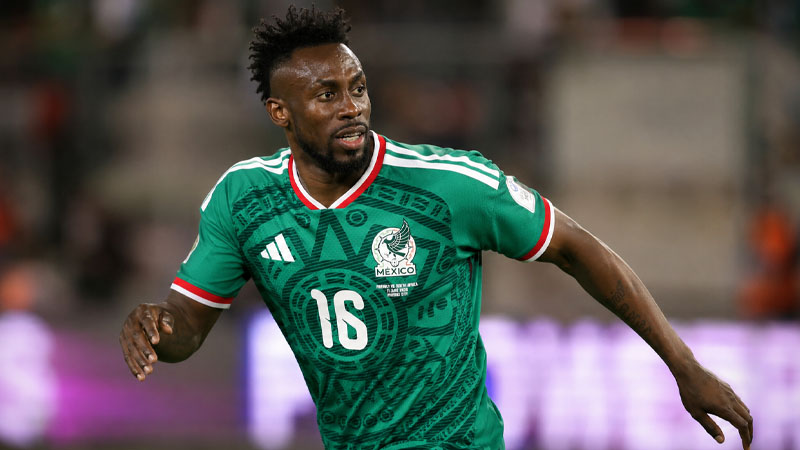
Julián Quiñones has become one of the most discussed figures in international football, not only for his clinical finishing but for his unique cultural and legal journey.
As a striker who recently etched his name into the history books at the Estadio Azteca, his background serves as a fascinating study of modern sports identity.
Born in Colombia and now a proud Mexican citizen, Quiñones represents a bridge between two proud footballing nations.
Understanding his nationality requires looking beyond a passport; it involves tracing a path from his early days in South America to his emergence as a cornerstone of the Mexico National Team.
Understanding the Dual Roots of Julián Quiñones
The story of Julián Quiñones begins long before he donned the green jersey of El Tri. His identity is deeply rooted in the Pacific coast of South America, a region known for producing explosive athletic talent.
To understand the man he is today, one must first look at the foundations laid during his formative years in Colombia and how those early experiences shaped his professional trajectory.
Born in Magüí Payán, Nariño
Quiñones was born in Magüí Payán, located in the Nariño department of Colombia. This region is characterized by its deep love for football and has been a nursery for many professional players.
Growing up in this environment, Quiñones developed the physical strength and technical flair that would later make him a standout in North American leagues.
His Colombian heritage remains a significant part of his personal history, providing the initial spark for a career that would eventually span continents.
Early Youth Career and Development
While he is now a Mexican icon, his initial footballing education took place within the Colombian system. He represented Colombia at the youth level during the early stages of his career, showcasing the potential that scouts quickly noticed.
However, the professional opportunities that materialized for him were centered in Mexico. This early shift from the Colombian youth ranks to the Mexican league system set the stage for a long-term integration that would eventually lead to a permanent change in his international allegiance.
The Legal Journey to Mexican Citizenship
Transitioning from a foreign professional to a national team hero is a process that involves significant legal and personal milestones.
For Quiñones, this was not a decision made overnight but the culmination of years spent living and working within the Mexican culture.
His commitment to the country was formalized through a rigorous naturalization process that allowed him to represent his adopted home on the world stage.
| Milestone | Description | Date/Details |
|---|---|---|
| Arrival in Mexico | Moved to Mexico as a teenager to pursue a professional career. | Mid-2010s |
| Residence Requirement | Completed the necessary years of residency to apply for naturalization. | 2015-2023 |
| Citizenship Granted | Legally obtained his Mexican citizenship, finalizing his dual status. | October 2023 |
| FIFA Approval | Received authorization to switch international allegiance to Mexico. | Late 2023 |
International Allegiance: Why Mexico Instead of Colombia?
One of the most frequent questions regarding Julián Quiñones concerns his decision to play for Mexico over his birth country, Colombia.
In the world of FIFA regulations, a player’s international future is often determined by where they feel most valued and where they have built their adult lives.
For Quiñones, the choice was a reflection of his gratitude toward the country that provided him with a professional platform.
Pledging a Senior Career to El Tri
Despite his history with the Colombian youth teams, Quiñones made the definitive choice to pledge his senior international career to Mexico.
This move was met with significant anticipation from the Mexican fanbase, who saw in him the dynamic offensive threat the team had been missing.
By choosing Mexico, he signaled his full integration into the nation’s sporting fabric, moving beyond the status of a foreign “legionnaire” to that of a true local representative.
Navigating the Naturalization Narrative
The inclusion of naturalized players in national teams often sparks debate among traditionalists. However, Quiñones handled this transition with professionalism and consistent performance.
His October 2023 citizenship was not merely a tactical move for his career; it was an acknowledgment of his life in Mexico, where he had resided since he was a teenager.
This long-term residency helped him bypass many of the criticisms typically leveled at naturalized athletes, as he had effectively grown up within the Mexican football system.
Global Impact at the 2026 FIFA World Cup
The ultimate validation of a player’s international status often comes during the FIFA World Cup. For Quiñones, the 2026 tournament provided a stage to silence any remaining doubters and solidify his legacy as a Mexican hero.
The opening match of the tournament was not just a game; it was a cultural moment that defined his career and justified his decision to change nationalities.
The Historic Opening Goal
In a moment that will be replayed for decades, Julián Quiñones scored the very first goal of the 2026 FIFA World Cup. Playing at the iconic Estadio Azteca, he found the back of the net during Mexico’s opening match against South Africa.
This goal was the catalyst for a 2-0 victory, setting the tone for the host nation’s campaign. Scoring the opening goal of a World Cup is a rare feat, and doing so as a naturalized citizen added a layer of historic depth to the achievement.
A Hero at the Estadio Azteca
The Estadio Azteca has hosted some of the greatest moments in football history, from Pelé to Maradona. By scoring such a crucial goal in that venue, Quiñones joined an elite group of players who have left an indelible mark on the stadium’s legacy.
The roar of the Mexican fans as he celebrated confirmed his status not as an outsider, but as a beloved son of the nation.
This performance effectively ended any debate regarding his place on the team, proving that nationality is as much about contribution and heart as it is about birth.
Professional Career and Club Success
While his international exploits have garnered headlines, his club career has been the engine behind his rise.
Quiñones has demonstrated a remarkable ability to adapt to different leagues and tactical systems, maintaining high scoring rates regardless of the environment.
His journey from the youth academies of Colombia to the professional ranks of Mexico and eventually the Middle East illustrates a relentless drive for growth.
- Move to Mexico as a Teenager: Arrived in the country at a young age, allowing for deep cultural and tactical integration.
- Liga MX Dominance: Established himself as one of the most feared attackers in the Mexican league, winning multiple titles and individual honors.
- Transition to Saudi Pro League: Currently plays for Al-Qadsiah FC in the Saudi Pro League, continuing his career on an increasingly global scale.
- Tactical Versatility: Known for his ability to play as a central striker or a secondary forward, making him a valuable asset for both club and country.
The Legacy of Naturalized Players in Mexican Football
Julián Quiñones is not the first naturalized player to represent Mexico, but his success has brought the conversation into the modern era.
His journey highlights the changing landscape of global football, where migration and personal history often intersect with national identity.
He follows in the footsteps of other iconic figures who chose to represent Mexico, further diversifying the narrative of what it means to play for El Tri.
Breaking Traditional Barriers
For many years, there was a hesitation within some segments of Mexican football culture to rely on naturalized talent. Quiñones has helped shift this perspective by showing that commitment to the badge is the most important factor.
His story is one of mutual respect: Mexico gave him a career and a home, and in return, he gave the country a historic World Cup moment.
This synergy is becoming increasingly common in international sports, and Quiñones stands as a prime example of its success.
Inspiring the Next Generation
His success serves as an inspiration for other young players who find themselves in similar positions. Whether they are migrants or individuals with dual heritage, Quiñones proves that one can honor their roots while fully embracing a new national identity.
His journey from Magüí Payán to the heights of the World Cup is a testament to the fact that talent and hard work can transcend borders and traditional definitions of nationality.
Frequently Asked Questions About Julián Quiñones
Where was Julián Quiñones born?
He was born in Magüí Payán, Nariño, Colombia.
What is his current nationality?
He is a naturalized Mexican citizen. He officially received his citizenship in October 2023.
Which national team does he play for?
He plays for the Mexico National Team, commonly known as El Tri.
Did he ever play for Colombia?
He represented Colombia at the youth level but never made a senior appearance for their national team, allowing him to switch his allegiance to Mexico.
What club does he currently play for?
He currently plays for Al-Qadsiah FC in the Saudi Pro League.
What is his most significant career achievement?
Scoring the first goal of the 2026 FIFA World Cup at the Estadio Azteca is widely considered his most historic moment.
Conclusion: A Global Icon of Modern Football
The story of Julián Quiñones’ nationality is a narrative of evolution and embrace. By moving from Colombia to Mexico as a teenager, he embarked on a path that would eventually redefine his life and the expectations of a football-mad nation.
His decision to represent Mexico was not a rejection of his past, but an affirmation of his present and future.
Today, he stands as a symbol of the modern athlete—someone whose identity is shaped by multiple cultures and whose impact is felt on a global scale.
His historic goal at the 2026 World Cup served as the ultimate bridge between his two worlds, proving that no matter where a journey begins, it is the destination and the heart shown along the way that truly define a legacy.
As he continues his career in the Saudi Pro League and leads the Mexican attack, the world will continue to watch a player who truly belongs to the global stage.