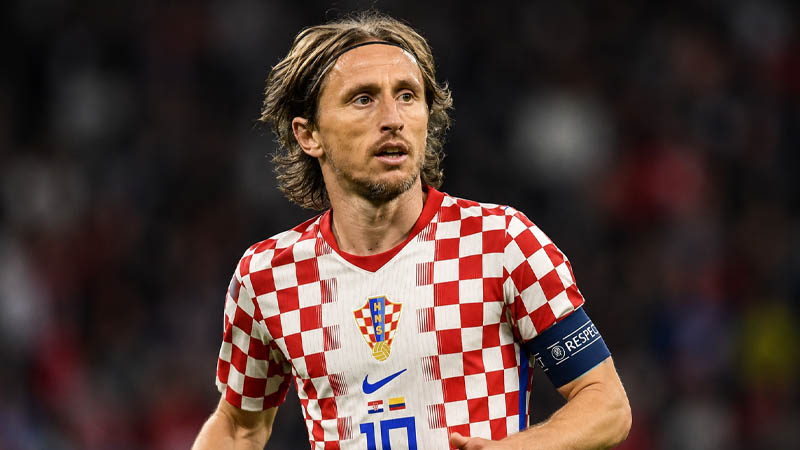
The prospect of Luka Modrić joining Lionel Messi at Inter Miami once felt like an inevitability, a final masterstroke for David Beckham’s ambitious project in Florida.
As the Croatian maestro saw his minutes dwindle at the Santiago Bernabéu during the 2023/24 season, the footballing world braced for another legendary arrival in South Beach.
However, the intersection of modern football strategy, rigid league regulations, and Modrić’s own professional hunger led to a different outcome.
This analysis explores the intricate timeline of the failed move, the strategic pivot by Inter Miami, and Modrić’s subsequent decision to continue his elite-level career in Europe.
The Genesis of the Inter Miami Rumors
The narrative surrounding Modrić’s potential move to Major League Soccer (MLS) gained significant traction when the veteran midfielder’s role at Real Madrid underwent a visible shift.
For a player accustomed to being the heartbeat of the team, falling to 15th in the squad for minutes played was a clear signal that an era was ending.
This lack of playing time, which saw him benched for consecutive games for the first time since 2012, fueled speculation that the 2018 Ballon d’Or winner was ready for a new challenge.
The David Beckham and Lionel Messi Connection
Rumors intensified following high-profile interactions between the player and the Inter Miami hierarchy. Reports surfaced that David Beckham had met with Modrić on the Croatian coast, a meeting that many viewed as the opening of formal negotiations.
Adding to the allure was the personal interest shown by Lionel Messi. The Argentine legend reportedly requested Modrić’s inclusion in the squad to bolster a midfield that already featured Sergio Busquets.
This “super-team” concept aimed to unite the greatest rivals of the El Clásico era under the Miami sun, creating a global marketing and sporting juggernaut.
Financial and Contractual Framework
As negotiations progressed in the media, specific details of a potential deal began to emerge.
Discussions reportedly centered on a contract that would run until July 2026, perfectly aligning with the next FIFA World Cup. The proposed financial package included an annual salary of approximately $2.5 million.
For Modrić, the move offered more than just a paycheck; it represented a lifestyle shift for his family and a chance to play in a league that was rapidly becoming the center of global football attention due to the “Messi effect”.
Why the Inter Miami Move Never Materialized
Despite the heavy romanticism of the deal, the move eventually collapsed. While many fans expected a formal announcement, the reality of MLS roster building and the specific needs of the Miami squad took precedence.
The decision-making process was not merely about star power but about the long-term sustainability of the roster under strict financial constraints.
MLS Salary Cap and Roster Constraints
Navigating the MLS salary cap is a complex task even for the most seasoned executives. Inter Miami had already utilized significant resources to secure Messi, Luis Suárez, Sergio Busquets, and Jordi Alba.
Adding another veteran of Modrić’s stature would have put an immense strain on the club’s “Designated Player” slots and General Allocation Money.
Furthermore, the squad’s primary deficiencies were identified in the defensive line rather than the central midfield, leading the front office to prioritize reinforcements who could provide athleticism and longevity.
A Strategic Pivot Toward Youth
A critical factor in the rejection of the Modrić deal was a fundamental shift in Inter Miami’s recruitment philosophy. After initially focusing on established legends, the club began to prioritize younger talents to balance the age profile of the squad.
The technical staff recognized that relying too heavily on players nearing 40 could lead to issues with speed and durability in a league known for its physical demands.
This strategic pivot meant that even a player of Modrić’s caliber was viewed through the lens of “opportunity cost,” where his signing might block the development or acquisition of a high-potential younger player.
| Feature | Rumored Inter Miami Proposal | Actual AC Milan Tenure |
|---|---|---|
| Contract Duration | July 2026 | June 30, 2026 |
| Annual Salary | $2.5 Million | Undisclosed (Free Transfer) |
| Primary Motivation | Family & MLS Growth | Elite Competition & WC 2026 Prep |
| Role | Marquee DP Legend | Vital Leader & Midfield Engine |
The AC Milan Chapter: Choosing Elite Competition
When it became clear that the Miami deal would not proceed, Modrić did not opt for the lucrative offers coming from Saudi Arabia, which he had already rejected once before. Instead, he chose to remain at the pinnacle of European football.
His move to AC Milan on a free transfer was a statement of intent, proving that he believed his “level” was still that of the Champions League rather than a “sunset league”.
Maintaining Form for the 2026 World Cup
Modrić’s primary sporting objective remains leading the Croatian national team. He has consistently expressed a desire to stay in Europe to ensure he remains in peak physical condition for the 2026 World Cup.
Serie A, with its tactical depth and slower pace compared to the Premier League, has proven to be the perfect environment for a 40-year-old technician to remain effective.
By playing in Italy, he continues to test himself against top-tier tactical setups, ensuring his sharpness for international duty.
The Extension and Future Plans
Currently, Modrić is much more than a peripheral figure in Milan. He has established himself as a vital leader in the dressing room and a consistent performer on the pitch.
His current contract runs through June 2026, but recent reports suggest that his impact has been so profound that he may trigger a one-year extension option.
This would keep him at the San Siro through the 2026/27 season, potentially taking his career past his 41st birthday before he considers retirement or a secondary role in football management.
Tactical Analysis: The “Old and Slow” Debate
One of the most persistent criticisms during the negotiation phase with Inter Miami was the concern that the team was becoming “old and slow”.
Fans and analysts pointed to the presence of aging legends and wondered if adding a 40-year-old midfielder would exacerbate the team’s inability to track back against the high-press, athletic sides typical of the MLS.
- Athleticism vs. IQ: While Modrić lacks the raw speed of his younger years, his tactical intelligence and passing range remain elite, often neutralizing faster opponents through superior positioning.
- Squad Balance: The failure of the Miami move highlights the necessity of “workhorses” in a squad to support high-IQ veterans. Miami eventually sought younger, more mobile midfielders to complement Busquets and Messi.
- The Saudi Alternative: Modrić’s refusal of the Saudi Pro League—despite its massive financial offers—underscores his commitment to competitive integrity over a comfortable retirement.
Expert Insights on the Evolution of MLS Strategy
The Modrić saga serves as a case study for the evolution of Major League Soccer. The league is moving away from its reputation as a “retirement home” for European stars.
While the “Messi Effect” brought a wave of veterans to Florida, the subsequent rejection of Modrić signals that even the most ambitious clubs must now adhere to a balanced roster-building model.
This model prioritizes a mix of global icons for commercial viability and young, “under-the-radar” prospects for on-field success.
The Impact on Inter Miami’s Legacy
By not signing Modrić, Inter Miami avoided the trap of becoming a pure exhibition team. Instead, they have attempted to integrate their legendary core with players in their mid-20s who can handle the physical “miles” required throughout a grueling MLS season.
This balance is essential for long-term competitiveness, especially as the league continues to improve in quality and speed. Modrić, meanwhile, has preserved his legacy as a player who never truly “stepped down” from elite competition.
Frequently Asked Questions
Is Luka Modrić currently playing for Inter Miami?
No, Luka Modrić is not an Inter Miami player. He currently plays for AC Milan in Italy’s Serie A.
Why did Luka Modrić not sign with Inter Miami?
The deal failed primarily due to Inter Miami’s shift toward a younger squad hierarchy and the financial constraints of the MLS salary cap and Designated Player slots.
Did Lionel Messi want Modrić in Miami?
Yes, reports indicated that Messi was personally interested in having Modrić join the team and had reached out to him regarding the move.
How long is Modrić’s contract with AC Milan?
He is under contract with AC Milan until June 30, 2026, with reports suggesting a possible extension through 2027.
Did Modrić reject a move to Saudi Arabia?
Yes, Modrić turned down significant offers from the Saudi Pro League to remain in Europe and prepare for the 2026 World Cup.
Conclusion: A Legacy Defined by Competition
The story of Luka Modrić and Inter Miami is a testament to a player who refuses to let his age define his limitations.
While the allure of Miami was strong, Modrić’s commitment to the highest level of competition led him to Italy, where he continues to defy expectations. For Inter Miami, the “miss” on Modrić was a strategic choice that reflects the growing complexity of the MLS.
As we look toward 2026, Modrić remains a standard-bearer for longevity, proving that class is permanent, even if the destination changes.