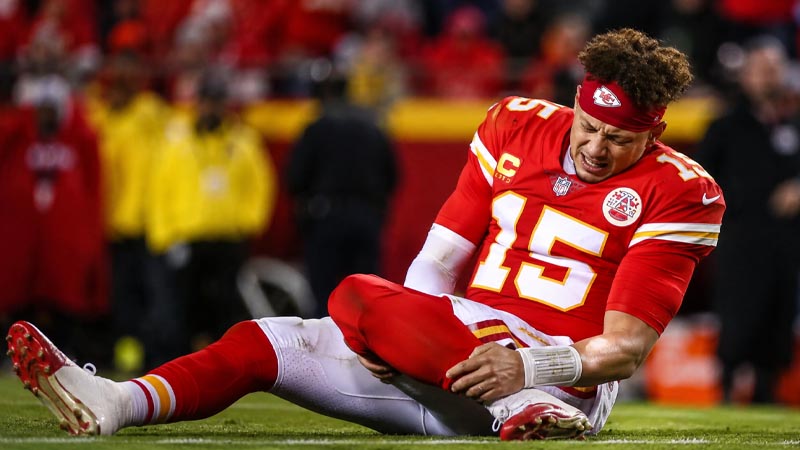
Late-season professional football is fundamentally a war of attrition. By the time December arrives, the physical toll of months of high-impact collisions reaches a boiling point, transforming the hunt for the Lombardi Trophy into a test of survival.
Yet, even by the brutal standards of modern gridiron competition, the events of Week 15 of the 2025 season will be remembered as a historic turning point.
In a single, devastating Sunday afternoon, a series of catastrophic physical setbacks to some of the league’s most elite players dismantled long-standing playoff projections and altered the trajectory of multiple franchises.
From the heartland of Kansas City to the tundra of Green Bay, fan bases and front offices alike were forced to confront a harsh new reality as their championship aspirations evaporated or were severely compromised.
This deep-dive analysis unpacks the tactical, organizational, and postseason implications of a weekend that shook the foundations of the football world.
The Anatomy of a Crisis: Mahomes, Parsons, and the Devastation of the ACL
To understand the magnitude of the shift that occurred in Week 15, one must first examine the specific medical and tactical losses suffered by two of the league’s premier franchises.
The anterior cruciate ligament (ACL) is the crucial stabilizing structure of the knee, responsible for facilitating the rapid lateral cuts and explosive changes of direction that define elite athletic performance. When it fails, the ripple effects are felt across an entire organization.
The Fall of Patrick Mahomes in Kansas City
For the Kansas City Chiefs, their entire offensive identity is built upon the unique off-platform playmaking ability of quarterback Patrick Mahomes.
During a highly contested divisional matchup against the Los Angeles Chargers, that foundation fractured. Mahomes took an awkward, unnatural step on the turf, resulting in a clean tear of his anterior cruciate ligament.
The immediate consequence of an ACL tear is the absolute termination of a player’s active campaign, leaving Mahomes’ long-term return timetable shrouded in uncertainty.
Tactically, Mahomes’ injury strips the Chiefs of their primary vertical threat and their ability to extend plays outside the pocket.
Modern defensive coordinators spent years designing complex coverages to contain his scrambling ability; without that threat, opponents can shift to highly aggressive, single-high safety configurations designed to choke out short passing lanes.
Micah Parsons and the Green Bay Defensive Vacuum
Simultaneously, the Green Bay Packers experienced an equally devastating defensive blow in Denver.
While pursuing Broncos rookie quarterback Bo Nix on a non-contact play, elite edge rusher Micah Parsons went down in obvious agony, with subsequent medical evaluations confirming a feared torn ACL.
Parsons is not merely a pass rusher; he is a defensive chess piece whose versatility allows the Packers to run unique blitz packages and simulated pressures.
His ability to line up at defensive end, off-ball linebacker, or even over the slot forces opposing offensive lines to shift their protection schemes, creating favorable matchups for Green Bay’s secondary rushers.
Without Parsons anchoring the defense, the Packers lose their ability to generate pressure with a standard four-man rush.
This forces the defensive coaching staff to blitz more frequently, leaving their cornerbacks exposed in isolated man-to-man coverage.
A Historic Fall: The Kansas City Chiefs and the Postseason Sideline
The loss of Patrick Mahomes was not merely a physical blow; it was a mathematical death sentence for the Chiefs’ 2025 campaign.
The defeat at the hands of the Chargers, combined with the loss of their superstar quarterback, officially clinched a rare missed postseason for Kansas City.
+-------------------------------------------------------------+
|               KANSAS CITY CHIEFS: THE FALLOUT               |
+-------------------------------------------------------------+
|  * Mahomes Suffers Torn ACL (Out Indefinitely)              |
|  * Divisional Loss to Los Angeles Chargers                  |
|  * Official Postseason Elimination Clinched                 |
|  * First Healthy-Start Postseason Miss of Mahomes Era        |
+-------------------------------------------------------------+
For nearly a decade, the road to the AFC Championship has run through Arrowhead Stadium. The Chiefs have established a standard of late-season excellence that made their presence in the bracket feel like an annual inevitability.
To see a healthy-start Kansas City squad completely excluded from the postseason tournament is a historic anomaly that reshapes the power dynamics of the entire conference.
The Schematic Collapse
Without Mahomes, the Chiefs’ offensive scheme must undergo a complete philosophical shift. The backup quarterback position is designed for game management, not dynamic playmaking. Consequently, the playbook must be compressed. This means:
- An increased reliance on a heavy, zone-blocking running game to stay ahead of the chains.
- A dramatic reduction in deep vertical concepts, replaced by high-percentage quick outs, screens, and curl routes.
- An immense burden placed on the defensive unit to keep games low-scoring, limiting the team’s margin for error to near-zero.
This elimination marks the end of an era of unchallenged AFC dominance and forces the Chiefs’ front office to ask difficult questions about their roster construction and depth management heading into the offseason.
Green Bay’s Fractured Super Bowl Dream: The Dual Blows in Denver
While Kansas City mourned the end of their season, the Green Bay Packers saw their status as a complete NFC powerhouse severely threatened during a brutal matchup against the Denver Broncos.
Green Bay did not just lose their defensive anchor in Parsons; they suffered a compounding offensive blow that threatens to derail their entire offensive system.
Christian Watson’s Chest Injury and the Vertical Threat
In addition to the devastating loss of Parsons on the defensive side of the ball, emerging wide receiver Christian Watson was forced to exit the Denver game early due to a chest injury.
Watson’s physical profile—specifically his rare combination of size and deep-field speed—is the engine that drives the Packers’ play-action passing game.
+-------------------------------------------------------------+
|            GREEN BAY PACKERS: A MULTI-FRONT CRISIS          |
+-------------------------------------------------------------+
|  DEFENSIVE BLOW: Micah Parsons (Feared Torn ACL)           |
|  * Strips defense of premier edge rusher and chess piece   |
|                                                             |
|  OFFENSIVE BLOW: Christian Watson (Chest Injury)            |
|  * Removes primary vertical boundary threat and deep speed  |
+-------------------------------------------------------------+
When Watson is on the field, opposing free safeties must play with deep depth, which naturally opens up intermediate passing lanes for tight ends and slot receivers.
Without him, the defense can play closer to the line of scrimmage, compressing the field and making it significantly harder for the Packers to establish a consistent offensive rhythm.
The loss of multiple core starters on both sides of the ball in a single afternoon represents a worst-case scenario for a coaching staff.
To salvage their championship hopes, Green Bay must completely adapt, transitioning from a dynamic, big-play team into a disciplined, ball-control unit that wins through execution rather than raw athletic superiority.
The NFC West Ripple Effect: Davante Adams and the Rams’ Offensive Puzzle
The wave of physical devastation in Week 15 extended all the way to the West Coast, where the Los Angeles Rams found their offensive outlook clouded following a physical battle against the Detroit Lions.
Superstar wide receiver Davante Adams was forced to exit the game early due to a severe non-contact hamstring injury.
The Danger of the Non-Contact Hamstring Setback
Hamstring strains, particularly of the non-contact variety, are notoriously difficult injuries for perimeter pass-catchers.
They require extensive rest to heal properly, and players who return too quickly run a high risk of re-injury.
For a route-runner of Adams’ caliber, whose game is built on sudden deceleration and explosive releases off the line of scrimmage, a compromised hamstring limits his effectiveness.
Tactical Adjustments for Sean McVay
With Adams sidelined or limited, the Rams’ offensive staff must scramble to redistribute targets.
- Stretching the Boundary: The coaching staff must lean on younger, unproven speedsters to keep opposing safeties from crowding the box.
- Feeding the Middle: The tight end position and running backs must become primary options in the short passing game, utilizing quick horizontal concepts to move the chains.
- Adjusting Personnel Groupings: The Rams may be forced to abandon their preferred 11-personnel (three wide receivers) packages in favor of 12-personnel (two tight ends) to provide extra protection for the quarterback and establish a stronger presence in the running game.
As the NFC West race enters its final, pressure-packed weeks, the Rams’ ability to quickly integrate these adjustments and keep their offense functional will decide whether they secure a playoff berth or join the Chiefs on the sideline.
Next Man Up: The Strategic Imperative of Roster Depth
The catastrophic events of Week 15 highlight a fundamental truth of professional football: the strength of an organization is defined by the quality of its depth. When superstar players go down, the franchise’s survival depends on the preparation and development of its reserves.
+-----------------------------------------------------------------+
|               ROSTER DEPTH VS. STAR-HEAVY CAP DESIGNS           |
+-----------------------------------------------------------------+
|  STAR-HEAVY BLUEPRINT (Top-Heavy)                               |
|  * Allocates 60-70% of cap to top 5-7 superstar players.         |
|  * High ceiling: Unstoppable when completely healthy.           |
|  * Low floor: A single major physical setback derails season.   |
|                                                                 |
|  DEPTH-ORIENTED BLUEPRINT (Balanced)                            |
|  * Spreads cap evenly; invests in premium backup positions.      |
|  * Mid-tier ceiling: Lacks explosive individual playmakers.      |
|  * High floor: Resilient to injuries; sustains playoff pushes.  |
+-----------------------------------------------------------------+
The Front-Office Dilemma: Stars vs. Depth
NFL general managers face a continuous challenge when structuring their active rosters under a hard salary cap.
- The Top-Heavy Approach: Allocating a massive percentage of the cap to elite superstars like Mahomes, Parsons, or Adams. This approach guarantees elite performance at key positions but leaves the roster incredibly thin at the backup spots.
- The Depth-Oriented Approach: Structuring contracts to allow for the acquisition of high-quality, experienced depth pieces. This ensures the team can survive injuries, but it often means sacrificing the elite playmaking talent required to win championship matchups.
When a team suffers a cluster of injuries to key starters, the focus shifts entirely to the coaching staff’s ability to develop the bottom third of the roster.
Backup players must be integrated into the game plan without a drop-off in execution, a task that requires exceptional coaching, simplified terminology, and a clear understanding of each player’s unique physical strengths and limitations.
The Realignment of NFL Power Dynamics
With the Chiefs officially eliminated and the Packers and Rams searching for answers, the championship landscape has been thrown into complete chaos. The established hierarchies that dominated the early and middle parts of the season no longer apply.
       [ OLD HIERARCHY ]                     [ NEW HIERARCHY ]
   +-----------------------+             +-----------------------+
   |  KC Chiefs (Mahomes)  |             |  Buffalo / Baltimore  |
   |  GB Packers (Parsons)  |    ====>    |   (Healthy Systems)   |
   |   LA Rams (Adams)     |             |   Philly / Detroit    |
   +-----------------------+             +-----------------------+
The AFC Power Vacuum
For years, AFC contenders had to build their rosters with the specific goal of defeating Patrick Mahomes in January.
His sudden absence from the bracket removes a massive psychological and tactical barrier for franchises like the Baltimore Ravens, Buffalo Bills, and Houston Texans.
The road to the Super Bowl in the AFC is now wide open, offering a golden opportunity for a rising franchise to seize control of the conference.
The NFC Shakeup
In the NFC, Green Bay’s defensive vulnerability and the Rams’ offensive struggles have created a window of opportunity for physical, run-heavy teams like the Detroit Lions and Philadelphia Eagles.
Teams that can control the line of scrimmage and limit big plays are suddenly perfectly positioned to dominate a conference where many of the top passing attacks have been compromised by injury.
Summary: The Final Sprint
The events of Week 15 of the 2025 season served as a stark reminder of the fragile nature of success in professional football.
In a single afternoon, the championship landscape was completely reshaped, turning established favorites into desperate contenders and opening the door for new powerhouses to emerge.
As the regular season enters its final stretch, the teams that hoist the Lombardi Trophy will not necessarily be the ones with the most talented rosters, but rather those that possess the organizational depth, coaching adaptability, and physical resilience to navigate the gridiron grief of December.