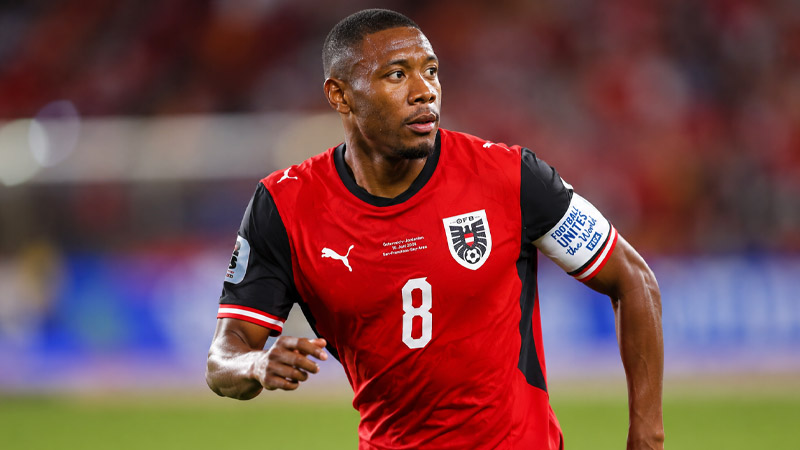
In the upper echelons of international football, few names carry as much weight and versatility as David Alaba.
Currently a cornerstone of the defense at Real Madrid, Alaba has built a career defined by an elite winning mentality and a unique ability to adapt to any tactical challenge.
However, beyond his trophy-laden cabinets and tactical intelligence lies a story of identity that resonates far beyond the boundaries of the pitch.
To understand David Alaba is to understand the modern face of global sports—a figure who represents the intersection of multiple cultures while serving as the primary symbol of a single nation.
For fans and analysts alike, the question of his background is frequently raised, not out of confusion, but out of an interest in how his diverse roots have shaped one of the most respected leaders in the game today.
A National Icon: The Austrian Identity
The definitive answer to the most common query regarding his status is clear: David Alaba is Austrian. Born in the historic city of Vienna, his connection to the country is profound and foundational.
Unlike many players who may navigate complex eligibility decisions early in their careers, Alaba’s commitment to the land of his birth has remained unwavering since his youth.
His role within the national framework has evolved from a teenage prodigy to the definitive leader of his generation. As the captain of the Austria National Football Team, Alaba carries the aspirations of a nation.
His leadership is not merely symbolic; it is the result of years spent as the most recognizable and successful athlete in the country.
In Vienna, he is more than a celebrity; he is a testament to the city’s evolving cultural landscape and a bridge between traditional European footballing heritage and a more inclusive future.
Paternal Roots: The Connection to Nigeria
While his passport and national allegiance are firmly rooted in Central Europe, Alaba’s personal identity is enriched by the heritage of his parents.
His father, George Alaba, is a Nigerian from Ogun State. This West African connection provides a significant layer to his persona, linking him to one of the most passionate footballing nations on the planet.
The influence of his father is often cited as a key factor in his professional discipline and his early exposure to the world of performance.
In Nigeria, Alaba is viewed with immense pride, often celebrated as a member of the global diaspora who has reached the pinnacle of European sport.
This paternal lineage connects him to the Yoruba culture of Ogun State, adding a depth to his character that he has often acknowledged in his public life, even while representing Austria at the highest international levels.
Maternal Heritage: The Filipino Influence
The other half of Alaba’s cultural makeup comes from his mother, Gina, who is Filipino. This aspect of his heritage is particularly noteworthy within the context of elite European football, where individuals of Southeast Asian descent are historically underrepresented.
His Filipino roots have made him an accidental pioneer for an entire region. In the Philippines and among the Filipino diaspora globally, Alaba is a figure of immense inspiration.
His success at clubs like Bayern Munich and Real Madrid serves as a powerful narrative that excellence in the world’s most popular sport is not limited by geography or ethnic background.
This maternal connection completes the “global” aspect of his identity, making him a rare individual who can claim deep cultural ties to Europe, Africa, and Asia simultaneously.
The Modern Captain: Leading Through Diversity
The synthesis of these three distinct influences—Austrian, Nigerian, and Filipino—has created a leader who is uniquely equipped for the demands of the modern era.
Leadership in a globalized sport requires an ability to communicate across cultures, empathize with diverse perspectives, and unite people under a common goal.
As the captain of the Austrian national team, Alaba does not just lead through tactical instructions; he leads as a representative of a multi-ethnic, 21st-century Austria.
His presence on the field is a daily reminder that national identity is not a static concept, but one that is constantly being enriched by global stories.
His journey from the neighborhoods of Vienna to the captaincy of his country, while carrying the heritage of Ogun State and the Philippines, is a narrative of successful integration and the pursuit of excellence.
Professional Excellence at Real Madrid and Beyond
While his heritage provides the context, his performance provides the proof of his elite standing. His move to Real Madrid marked a significant chapter in an already legendary career.
Transitioning from a long, successful tenure in Germany to the most prestigious club in Spain required a high level of professional maturity.
In Madrid, he has filled the void left by departing legends, proving that his leadership translates across different leagues and languages.
His versatility remains his most valuable professional asset. Whether playing as a central defender, a left-back, or a midfielder, his technical proficiency remains world-class.
This adaptability on the field mirrors his adaptability off it—a man comfortable in the spotlight of the Santiago Bernabéu, just as he is comfortable representing the varied facets of his own history.
Frequently Asked Questions Regarding David Alaba
Is David Alaba Nigerian?
David Alaba possesses Nigerian heritage through his father, who originates from Ogun State. However, Alaba himself was born in Austria and represents the Austria National Football Team as their captain.
What is David Alaba’s nationality?
His nationality is Austrian. He was born in Vienna and has spent his entire international career representing Austria at various age levels before becoming the senior team captain.
Where were David Alaba’s parents born?
His father was born in Nigeria, and his mother was born in the Philippines. They moved to Austria, where David was born and raised.
Which club does David Alaba currently play for?
He currently plays for Real Madrid in Spain’s La Liga, having joined them after a highly successful period with Bayern Munich.
Conclusion: A Global Legacy
David Alaba’s story is one of the most compelling in contemporary sport. It is a story that confirms that one can be deeply rooted in a specific national identity—as the proud captain of Austria—while also honoring a heritage that spans continents.
For the young athlete in Vienna, the aspiring footballer in Lagos, or the fan in Manila, Alaba represents the ultimate ceiling of what is possible.
He is a reminder that excellence is a universal language and that the most effective leaders are often those who can navigate and celebrate the complexities of a globalized world.
As he continues to lead Real Madrid and the Austrian national team, his legacy will be defined not just by the trophies he wins but by the barriers he has broken and the diverse communities he continues to represent.