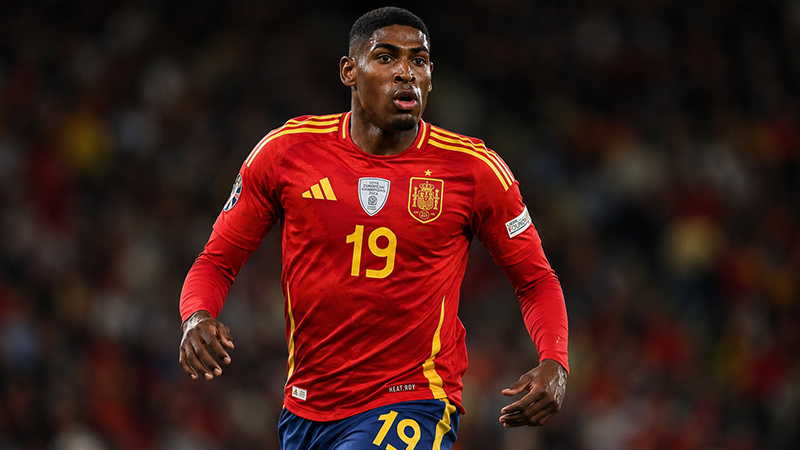
Cristhian Mosquera has rapidly become one of the most talked-about defensive talents in European football. As his profile rises with Valencia CF, fans and analysts alike are increasingly curious about the background that shaped him.
Central to this interest is the question of his heritage. Although he is a prominent figure in the Spanish national youth system, his roots tell a deeper story of migration and dual identity.
This article explores the specific details of his lineage, his dual citizenship, and how his Colombian and Spanish backgrounds influence his professional path and personal identity.
The Colombian Roots of Cristhian Mosquera
To understand the player today, one must look back at the journey of his family. His background is deeply rooted in South American soil, specifically Colombia, which provides the foundation for his cultural identity.
The Migration Story of His Parents
The story of his heritage begins in the early 2000s. During this period, Spain saw a significant influx of South American immigrants seeking better economic conditions and social stability.
Among those who made the journey were Mosquera’s mother and father, who moved from Colombia to the coastal city of Alicante shortly before he was born.
Their decision was driven by the search for work and a stable environment to raise a family, a narrative common to many members of the modern Spanish workforce.
Maintaining a Cultural Connection
Despite being born and raised in Europe, the influence of his parents’ homeland remains a significant part of his daily life.
The traditions, values, and cultural nuances of Colombia have been passed down through his family, creating a household where South American heritage is celebrated.
This dual exposure allows him to navigate two different cultural landscapes with ease, blending the disciplined European professional environment with the passionate cultural roots of his ancestors.
Born in Spain: The Alicante Connection
While his bloodline is Colombian, his birthplace is Alicante, a port city on Spain’s Costa Blanca. This geographic detail is crucial because it defines his legal identity and his early development as an athlete.
Early Life in the Valencian Community
Growing up in Alicante provided him with access to some of the best footballing infrastructure in the world. The Spanish youth systems are renowned for their tactical rigors and technical focus.
For a young athlete of his background, this meant he could combine the natural physical attributes often associated with Colombian defenders—strength and speed—with the sophisticated tactical awareness taught in Spanish academies.
A Symbol of the New Spain
He has explicitly stated that he views himself as a representative of a new, diverse generation of Spanish athletes. This generation is characterized by children of immigrants who have fully integrated into Spanish society while retaining a strong sense of their parents’ origins.
For Mosquera, being “Spanish” is not a singular definition; it is a multi-layered identity that includes his immigrant history as a core component.
Understanding Dual Citizenship and Legal Identity
The legal nuances of his background are a frequent topic of discussion among fans and scouts. Because of the specific laws regarding jus sanguinis (right of blood) and jus soli (right of soil), he occupies a unique legal position.
| Feature | Details |
|---|---|
| Place of Birth | Alicante, Spain |
| Parental Heritage | Colombian |
| Citizenship Status | Dual Citizenship (Spain & Colombia) |
| Primary National System | Spanish Youth Teams |
Having dual citizenship is more than just a legal convenience; it reflects his dual allegiance. In the eyes of the law, he is both fully Spanish and fully Colombian.
This status grants him the flexibility to live and work across the European Union while maintaining his rights in South America, a common benefit for the “Generation of 2000” in Spain whose parents migrated from Latin America.
The International Tug-of-War: Spain vs. Colombia
One of the most compelling aspects of his career is the ongoing competition between the Spanish and Colombian football federations to secure his long-term loyalty. This is a direct result of his multi-cultural identity and his high level of performance on the pitch.
Success with the Spanish National Team
His development has been almost entirely within the Spanish footballing framework. He has risen through various youth levels, proving himself to be a reliable and technically gifted defender.
The pinnacle of this journey thus far was his involvement in the Spanish squad that secured an Olympic gold medal.
Winning such a prestigious honor for Spain has solidified his status in the country’s sporting history and strengthened his bond with the Spanish federation.
The Pursuit by the Colombian Federation
However, the Colombian Football Federation has not stood idly by. Recognizing his immense potential and his undeniable Colombian descent, they have made active efforts to persuade him to join their senior national team.
For Colombia, bringing him into the fold would mean gaining a top-tier defender who understands the European game. For the player, it presents a difficult emotional and professional choice: represent the country of his birth or the country of his parents’ heart.
The Impact of Dual Identity on Professional Performance
Identity often plays a subtle but powerful role in how an athlete carries themselves. For players with a background like his, there is often a feeling of needing to prove oneself to two different audiences.
Combining Two Footballing Philosophies
The tactical discipline he learned in Spain is evident in his positioning and his ability to play out from the back. Yet, there is a certain “garra” or grit often associated with South American defenders that appears in his game during high-pressure defensive transitions.
This hybrid style makes him a unique asset for Valencia CF, as he can handle the technical demands of La Liga while possessing the physical presence necessary for international competition.
Managing the Pressure of Choice
The “international tug-of-war” is not just about logistics; it is a psychological test. Every time he steps on the pitch, the media in both Spain and Colombia analyze his performance through the lens of his future national team decision.
He has handled this pressure with professional poise, focusing on his club duties while remaining respectful of both nations that claim him as their own.
The Modern Athlete as a Cultural Bridge
His story is part of a broader trend in global sports where athletes serve as bridges between different cultures and nations.
Diversity in the Spanish Squad
The current Spanish national setup is more diverse than ever before. Players like Mosquera are changing the face of the team, reflecting the demographic shifts that have occurred in Spain over the last two decades.
By embracing his multi-cultural identity, he helps to normalize the idea that an athlete can be a “symbol of a modern, diverse generation” without having to sacrifice one part of their heritage for another.
A Role Model for Immigrant Communities
For the Colombian diaspora in Spain, he is a figure of immense pride. He represents the success that can be achieved through hard work and integration.
His story provides a blueprint for young athletes in similar positions, showing that dual heritage is an advantage to be celebrated rather than a conflict to be resolved.
Frequently Asked Questions
What is Cristhian Mosquera’s ethnicity?
He is of Colombian descent. His parents immigrated to Spain from Colombia in the early 2000s, and he was born shortly thereafter in Alicante.
Does he play for Spain or Colombia?
As of now, he has primarily represented Spain at the youth levels and won an Olympic gold medal with the Spanish team. However, because he holds dual citizenship, he is still eligible for the Colombian senior national team, and they have actively tried to recruit him.
Where was Cristhian Mosquera born?
He was born in Alicante, Spain. This makes him a Spanish citizen by birth, while his parental heritage grants him Colombian citizenship.
Why is there a “tug-of-war” for his international career?
Because of his high talent level and his dual heritage, both the Spanish and Colombian federations want him to represent them at the senior level. This has created a competitive situation where both nations are vying for his commitment.
Conclusion: A Future Defined by Heritage and Talent
Cristhian Mosquera’s ethnicity is a central pillar of his identity, but it is his talent and character that have made him a rising star. By embracing both his Colombian roots and his Spanish upbringing, he has become a symbol of a more inclusive and globalized era of sport.
Whether he eventually chooses to wear the yellow of Colombia or the red of Spain at the senior level, his journey remains a testament to the power of dual identity.
His career serves as a reminder that heritage is not a limitation but a source of strength. As he continues to develop at Valencia CF and on the international stage, his background will continue to be a point of fascination and pride for fans in two different hemispheres.
For now, he remains focused on the pitch, embodying the best of both worlds as a premier defender of his generation.