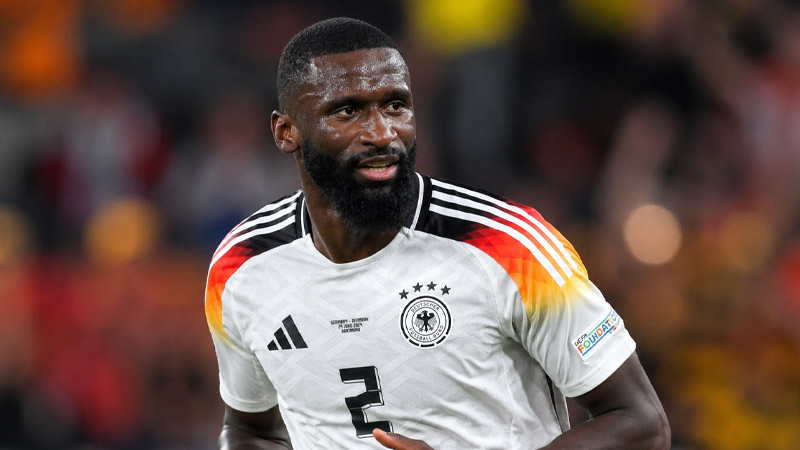
Antonio Rüdiger is a figure who commands respect on the global football stage, not just for his defensive prowess but for his complex, multifaceted identity.
While many fans recognize him as a cornerstone of the German national team and a key player for Real Madrid, his personal story is deeply rooted in a blend of European and West African cultures.
Understanding his background requires looking beyond the jersey to the history of his family and the streets of Berlin.
This exploration into his heritage reveals a man who successfully navigates two worlds, embodying the spirit of a modern, multicultural sporting icon.
Defining Antonio Rüdiger’s Diverse Heritage
Antonio Rüdiger is of mixed Afro-German and Sierra Leonean heritage, a dual identity that has profoundly shaped his worldview and professional journey.
Born in Berlin, Germany, he represents the growing demographic of individuals who bridge the gap between European nationality and African ancestry. This blend of cultures is not just a footnote in his biography; it is the foundation of his character.
Rüdiger often describes himself as a product of his environment, where the discipline of his German upbringing meets the deep cultural traditions of his family’s homeland.
His identity is a testament to the modern era of football, where athletes often represent nations that welcomed their parents as they sought better lives.
For Rüdiger, his ethnicity is a point of pride that he displays openly, whether through his public statements or his actions on the pitch.
He serves as a bridge between Germany and Sierra Leone, demonstrating that nationality is not a single-track concept but a rich tapestry of experiences and histories.
The German Foundation: A Berlin Native
Rüdiger was born in the capital city of Berlin, a location that provided him with the infrastructure and opportunities to develop into a world-class athlete.
His German nationality is a core part of his identity, as he has spent the majority of his life immersed in the country’s culture, education system, and footballing philosophy.
This European upbringing gave him the tactical discipline and mental toughness that are hallmarks of the German football style.
The Sierra Leonean Connection: An African Heart
Despite his European birthplace, Rüdiger maintains an unbreakable bond with Sierra Leone, the country of his mother’s birth.
He often visits the nation to reconnect with his roots and engage in philanthropic efforts, ensuring that his success benefits the community his family originated from.
This connection is so strong that he frequently celebrates his greatest professional achievements, such as winning the UEFA Champions League, by prominently displaying the Sierra Leonean flag.
The Influence of Matthias and Lily Rüdiger
The story of Antonio Rüdiger’s ethnicity and character begins with his parents, Matthias and Lily Rüdiger. His father, Matthias, is Afro-German, providing Antonio with a direct link to the established Afro-German community within the country.
His mother, Lily, however, brought a different history to the family. She fled Sierra Leone in 1991 to escape the horrors of the civil war that was ravaging the nation at the time. This history of survival and resilience is a cornerstone of the Rüdiger family legacy.
Matthias and Lily worked to provide a stable environment for Antonio, balancing the preservation of their cultural heritage with the realities of life in Germany.
The combination of his father’s Afro-German experience and his mother’s journey as a refugee created a unique household dynamic where the value of opportunity was never taken for granted.
This upbringing instilled in Antonio a sense of gratitude and a drive to succeed that has carried him through the highest levels of professional sport.
Resilience as a Family Value
Lily Rüdiger’s experience as a refugee significantly influenced the way Antonio views challenges. Hearing the stories of his mother’s flight from conflict in 1991 gave him a perspective on life that few of his peers possessed.
This background explains much of his on-field persona—his tenacity, his “never-say-die” attitude, and his ability to remain calm under extreme pressure. He views footballing setbacks as minor compared to the real-world struggles his family overcame.
A Supportive Parental Partnership
Matthias Rüdiger played a crucial role in navigating the German sports system, helping Antonio find the right clubs and training environments in Berlin.
The partnership between his parents allowed Antonio to grow up with a secure sense of self, knowing exactly where he came from while being encouraged to reach for the stars in his host nation.
Their guidance ensured that he remained grounded even as his fame grew.
Neukölln: The Neighborhood That Built a Warrior
The environment in which a player grows up often dictates their style of play and mental makeup. For Antonio Rüdiger, that environment was Neukölln, a neighborhood in Berlin renowned for its diverse immigrant communities.
Neukölln is a melting pot where different cultures, languages, and traditions collide, creating a high-energy and often challenging atmosphere for young people.
Growing up in such a diverse area meant that Rüdiger was constantly exposed to different perspectives. This multicultural upbringing helped him develop the social adaptability required for a career that has taken him to elite clubs in Germany, Italy, England, and Spain.
In Neukölln, football was more than just a game; it was a way for children from various backgrounds to communicate and prove themselves.
| Aspect of Neukölln Life | Impact on Antonio Rüdiger |
|---|---|
| Cultural Diversity | Developed high emotional intelligence and adaptability. |
| Competitive Street Football | Forged a physical and aggressive defensive style. |
| Immigrant Resilience | Reinforced the importance of hard work and community. |
| Urban Landscape | Provided a sense of “street smarts” and mental toughness. |
Balancing German Nationality with African Identity
A major theme in Antonio Rüdiger’s life is the balance between his German nationality and his African heritage.
While he is a proud member of the German national team and has represented the country for many years, he has never turned his back on his Sierra Leonean roots.
This dual loyalty is a defining characteristic of his career. It is not a matter of choosing one over the other, but rather embracing the fullness of his identity as both a German citizen and a man of African descent.
This balance is often visible during the highest points of his career. When Rüdiger wins major trophies, he is frequently seen with the Sierra Leonean flag draped over his shoulders or held high in the air.
This gesture is a powerful message to fans in both Germany and Africa, signaling that he carries both nations with him.
He is a prominent figure who shows that one can be fully integrated into European society while remaining deeply connected to their ancestral heritage.
A Pillar of the German National Team
Rüdiger’s commitment to Germany is undeniable. He has been a long-standing and prominent member of the national squad, representing the country in European Championships and World Cups.
His presence in the team is a symbol of the modern, diverse Germany, a nation that has been enriched by the contributions of its immigrant populations.
He is seen as a leader within the locker room, respected for his talent and his dedication to the national cause.
Philanthropy and Presence in Sierra Leone
Beyond the symbolic use of the flag, Rüdiger’s commitment to Sierra Leone is tangible. He frequently visits the country, not just for leisure, but to maintain his ties and oversee charitable projects.
By investing in the infrastructure and youth of Sierra Leone, he is actively contributing to the future of his mother’s homeland. These visits allow him to stay connected to the people and the culture that form a significant part of his ethnicity.
The Socio-Cultural Impact of Rüdiger’s Story
The narrative of Antonio Rüdiger’s ethnicity resonates far beyond the football pitch. In a world where identity politics can often be divisive, Rüdiger stands as a successful example of integration and cultural pride.
He provides a roadmap for young Afro-German athletes who may feel caught between two worlds. His success proves that having a diverse background is a strength, offering a wider range of experiences and a unique perspective that can be a competitive advantage.
Rüdiger’s openness about his mother’s history as a refugee also brings awareness to the human stories behind global migration. By sharing his family’s journey from the civil war in 1991 to the heights of European football, he humanizes a complex political issue.
He is a living reminder that the children of refugees can become the pride of their new nations while still honoring the struggles of their parents.
Mentorship Through Example
By being vocal about his heritage, Rüdiger acts as an unofficial mentor to the next generation. He shows that it is possible to be a “tough” defender and a world-class athlete while remaining empathetic and connected to one’s community.
His visibility ensures that young players of African descent in Germany see themselves reflected in the highest levels of the sport.
Redefining the “German” Athlete
Rüdiger is part of a generation of players who are redefining what it means to be a German athlete. The German national team today is more reflective of the country’s actual demographics than ever before.
Rüdiger, along with his teammates of various backgrounds, represents a nation that is evolving and embracing its multicultural reality.
Frequently Asked Questions About Antonio Rüdiger’s Ethnicity
Where was Antonio Rüdiger born?
Antonio Rüdiger was born in Berlin, Germany. He grew up in the Neukölln district, which is a diverse area of the city known for its various immigrant communities.
What is Antonio Rüdiger’s nationality?
He holds German nationality. He has been a key player for the German national football team for many years, representing the country in numerous international tournaments.
Which country are Antonio Rüdiger’s parents from?
His father, Matthias Rüdiger, is Afro-German. His mother, Lily Rüdiger, originally came from Sierra Leone, fleeing the country in 1991 during the civil war.
Does Antonio Rüdiger have a connection to Sierra Leone?
Yes, he has deep ties to Sierra Leone through his mother. He frequently visits the country and often celebrates his major football achievements by displaying the Sierra Leonean flag.
Is Antonio Rüdiger considered Afro-German?
Yes, he is of mixed Afro-German and Sierra Leonean heritage. His father’s Afro-German background and his mother’s Sierra Leonean roots combine to create his unique ethnic identity.
Conclusion: A Legacy of Unity and Excellence
Antonio Rüdiger’s story is a powerful illustration of how heritage and nationality can coexist and enrich one another.
From his birth in the multicultural streets of Berlin to his status as a champion on the world stage, he has remained true to both his German upbringing and his Sierra Leonean roots.
His journey—marked by his mother’s survival and his father’s support—serves as an inspiration for millions.
As he continues to excel at the highest levels of football, Rüdiger remains a symbol of the positive impact of diversity.
He is a man who carries the history of two nations in his heart and the flag of one on his shoulders, proving that identity is not about where you are from, but about how you honor all the pieces of your story.
His legacy will be defined not just by the tackles he made or the trophies he won, but by the bridges he built between cultures.