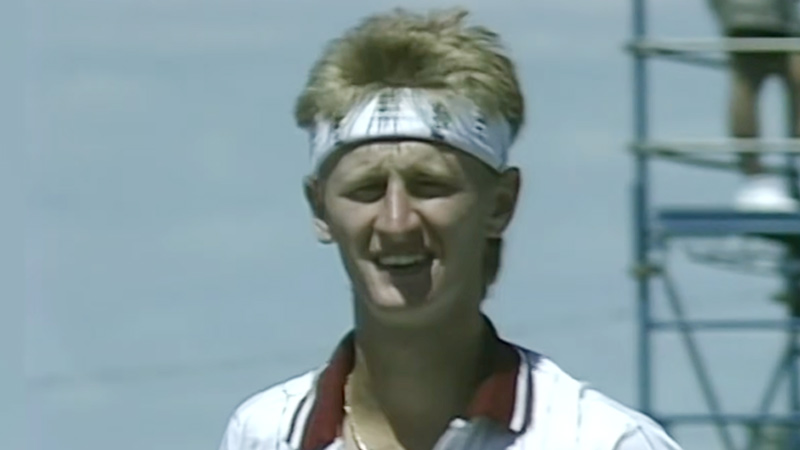
Petr Korda is not playing tennis today because he officially retired from professional competition in July 1999 at the age of 31. His departure was primarily triggered by a high-profile doping scandal following his 1998 Australian Open victory.
After testing positive for the steroid nandrolone at Wimbledon, a complex legal battle and intense pressure from fellow players effectively ended his career at the elite level.
While he made sporadic appearances in lower-tier doubles until 2005, he has since transitioned into a full-time mentor and coach, guiding his children—Sebastian, Nelly, and Jessica—to global sporting success.
The 1998 Nandrolone Scandal Explained
The primary catalyst that forced Petr Korda out of professional tennis was a high-profile doping case that shocked the sporting world in the late 1990s. At the height of his career, Korda faced allegations that would eventually lead to a permanent exit from the ATP Tour.
The Positive Test at Wimbledon
In July 1998, only six months after reaching a career-high ranking of World No. 2 and winning the Australian Open, Korda tested positive for the banned anabolic steroid nandrolone.
The test occurred immediately following his quarterfinal match at Wimbledon. This revelation was particularly jarring given Korda’s reputation as a highly technical and strategic player whose game relied more on finesse than raw power.
The Initial Ruling and Player Backlash
In December 1998, an independent International Tennis Federation (ITF) appeals board accepted Korda’s defense that he did not knowingly ingest the steroid.
While the board docked his prize money from the Wimbledon tournament, they controversially waived the mandatory one-year suspension. This decision sparked massive outrage among fellow ATP players.
High-profile competitors were furious over what they perceived as favoritism, and several openly threatened to boycott the 1999 Australian Open if Korda were permitted to defend his title without serving a suspension.
Why Did Petr Korda Retire at 31?
Korda’s decision to step away from the game was not solely based on the legalities of his case but also on the shifting environment of the professional circuit and his own personal motivation.
Loss of Competitive Motivation
By July 1999, Korda was facing an impending legal defeat and a relentless media firestorm. The psychological toll of the ongoing dispute, combined with a significant dip in form, led to a loss of motivation.
His final attempt to compete at a high level saw him fail to qualify for Wimbledon in 1999, after which he officially announced his retirement from professional tennis. At 31 years old, he chose to exit the sport before the final legal hammer fell.
The CAS Legal Reversal and Financial Penalties
The ITF, facing internal rebellion from players, filed an appeal with the Court of Arbitration for Sport (CAS) to reverse its own committee’s lenient decision.
On August 31, 1999, the CAS officially ruled against Korda, handing down a retrospective 12-month ban that was effective from September 1, 1999, to August 31, 2000.
Furthermore, he was stripped of all ranking points and more than $500,000 in prize money earned since the initial positive test. This ruling effectively closed the door on any potential high-level comeback.
Petr Korda’s Career and Retirement Timeline
The following table provides a comprehensive chronological breakdown of the events that led to the end of Petr Korda’s professional playing days and his transition into coaching.
| Date | Key Event | Impact on Career |
|---|---|---|
| January 1998 | Wins Australian Open | Reaches Career-High World No. 2 |
| July 1998 | Positive Nandrolone Test | Initiates doping investigation at Wimbledon |
| December 1998 | ITF Waives Suspension | Sparks player backlash and boycott threats |
| July 1999 | Official Retirement | Korda exits pro tennis after failing Wimbledon qualifying |
| August 1999 | CAS Ruling | 12-month ban and $500,000 fine imposed |
| 2000 – 2005 | Sporadic Appearances | Brief returns to low-level Challenger events |
| 2006 – Present | Full-Time Coaching | Focus shifts to mentoring his three children |
The Post-Suspension Years: 2000–2005
After his official 12-month ban expired, Korda did not immediately disappear from the tennis world, though his days in the “top flight” were over. He made several attempts to engage with the sport in a limited capacity.
Brief Return to the Challenger Circuit
In December 2000, Korda attempted a modest competitive return at a low-level $25,000 ATP Challenger event held in Prague. The results indicated that his time at the elite level had passed; he lost in the opening round of the singles draw to a low-ranked opponent.
While he managed to win a round in the doubles portion of that event, it was clear that a return to the ATP Tour was not viable.
Transition to Doubles and Wildcards
Between 2001 and 2005, Korda occasionally accepted wildcards to play in sporadic doubles matches, primarily in Czech Challenger events. He often paired with long-time friends and former colleagues, such as Cyril Suk.
However, he never attempted to play singles at a notable professional level again during this period, gradually phasing out his competitive appearances entirely by 2006.
A New Chapter: The Architect of Sporting Excellence
Today, Petr Korda is not playing tennis because he has found a second calling as the patriarch and primary advisor of one of the most successful families in modern sports. His expertise has been channeled into developing the next generation of champions.
Coaching Sebastian Korda
Petr serves as the primary technical advisor and coach for his son, Sebastian Korda, who is currently a top-tier professional on the ATP Tour. This partnership reached a significant milestone in 2024 when Sebastian won the Washington Open.
This victory was deeply symbolic, as it was the same tournament Petr himself had won in 1992, marking a rare father-son achievement in professional tennis.
Mentoring Major-Winning Golfers
Korda’s coaching influence extends beyond the tennis court into the world of professional golf.
He spent several years traveling on the LPGA tour, famously acting as a caddy and mentor for his daughters, Nelly and Jessica Korda, during their early major championship runs.
Both daughters have reached the pinnacle of their sport, with Nelly Korda becoming a world number one and Olympic gold medalist, further cementing Petr’s reputation as an elite developer of athletic talent.
Frequently Asked Questions About Petr Korda
How old is Petr Korda now?
Petr Korda is currently 58 years old. While he no longer competes, he remains in peak physical condition to assist in the training and coaching of his son, Sebastian, on the ATP circuit.
Did Petr Korda lose his Australian Open title?
No, Petr Korda did not lose his 1998 Australian Open title. Although the CAS ruling stripped him of prize money and ranking points earned after the positive test at Wimbledon in July 1998, his victory in Melbourne occurred six months prior to the violation and remains part of his official record.
What is Petr Korda’s involvement in tennis today?
His involvement is strictly limited to coaching and management. He is frequently seen in the player’s box during ATP tournaments, providing tactical guidance to Sebastian Korda. He does not participate in senior tours or exhibition matches as a player.
Why was the 1998 doping case so controversial?
The controversy stemmed from the initial leniency of the ITF. The decision to waive a suspension despite a positive test for an anabolic steroid was unprecedented and led to a breakdown in trust between the governing body and the player base, eventually requiring the intervention of the Court of Arbitration for Sport.
The Enduring Impact of a Complex Career
Petr Korda’s departure from the professional game remains one of the most discussed exits in tennis history. While the 1998 scandal cast a long shadow over his individual accomplishments, his subsequent years have been defined by a remarkable shift in focus.
By moving from the role of a player to that of a mentor, he has successfully navigated a path toward a different kind of sporting immortality.
The transition from a World No. 2 champion to the coach of a multi-sport dynasty highlights a rare ability to adapt and excel beyond personal accolades.
Today, the Korda name is synonymous with elite performance across both tennis and golf, a testament to the technical knowledge and competitive drive Petr has instilled in his children. While he may no longer take to the court as a competitor, his influence is felt in every major tournament his children enter.
Ultimately, Petr Korda is not playing tennis because his mission has changed. He has traded the pursuit of his own trophies for the development of a legacy that spans generations and multiple disciplines.
His story serves as a reminder that a professional career is often just the first chapter in a much larger narrative of sporting excellence.