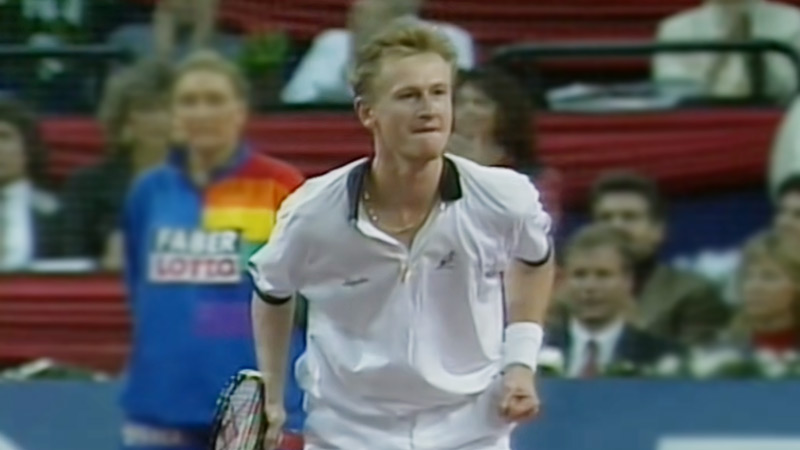
Yes, Petr Korda achieved historic success at the Australian Open, winning the men’s singles title in 1998 and the men’s doubles title in 1996.
His 1998 victory over Marcelo Ríos marked his only Grand Slam singles title, catapulting him to a career-high world ranking of number two.
Beyond his own trophies, Petr established a unique “Korda Slam” in Melbourne, as his children Sebastian, Jessica, and Nelly have all since won major championships in the same city across tennis and golf.
This extraordinary family dominance began with Petr’s masterful performances at Melbourne Park.
The 1998 Men’s Singles Championship Run
Petr Korda’s journey to the 1998 championship was a display of peak athletic performance and resilience as he navigated a difficult draw to reach the pinnacle of the sport.
Overcoming Elite Competition
Korda’s path to the trophy was marked by a series of increasingly difficult matches that tested his physical and mental limits. In the Round of 16, he faced the formidable Cédric Pioline, whom he defeated in four sets: 6–4, 6–4, 3–6, 6–3.
This victory set the stage for one of the most grueling matches of the tournament in the quarterfinals. Facing the 4th-seeded Jonas Björkman, Korda found himself in a high-stakes battle that went the full distance.
Despite falling behind early, he outlasted Björkman in a five-set marathon, finishing with a score of 3–6, 5–7, 6–3, 6–4, 6–2. This comeback demonstrated the tenacity that would eventually lead him to the title.
In the semifinals, he maintained his momentum by defeating Slovakia’s Karol Kučera in four sets (6–1, 6–4, 1–6, 6–2), securing his place in the final match.
Historical Milestones for Czech Tennis
The 1998 victory held significant historical weight beyond Korda’s individual career. By winning the title, he became the first Czech man to capture a Grand Slam singles championship following the peaceful dissolution of Czechoslovakia at the end of 1992.
This achievement established him as a national sporting hero and cemented his place in the annals of tennis history. The win was not just a personal triumph but a milestone for his country’s athletic identity on the global stage.
Furthermore, the ranking points gained from this victory instantly catapulted him to his career-high ranking of World No. 2, placing him among the elite players of his era.
A Masterclass Performance in the 1998 Final
The final match on February 1, 1998, remains one of the most dominant displays in the history of Grand Slam tennis, as Korda dismantled his opponent with precision.
| Match Detail | Statistics & Information |
|---|---|
| Date | February 1, 1998 |
| Winner | Petr Korda (6th seed) |
| Opponent | Marcelo Ríos (9th seed) |
| Score | 6–2, 6–2, 6–2 |
| Match Duration | 85 minutes |
| Key Celebration | Cartwheel across the baseline and “scissor-kick” jump |
Versatility on the Court: The 1996 Doubles Win
Long before his singles triumph, Korda proved his prowess by conquering the doubles draw at Melbourne Park, showcasing his ability to excel in multiple disciplines.
Partnering with a Legend
In 1996, Korda paired up with Swedish tennis icon Stefan Edberg to form a formidable duo. Their partnership combined Korda’s versatile shot-making with Edberg’s legendary serve-and-volley skills.
Together, they navigated a competitive field to reach the final, where they faced the North American team of Sébastien Lareau and Alex O’Brien.
The final was a closely contested affair, but Korda and Edberg eventually prevailed in a tight four-set match with a score of 7–5, 7–5, 4–6, 6–1. This victory earned Korda his very first Grand Slam trophy, two years prior to his singles success.
The Impact on Edberg’s Career
This doubles title was particularly poignant as it marked the final Grand Slam championship of Stefan Edberg’s illustrious career.
For Korda, the win served as a validation of his immense versatility on fast hardcourts, proving he could compete with the best in the world regardless of the format.
It also established a winning precedent for him in Melbourne, a city that would become central to his family’s sporting identity. This early success provided the foundation of confidence that Korda would draw upon during his historic singles run two years later.
Comprehensive Career Statistics at Melbourne Park
Analyzing Petr Korda’s decade-long history at the tournament reveals a trajectory defined by early challenges followed by ultimate triumph.
| Metric | Singles Statistics | Doubles Statistics |
|---|---|---|
| Career Record | 17 wins, 8 losses (68.0%) | Noted for “superior career winning percentage” |
| Total Appearances | 9 (From 1989 to 1999) | Multiple deep runs in the mid-1990s |
| Titles | 1 (1998) | 1 (1996) |
| Best Finish | Champion | Champion |
| Finals Reached | 1 | 1 |
Year-by-Year Results in Australia
Korda’s career in Melbourne was highly polarized, featuring several early exits before his breakthrough championship performances.
- 1989: Round of 128 (Debut tournament, lost to Darren Cahill)
- 1990: Round of 64 (Lost to Henri Leconte)
- 1991: Round of 64 (Lost to Wayne Ferreira)
- 1993: Round of 32 (Lost to MaliVai Washington)
- 1995: Round of 128 (Lost to Go Soeda)
- 1996: Round of 128 (Lost to Nicklas Kulti)
- 1997: Round of 128 (Lost to Albert Costa)
- 1998: Champion (Defeated Marcelo Ríos in the final)
- 1999: Round of 32 (Final appearance, lost to Todd Martin)
The Unique Korda Family Legacy in Melbourne
The Korda name is etched into the history of Australian sports through a multi-generational streak of excellence that is unprecedented in professional athletics.
Sebastian Korda’s Junior Success
Petr’s son, Sebastian Korda, continued the family’s tennis tradition by making his own mark on the Australian courts. Exactly twenty years after his father’s historic 1998 win, Sebastian captured the 2018 Australian Open boys’ singles title.
By winning this junior Grand Slam, he ensured that the Korda name remained associated with tennis excellence in Melbourne, following directly in his father’s footsteps.
This victory was a key milestone in Sebastian’s transition to the professional tour, where he has continued to compete at a high level.
Golfing Dominance by Jessica and Nelly
The family’s dominance extends beyond the tennis court and onto the golf greens of Australia. Petr’s eldest daughter, Jessica Korda, won the Women’s Australian Open in 2012, proving that the family’s athletic genes translated perfectly to professional golf.
Not to be outdone, her sister Nelly Korda also claimed victory at the Women’s Australian Open in 2019. Nelly’s success in Australia contributed to her rise as a World No. 1 LPGA golfer.
With four members of the same immediate family winning major titles in Melbourne, the “Korda Slam” stands as a testament to their collective dedication and skill.
Why the 1998 Win Defined a Sporting Era
Beyond the physical trophy, the 1998 victory represented the pinnacle of Korda’s professional life and a shift in his standing among the greats of the game.
Rising to World Number Two
Winning a Grand Slam is the ultimate goal for any professional tennis player, but for Korda, it also served as the catalyst for his highest ever ranking.
Reaching World No. 2 placed him in rarefied air, reflecting his consistency and dominance during that period of the 1998 season.
This ranking was a byproduct of his ability to perform under the immense pressure of a major final, where he dropped only six games across three sets against a world-class opponent like Marcelo Ríos.
The Iconic Scissor-Kick Celebration
One of the most enduring images of Korda’s 1998 victory is his unique on-court celebration. After securing championship point, he famously performed a cartwheel across the center court baseline.
This was followed by his signature “scissor-kick” jump at the net, a move that became his trademark and a symbol of his joy in the sport.
These celebrations endeared him to fans and provided a memorable visual conclusion to his crowning achievement at Melbourne Park.
Sudden Departure from Professional Tennis
Despite the glory achieved in 1998, Korda’s career faced a rapid and unexpected conclusion shortly after his greatest triumph.
The Wimbledon Incident
Just months after his Australian Open singles win, Korda’s career was overshadowed by a significant controversy. During the 1998 Wimbledon tournament, he tested positive for nandrolone, a banned steroid.
This development was a shocking turn of events for a player who had just reached the top of the tennis world. The incident led to a series of legal and athletic challenges as Korda sought to defend his reputation and continue his career.
Leaving the Professional Tour
Following the initial controversy and subsequent appeals, Korda’s time as a top-tier professional came to a close.
He returned to Melbourne Park in 1999 as the defending champion but was unable to replicate his previous year’s success, falling in the Round of 32 to Todd Martin.
Later that year, he retired from professional tennis, ending a career that was defined by both immense talent and a sudden, quiet exit from the tour.
Though his career ended amidst controversy, the historical record of his championships in Australia remains a permanent part of the sport’s history.
Frequently Asked Questions About Petr Korda
How many Grand Slam singles titles did Petr Korda win?
Petr Korda won one Grand Slam singles title, which was the 1998 Australian Open.
Who did Petr Korda beat in the 1998 Australian Open final?
He defeated Chile’s Marcelo Ríos in straight sets with a score of 6–2, 6–2, 6–2.
Did Petr Korda win any doubles titles in Australia?
Yes, he won the 1996 Australian Open men’s doubles title with partner Stefan Edberg.
What is the “Korda Slam”?
The “Korda Slam” refers to the fact that four members of the Korda family—Petr, Sebastian, Jessica, and Nelly—have all won major sporting titles in Melbourne, Australia.
What was Petr Korda’s highest world ranking?
Following his 1998 Australian Open win, he reached a career-high ranking of World No. 2.