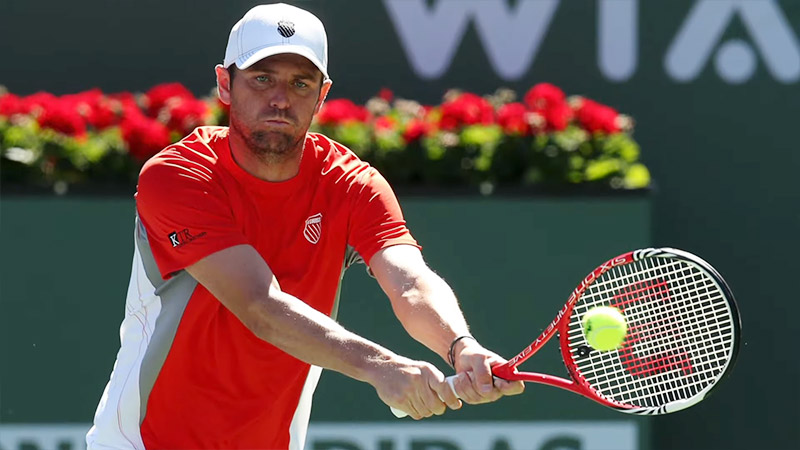
Mardy Fish suffered from a complex combination of physical and psychological health challenges that reshaped his life. Primarily, he was diagnosed with cardiac arrhythmia, a condition involving an irregular heartbeat that caused his heart to race uncontrollably.
This physical trauma directly triggered a severe anxiety and panic disorder, leading to frequent, debilitating panic attacks and agoraphobia.
The intensity of these struggles forced his withdrawal from the 2012 U.S. Open, effectively halting his professional tennis career. Today, he manages these conditions through therapy, medication, and his successful transition into the world of elite celebrity golf.
Understanding the Medical Journey of Mardy Fish
Mardy Fish’s health journey began with sudden, terrifying physical symptoms that quickly escalated into a full-scale life crisis, requiring both medical intervention and psychological support.
The transition from being a world-class athlete to a patient struggling with basic daily functions was both swift and punishing.
The Physical Catalyst: Cardiac Arrhythmia
In early 2012, at the absolute peak of his professional tennis career, Fish began experiencing frightening physical sensations that would soon be identified as a major heart condition. He would wake up in the middle of the night with his heart racing at speeds of 170 to 180 beats per minute.
These episodes were not just physically taxing; they were psychologically scarring, as they occurred during rest, making the athlete feel as though his body was betraying him without warning.
After medical consultation, he was officially diagnosed with cardiac arrhythmia, an irregular heartbeat caused by misfiring electrical pulses within the heart tissue.
The Surgical Solution: Cardiac Catheter Ablation
By May 2012, the situation had become untenable, leading Fish to undergo a specialized medical procedure known as a cardiac catheter ablation.
This surgery was designed to correct the faulty electrical pathways in his heart that were causing the dangerous spikes in heart rate. While the procedure was a physical success and effectively stabilized his heart rhythm, the trauma of the experience lingered.
Even though his heart was technically “fixed,” the fear that another episode could occur at any moment—especially in the high-pressure environment of professional sports—began to take a heavy toll on his mental well-being.
The Psychological Impact of a Sudden Heart Condition
While the surgery addressed the physical heartbeat, the mental scars left by the experience were much more difficult to heal, leading to a long-term battle with mental illness.
This phase of his life proved that the mind and body are inextricably linked, especially when a person’s livelihood depends on their physical performance.
From Physical Pain to Panic Disorder
The trauma surrounding his heart condition served as a direct trigger for a severe anxiety and panic disorder. Fish began to experience terrifying panic attacks that, at their worst, occurred as frequently as every 15 to 30 minutes.
These were not simple moments of nervousness; they were debilitating episodes of overwhelming dread that made it nearly impossible for him to function.
The constant threat of a panic attack created a cycle of “anxiety about the anxiety,” where the fear of having another episode became a constant companion in his daily life.
Living with Agoraphobia and Isolation
As the panic disorder intensified, Fish developed symptoms of agoraphobia, a condition that left him unable to leave his home or even sleep alone.
For a man who had traveled the world to play in the largest stadiums, the sudden inability to step outside his front door was a shocking reversal of life circumstances.
This period of isolation was a stark contrast to his previous life on the ATP Tour, highlighting the severe impact that mental health struggles can have on even the most disciplined and successful individuals.
The 2012 U.S. Open: A Defining Career Moment
The professional peak of Fish’s tennis career collided with his personal health crisis at the U.S. Open, creating a moment of profound decision-making that defined his legacy.
This event serves as a powerful case study in the importance of prioritizing mental well-being over professional accolades.
| Event Stage | Experience and Action Taken |
|---|---|
| Early Rounds | Fish suffered a severe panic attack while competing on the court. |
| Fourth Round Setup | He was slated to play against tennis legend Roger Federer. |
| The Breaking Point | On the way to the stadium, Fish suffered a massive panic attack in the car. |
| The Decision | Guided by his wife, he chose to withdraw from the match to save his sanity. |
| The Result | This choice effectively halted his career and began his focus on recovery. |
How Does Mardy Fish Manage His Health Today?
At age 44, Mardy Fish has developed a robust system for maintaining his well-being, proving that chronic conditions can be managed with the right tools and mindset.
His current life is a testament to the fact that recovery is an ongoing process rather than a final destination.
The Three Pillars of Daily Recovery
Fish remains open about the fact that he still lives with an anxiety disorder, but he has learned to manage it effectively through a multi-faceted approach.
This includes the consistent use of targeted prescription medication to balance his brain chemistry, regular talk therapy to process his experiences, and daily meditation to maintain a sense of calm.
By treating his mental health with the same rigor he once applied to his tennis training, he has been able to reclaim his life and find a sustainable balance.
Stability of the Cardiac Heart Condition
One of the brightest spots in his medical history is that his physical heart condition has remained perfectly stable since the 2012 ablation.
The surgery successfully corrected the electrical misfires, and he has not suffered from the racing heart episodes that once plagued him.
This physical stability has provided a necessary foundation for his mental health work, allowing him to engage in high-level sports once again without the immediate fear of a cardiac event.
Transitioning from Tennis Courts to Golf Courses
Golf became more than just a hobby for Fish; it became a therapeutic environment that allowed him to compete without the crushing weight of his past anxiety. The shift in scenery and sport played a pivotal role in his overall rehabilitation.
- Communal Environment: Unlike the isolating nature of professional tennis, golf offers a more social and communal atmosphere that Fish finds beneficial.
- Lower-Stress Competition: While he remains highly competitive, the pace and structure of golf do not trigger the same severe panic attacks he experienced on the tennis court.
- Elite Performance: Fish is currently one of the best non-professional golfers in the world, maintaining an elite +3.1 handicap.
- Tournament Success: He recently won his third American Century Championship, a prestigious celebrity golf title.
Global Impact and Mental Health Advocacy
Fish’s decision to speak openly about his struggles has made him a leading figure in the sports world, influencing how mental health is perceived across all levels of competition. He has leveraged his past pain to create a more supportive future for others.
The Success of “Untold: Breaking Point”
His journey was brought to a massive global audience through the Netflix documentary Untold: Breaking Point. The film provided a raw, honest look at his struggles with the Mardy Fish heart condition and subsequent mental health battles.
By showing the reality of panic attacks and the difficulty of walking away from a major match, Fish helped humanize the struggles of elite athletes and gave others permission to prioritize their own mental health.
Mentoring the Next Generation of Athletes
Today, Fish serves as a mentor for modern stars like Naomi Osaka, who have also spoken out about the pressures of professional sports.
He acts as a “text-away” mentor, offering support and guidance to those navigating severe performance pressures and mental illness.
By breaking the stigma surrounding mental health in male sports specifically, he is helping to foster a culture where seeking help is viewed as a sign of strength rather than weakness.
Frequently Asked Questions About Mardy Fish’s Health
Did Mardy Fish have a heart attack?
No, Mardy Fish did not have a heart attack. He suffered from cardiac arrhythmia, which is an irregular heartbeat caused by faulty electrical signals in the heart.
While his heart raced at dangerous speeds of up to 180 bpm, it was not the same as a myocardial infarction (heart attack).
What procedure did Mardy Fish have for his heart?
He underwent a cardiac catheter ablation in May 2012. This procedure involves inserting a catheter into the heart to neutralize the specific tissue that is causing the irregular electrical pulses, effectively “resetting” the heart’s rhythm.
Why did Mardy Fish retire from tennis?
While he briefly returned for a final tournament in 2015, the primary reason for his career halt was the severe anxiety and panic disorder that followed his heart diagnosis.
The high-pressure, isolating environment of professional tennis became a trigger for his panic attacks, making it impossible for him to compete at the highest level without sacrificing his mental sanity.
Is Mardy Fish still struggling with anxiety?
Yes, Fish continues to live with an anxiety disorder, but he manages it successfully on a daily basis. Through a combination of medication, meditation, and therapy, he has reached a point where he can live a full, active life as a celebrity golfer and media personality.
Conclusion: A Legacy of Resilience
The story of Mardy Fish is one of the most significant narratives in modern sports, shifting the focus from physical dominance to mental resilience.
By choosing to step away from the court at the 2012 U.S. Open, he didn’t just save his own health; he opened a door for countless other athletes to speak their truth.
Today, whether he is winning celebrity golf titles or advocating for mental health on major sports programs, Fish remains a champion whose greatest victory wasn’t a trophy, but the reclamation of his own mind.
His journey reminds us that even when the heart misfires and the mind feels trapped, there is always a path forward through management, support, and the courage to change course.