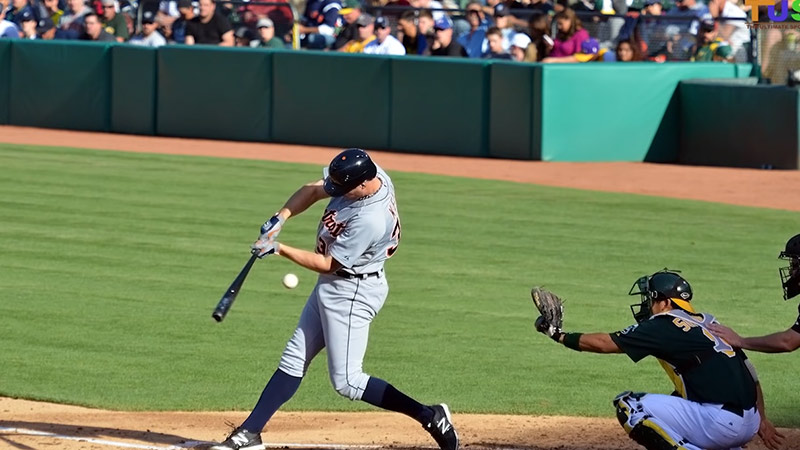
At first glance, mixing basketball terminology with America’s pastime sounds like a mismatch. “Corner 3s” belong firmly on the hardwood, designating that sweet spot on the court where the three-point arc flattens out, offering players the shortest path to deep-range points. Baseball, by contrast, is measured in diamond paths, pitching duals, and warning tracks.
Yet, sports analytics has a way of finding universal truths across disciplines. When modern analysts, front-office statisticians, and broadcasters talk about “baseball’s version of the corner three,” they are pointing to a very specific, highly efficient phenomenon: the down-the-line home run.
Just as basketball analytics revolutionized shot selection by prioritizing the corner three-pointer for its shorter distance and open looks, baseball strategy encourages pull-hitters to target the foul lines.
But why do these metaphorical “corner threes” exist in baseball? How do dimensions, geometry, and human biomechanics conspire to make hitting a home run down the line the most accessible path to glory for certain hitters? Let’s dive deep into the mechanics, geometry, and strategic philosophy driving this fascinating cross-sport parallel.
The Geometry of the Diamond – Why the Foul Lines Shrink the Game
To understand why a down-the-line home run mirrors the efficiency of a basketball corner shot, you have to look at the architectural blueprint of a Major League Baseball stadium.
The Shortest Distance from Home Plate
In virtually every professional ballpark, the outfield wall is not equidistant from home plate. Instead, stadiums are shaped by the constraints of urban real estate, historical architecture, and strict layout rules.
The Foul Lines: The distance from home plate down the left and right-field foul lines typically ranges between 310 and 330 feet.
Dead Center Field: By contrast, the distance straight away to center field usually stretches past 400 feet (and sometimes pushes 420 feet or more in historic yards like Fenway Park or Oracle Park).
This massive disparity means that a batted ball traveling at the same exit velocity and launch angle will clear the fence with ease down the line, while dying harmlessly into a center fielder’s glove if hit toward deep center.
[Home Plate]
    │
    ├─── (310-330 ft) ───> Left/Right Field Foul Lines (The "Corner 3")
    │
    └─── (400+ ft) ──────> Dead Center Field (The Deep Key)
The Geometry Parallel to Basketball
In basketball, the court is a rigid rectangle, and the three-point arc naturally extends further away from the basket as it moves toward the top of the key (23 feet, 9 inches).
However, where the arc meets the sidelines, the NBA artificially flattens the line to keep players from stepping out of bounds. This reduces the distance to just 22 feet.
In baseball, the foul lines act as the “flattened boundaries.” Because the geometry of the field pinches inward sharply as it forms the 90-degree angle of the foul lines, the fences converge closer to home plate much faster than they do in the expansive central sectors of the park. Hitters who master this geometry unlock a structural shortcut.
Biomechanics and the Art of the Pull Hitter
In basketball, the corner three is heavily favored for catch-and-shoot opportunities because players do not need to waste energy or time dribbling; they catch, set their feet, and fire. In baseball, hitting down the line relies on a parallel principle: maximizing leverage and rotational efficiency.
The Physics of Pulling the Ball
When a batter hits a ball “down the line,” they are almost always pulling the ball. For a right-handed hitter, pulling means driving an inside pitch toward left field. For a left-handed hitter, it means driving an inside pitch toward right field.
Pulling a baseball allows the hitter to:
- Meet the ball out in front: Contact is made slightly ahead of home plate, which naturally translates maximum bat speed and torque into the ball.
- Optimize launch angle: Pull-side home runs generally require slightly lower or more forgiving launch angles to clear short fences compared to the towering, soaring drives needed to clear a 400-foot center-field wall.
- Turn raw power into high efficiency: A player does not need to possess superhuman, 115-mph exit velocities to hit a home run if they can consistently elevate and pull the ball down a 315-foot line. Just as a role player can hit a high percentage of corner threes without being an isolation superstar, a gap-topper or situational slugger can rack up home runs by exploiting the short corners.
Defensive Alignment and Stadium Architecture
Just as basketball defenses collapse into the paint to protect the rim—leaving the corners wide open—baseball defenses must also make strategic trade-offs that open up the foul lines.
The Shift Era and Modern Defensive Posturing
While modern rules have restricted extreme defensive shifts, infielders and outfielders still play heavily based on tendencies.
- Guarding the Alleys: Defenses often shade hitters toward the gaps or play straight-up to cut off extra-base hits in the deeper parts of the outfield.
- The Foul Pole Risk: Outfielders playing down the line run the risk of yielding easy doubles or home runs if they cheat too far toward the gaps, leaving the extreme corners vulnerable to well-timed pull swings.
Architectural Quirks: Fenway Park and Oracle Park
Some ballparks take the “corner three” concept to extremes, creating legendary architectural anomalies that dictate entire offensive philosophies:
- Fenway Park’s Green Monster: Left field is a mere 310 feet from home plate, though it is guarded by a towering 37-foot wall. While it isn’t a traditional short fence distance, it serves as baseball’s ultimate pull-target for right-handed power hitters.
- Oracle Park’s Triples Alley / McCovey Cove: Right field features unique dimensions that reward left-handed hitters who can slice balls down the line or into the arcade.
- Yankee Stadium’s Short Porch: Right field famously measures just 314 feet down the line, creating an environment where routine fly balls that would die on the warning track in other stadiums become cheap home runs.
Basketball Corner 3s vs. Baseball Down-the-Line Homers
To fully grasp why these two concepts share a conceptual DNA, look at how their underlying traits match up across sports:
The Analytics Revolution – How Front Offices Treat the “Corner”
In the current era of baseball analytics, tracking data has transformed how hitters approach their craft.
Just as NBA general managers used spatial tracking to realize that corner three-pointers yield higher expected points values than mid-range jump shots, baseball front offices look closely at pull percentage and barrel rates down the line.
Barrel Rates and Launch Angle Sweet Spots
Statcast metrics show that when a batter connects with an optimal launch angle (typically between 25 and 35 degrees) and pairs it with an exit velocity over 95 mph down the foul line, the probability of a home run spikes dramatically.
Front offices actively coach players to avoid hitting lazy fly balls to dead center and instead encourage aggressive pulling.
By hunting pitches on the inner half of the plate, hitters can consistently exploit the geometric shortcut provided by the stadium’s design.
Frequently Asked Questions (FAQ)
1. Are all baseball foul lines the exact same distance?
No. Unlike basketball, where court dimensions are strictly standardized by governing bodies like the NBA or FIBA, Major League Baseball stadiums vary wildly.
Foul lines can range anywhere from 302 feet (like at Fenway Park’s Pesky’s Pole) to 330 feet or more depending on the historic design and local architecture of the ballpark.
2. Why do batters try to “pull” the ball down the line?
Pulling the ball allows a hitter to contact the pitch further out in front of home plate, transferring maximum rotational torque and bat speed into the ball.
Combined with the shorter distances of the foul lines, this gives batters the highest probability of hitting a home run without needing maximal, straining effort.
3. How does the basketball corner three compare in distance?
A standard NBA three-point line is 23 feet, 9 inches away from the basket at the top of the key and wings.
However, because the court is rectangular, the line flattens out near the sidelines, shortening the distance in the corners to 22 feet, making it nearly two feet closer and statistically the most efficient jump shot on the court.
Conclusion: Mastering the Angles for Maximum Output
While literal “corner threes” will always belong on the basketball court, the metaphor sheds brilliant light on the physics of baseball.
Whether it is a basketball player catching and shooting from the 22-foot mark before the defense can recover, or a Major League slugger pulling an inside fastball down a 310-foot foul line, success at the highest level often comes down to one fundamental principle: understanding geometry and exploiting the shortest path to success.
By recognizing where the boundaries pinch in and aligning mechanics to leverage those short distances, athletes across both sports turn spatial architecture into their greatest competitive advantage.