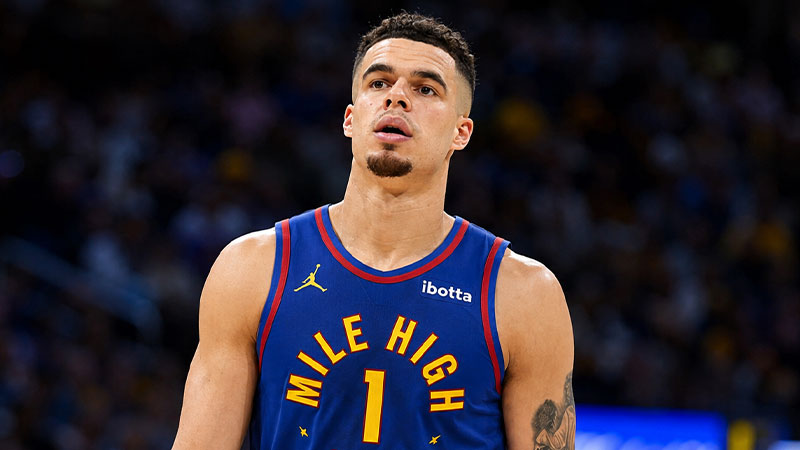
Michael Porter Jr. is expensive due to a five-year maximum rookie extension initially signed with the Denver Nuggets, totaling over $122 million in career earnings by 2026.
His valuation is driven by a unique combination of elite 6-foot-10 size, 42% career three-point shooting, and championship experience.
Since his 2025 trade to the Brooklyn Nets, his market value has surged further as he transitioned into a premier offensive option, averaging 24.2 points per game.
This combination of physical rarity and proven production justifies his high-ticket standing in the modern NBA economy.
The Financial Architecture of a Maximum Contract
To understand why a player like Michael Porter Jr. commands such a high price, one must look at the specific mechanics of NBA salary structures and the timing of his career milestones.
NBA contracts are often about more than just current production; they are a reflection of scarcity in the talent market and the projected ceiling of a player’s prime years.
The Logic Behind the Designated Rookie Max Extension
The foundation of Porter Jr.’s high cost began in 2021 when the Denver Nuggets signed him to a designated rookie max extension.
This specific type of contract allows a team to retain its drafted talent by offering the highest possible salary allowed under the collective bargaining agreement.
At the time, the Nuggets viewed him as a cornerstone piece whose elite shooting ability was indispensable for a championship-caliber roster. By securing this deal, Porter Jr. entered a tier of earners that includes the most influential wing players in the league.
The 2025 Trade and Salary Portability
While the contract was signed in Denver, its massive financial weight transferred to the Brooklyn Nets following a blockbuster trade in 2025. In the NBA, a “max” contract is often viewed as a moveable asset if the player maintains high production.
For Brooklyn, acquiring Porter Jr. meant taking on a significant cap hit, but it also meant acquiring an established winner who had already proven his value as a core starter during Denver’s 2023 title run.
The portability of his contract highlights that other franchises are willing to pay the premium for his specialized skill set.
Breaking Down the $122 Million Salary Trajectory
The cumulative wealth of Michael Porter Jr. has seen an exponential rise as he transitioned from his initial rookie scale deal to his current maximum salary status.
Analyzing these figures provides a clear view of how his market value has evolved over the last several seasons.
| Season | Team | Annual Salary & Cap Hit | Cumulative NBA Earnings |
|---|---|---|---|
| 2018-19 | DEN | $2,894,160 | $2,894,160 |
| 2019-20 | DEN | $3,389,400 | $6,283,560 |
| 2020-21 | DEN | $3,548,160 | $9,831,720 |
| 2021-22 | DEN | $5,261,375 | $15,093,095 |
| 2023-24 | DEN | $33,386,850 | $48,479,945 |
| 2024-25 | DEN | $35,859,950 | $84,339,895 |
| 2025-26 | BRK | $38,333,050 | $122,672,945 |
| 2026-27 | BRK | $40,806,150 (Projected) | $163,479,095 |
Data indicates that while he missed the 2022-23 season due to injury, his guaranteed salary execution remained intact, leading into his trade to Brooklyn.
The Scouting Report: Physical Assets and Elite Production
The primary reason Michael Porter Jr. is so expensive is that he possesses a physical and technical profile that is nearly impossible to replicate in the draft or free agency.
When a player offers both elite size and historically accurate shooting, front offices are often forced to pay a “premium” to keep those services away from competitors.
The Rare 6-Foot-10 Shooting Profile
Standing at 6-foot-10, Porter Jr. has the height of a traditional power forward but the shooting mechanics of an elite guard.
This allows him to shoot over the top of defenders, making his jumpshot virtually unguardable in one-on-one situations. His career 42% accuracy from three-point range is a metric that places him in the top echelon of shooters globally.
In a league that prioritizes “spacing,” a player who can shoot at that volume and efficiency while standing nearly seven feet tall is a rare offensive weapon.
Championship Pedigree as a Value Multiplier
Winning an NBA Championship significantly inflates a player’s market value. Porter Jr. was a core starter during the Denver Nuggets’ 2023 NBA Championship run, which served as a proof of concept for his high-value impact. T
eams are more likely to offer maximum contracts to players who have demonstrated they can contribute to winning at the highest level.
This “championship pedigree” acted as a security for the Brooklyn Nets when they decided to absorb his massive salary in the 2025 trade.
The Economics of Team Leverage and Market Scarcity
The price of an NBA superstar is often determined by the specific needs of the team and the leverage the player holds during negotiations. In the case of Porter Jr., several external economic factors played a role in pushing his contract to the maximum threshold.
Small-Market Leverage and Retention Costs
Small-market teams, such as the Denver Nuggets, often face a different economic reality than big-market franchises.
These teams typically cannot attract elite free agents through the city’s allure alone, making it essential to overpay to retain talent they have successfully drafted and developed.
This small-market leverage often results in max extensions for players who might receive slightly less on the open market, as the team cannot afford to lose the asset for nothing.
Increased Role and Volume in Brooklyn
Since moving to the Brooklyn Nets, Porter Jr. has successfully transitioned from a third-option role behind Nikola Jokic to a premier offensive option.
During the 2025-26 season, he averaged a career-high 24.2 points per game, proving that his scoring ability scales with increased volume.
This elevated production has silenced critics of his contract, as he has shown he can carry the offensive load for a franchise, thereby maintaining his exceptionally high trade and extension value.
The Financial Portfolio Beyond the NBA Court
While his NBA salary is the primary driver of his wealth, Michael Porter Jr. has built a sophisticated financial portfolio that includes major endorsements and strategic partnerships.
By 2026, his estimated net worth reached $28 million to $30 million, a figure that continues to climb alongside his career earnings.
Brand Endorsements and Alternative Income
Porter Jr. recognized the importance of off-court income early in his career. He signed a multi-year brand endorsement deal with Puma, which remains a significant pillar of his non-NBA income.
In addition to apparel, he has ventured into the tech and wellness sectors, holding active sponsorship and partnership deals with brands like INDIBA. these deals allow him to leverage his global platform to build wealth that is independent of his performance on the court.
The Impact of Lifestyle and Professional Costs
It is important to note that a player’s gross salary does not equal their liquid net worth. Porter Jr.’s total assets are influenced by high taxes, agent fees, and lifestyle expenses.
He famously went viral for his $200 to $250 daily expenditure on Uber rides in New York City. While seemingly extravagant, he justified the cost by citing the necessity of avoiding the city’s brutal traffic to maintain his professional schedule.
These everyday lifestyle costs, combined with the “New York price tag,” are part of the reality of managing a high-profile athletic career.
Navigating the Challenges of Long-Term Financial Health
Managing a portfolio valued at tens of millions of dollars requires a strategic approach to both spending and saving. For Porter Jr., the trajectory of his wealth is a case study in how modern athletes utilize their “max contract” years to set up long-term financial security.
Asset Growth and Career Longevity
Tracking his year-by-year earnings shows a dramatic scaling of wealth. His cumulative NBA earnings jumped from $15 million in 2022 to over $122 million by 2026.
This massive influx of capital in a short window requires disciplined management to offset the inevitable end of a professional playing career.
By diversifying into wellness tech and major apparel brands, he is creating a “post-career” cushion that ensures his net worth remains stable even after his final NBA check is cashed.
The “NYC Factor” in Personal Branding
Living and playing in New York has allowed Porter Jr. to expand his personal brand in a way that wasn’t possible in a smaller market.
While the cost of living is higher—evidenced by his viral transportation habits—the proximity to global media and corporate headquarters in Manhattan provides more opportunities for high-level business networking.
The move to Brooklyn wasn’t just a change in jersey; it was a strategic shift in his overall brand positioning within the global sports market.
Conclusion: The Future of the MPJ Investment
Michael Porter Jr. remains one of the most expensive players in basketball because he provides something that few others can: elite, high-volume scoring in a 6-foot-10 frame.
While his $38 million to $40 million annual cap hits are substantial, his production in Brooklyn has demonstrated that he is capable of being a franchise centerpiece.
As the NBA salary cap continues to rise, the “max” contracts of today may actually look like bargains in the near future.
What do you think about the current state of NBA salaries? Is a specialist like Michael Porter Jr. worth the $40 million annual price tag, or would you rather see that money spread across multiple role players? Drop a comment below and let’s discuss his impact on the Nets’ future!