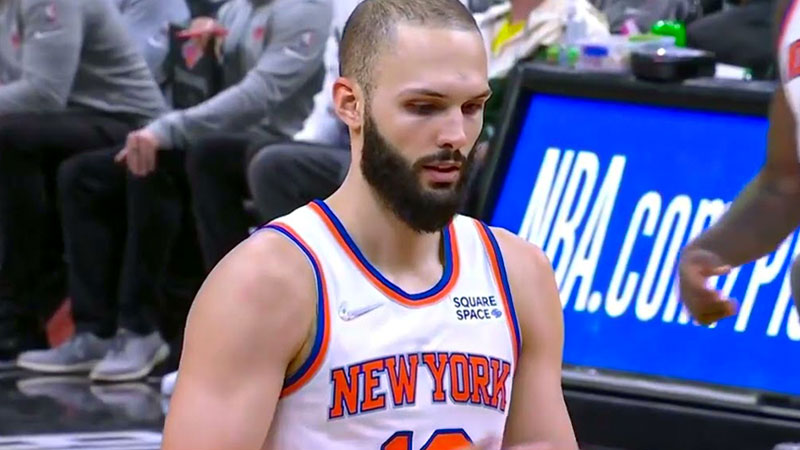
Evan Fournier’s “Don’t Google” nickname is widely considered the most dangerous moniker in professional sports history. The French basketball star earned this title not for his on-court performance, but due to a gruesome medical coincidence.
His surname is shared with “Fournier’s Gangrene,” a rare and necrotizing bacterial infection that targets the genital region.
Searching just his last name on Google Images triggers the algorithm to display graphic, clinical photos of the flesh-eating disease rather than basketball highlights.
Consequently, the nickname serves as a literal public service announcement, warning fans to include his first name or avoid the search results entirely.
Why is Evan Fournier’s Nickname “Don’t Google”?
The association between a professional athlete and a life-threatening medical condition is one of the most unique instances of digital branding in the modern era.
While many nicknames are born from athletic prowess, Fournier’s identity is inextricably linked to a cautionary tale of internet search behavior.
Understanding this phenomenon requires a look at both the medical severity of the condition and the way search engines prioritize information for users.
The Medical Reality of Fournier’s Gangrene
The primary reason for the warning lies in the nature of Fournier’s Gangrene, a rare but devastating necrotizing infection of the soft tissues in the genital and perineal regions. This condition is an acute clinical emergency where the tissue essentially dies and begins to rot away.
Medical documentation of the disease involves highly graphic imagery showing the progression of the infection, which is often described as stomach-churning by those who have mistakenly viewed it.
Historically, the condition was even documented in figures like Herod the Great, highlighting its long-standing and terrifying presence in medical history.
The Algorithmic Trap for Basketball Fans
When a user types only the surname “Fournier” into a search engine, the algorithm often struggles to distinguish between the athlete and the medical emergency.
Because the medical condition is a significant health topic, clinical photos frequently dominate the “Image” tab of search results.
For a basketball fan looking for the shooting guard’s highlights or statistics, failing to specify “Evan” can lead to a traumatic digital experience.
This specific algorithmic overlap is why sports writers and fans alike advocate for the “Don’t Google” rule as a necessary safety measure for the uninitiated.
How the “Never Google” Identity Formally Stuck
The transition from an accidental discovery to an official NBA moniker was a multi-year process involving social media warnings, media coverage, and community-driven edits to official basketball archives.
What began as a personal discovery by the player himself eventually became a permanent fixture of his professional identity.
The 2014 Warning Tweet
The genesis of the nickname can be traced back to February 27, 2014. On this day, Evan Fournier discovered the medical condition that shared his name, likely through his own curiosity or an accidental search.
Horrified by what he saw, he immediately took to social media to protect his followers, posting: “By the way, NEVER google my last name.
You don’t wanna see that”. This initial post laid the groundwork for the nickname, though it would take another year for the term to become his official designation in the sports world.
The 2015 Breakout and the Media Moniker
On November 2, 2015, while playing for the Orlando Magic, Fournier delivered a career-defining performance by scoring 30 points against the Houston Rockets.
As his name began trending due to his on-court success, prominent NBA writer Matt Moore of CBS Sports decided to officially christen him with the name.
Moore tweeted a reminder of the player’s 2014 warning, stating that Fournier’s nickname was now officially “Never Google”.
Shortly after, Moore adjusted the name to “Don’t Google” upon realizing the acronym “DGF” (Don’t Google Fournier) was more catchy and fit the player’s profile.
Cementing the Name on Basketball-Reference
Following the media’s adoption of the name, internet fans and “trolls” took the initiative to ensure the nickname was permanent. On November 3, 2015, Fournier’s Wikipedia page was edited to reflect the new title.
More significantly, the official statisticians at Basketball-Reference added “Don’t Google” to his verified player profile.
Unlike Wikipedia, Basketball-Reference is a controlled database, making the inclusion of the nickname a rare and permanent endorsement of the viral joke.
Evan Fournier’s Professional Career and Global Impact
Despite the notoriety of his nickname, it is important to recognize that Evan Fournier has maintained a highly successful professional career spanning over a decade in the most competitive leagues in the world.
His longevity and statistical contributions underscore his value as a premier international talent.
| Metric / Detail | Professional Profile |
|---|---|
| NBA Career Length | 12 Seasons (2012–2024) |
| Primary Position | Shooting Guard |
| Career 3-Point Average | 37.6% |
| Notable Teams | Orlando Magic, Boston Celtics, New York Knicks |
| International Success | 2019 FIBA World Cup Bronze Medalist (France) |
| Current Team | Olympiacos (Greek Basketball League) |
| Contract Status | Signed through 2028 with Olympiacos |
How the Athlete Embraced the Viral Identity
One of the reasons the “Don’t Google” nickname has persisted for over a decade is Fournier’s own willingness to lean into the humor.
Rather than distancing himself from the graphic medical condition, he has strategically used the warning as a way to engage with new fanbases and show his personality.
Trolling the Boston Celtics Fanbase
When Fournier was traded from the Orlando Magic to the Boston Celtics on the 2021 trade deadline, he used the nickname as his official introduction.
He famously tweeted to his new fans: “Hi @celtics fans, If you’re not familiar with me, please Google my last name. You’re welcome”.
This intentional “trap” resulted in thousands of Boston fans discovering the medical condition for the first time, further cementing his legend within the Celtics community.
Negotiating the New York Knicks Press Conference
Upon signing a lucrative contract with the New York Knicks in August 2021, Fournier was again asked about the infamous search warning during his introductory press conference.
With a grin, he advised the New York media and fans to avoid the search entirely. He jokingly suggested that if they felt the need to look him up, they should “just google ‘Evan’ and you’ll be fine”.
This charismatic handling of the situation allowed him to build immediate rapport with the New York market.
The Psychology of the “Streisand Effect”
The persistence of the “Don’t Google” nickname is a classic example of the “Streisand Effect,” where the act of warning people away from something only increases their curiosity to see it.
Sports writers have noted that the nickname is “fantastic” specifically because it is self-defeating; the moment a fan is told not to search it, they often feel a compulsion to do so.
This curiosity has led to generations of basketball fans sharing the trauma of the search, which in turn keeps the nickname alive in basketball subcultures like Reddit.
Future Outlook: Evan Fournier in the EuroLeague
After a distinguished 12-year stint in the NBA, Evan Fournier has transitioned back to European basketball, where his legacy continues to grow.
Currently playing for Olympiacos in the Greek Basketball League and the EuroLeague, he remains a high-level competitor on the international stage.
A Continued Legacy Overseas
Fournier recently signed a long-term extension with Olympiacos that will keep him with the team through 2028. His impact in Europe was immediate, as evidenced by him winning the EuroLeague Final Four MVP award while leading his team to victory.
Despite moving across the ocean and playing in a different league, the “Don’t Google” moniker remains a permanent part of his digital footprint.
His Basketball-Reference page continues to list the name, ensuring that his unique contribution to internet lore will never be forgotten.
Maintaining Professional Excellence
Throughout the transitions between teams and leagues, Fournier has consistently focused on his growth as a sharpshooter and veteran leader.
His ability to increase his scoring average for multiple consecutive seasons during his NBA tenure showcased a dedication to improvement that transcends viral nicknames.
As he leads Olympiacos, he brings a level of veteran experience and international prestige that makes him one of the most respected figures in French basketball history.
Frequently Asked Questions About the “Don’t Google” Name
Is it safe to Google “Evan Fournier”?
Yes, searching the full name “Evan Fournier” is safe. Search engines will prioritize the athlete’s statistics, headshots, and news articles. The danger only arises when searching the surname “Fournier” by itself, which triggers the medical search results.
When was the nickname officially recognized?
While the original tweet was sent in 2014, the nickname was officially recognized by major media outlets and Basketball-Reference on November 3, 2015.
Does Evan Fournier actually like the nickname?
Yes, reports indicate that Fournier “loves” the nickname and finds the humor in the situation. He has frequently used the name to troll his own teams’ fans on social media.
What exactly is the medical condition?
It is known as Fournier’s Gangrene, a rare and severe necrotizing bacterial infection of the genital area. It is considered a medical emergency and results in highly graphic clinical images.
The Impact of a Name in the Digital Age
Evan Fournier’s story is a fascinating study in how a simple name can bridge the gap between professional athletics and medical science through the power of viral internet culture.
While he will always be remembered for his lethal three-point shot and his leadership on the French National Team, he has also secured a place in history as the man with the most dangerous name on the internet.
By embracing the joke rather than fighting it, Fournier has turned a potentially negative medical association into a beloved piece of NBA folklore that continues to entertain and “traumatize” new fans every single year.