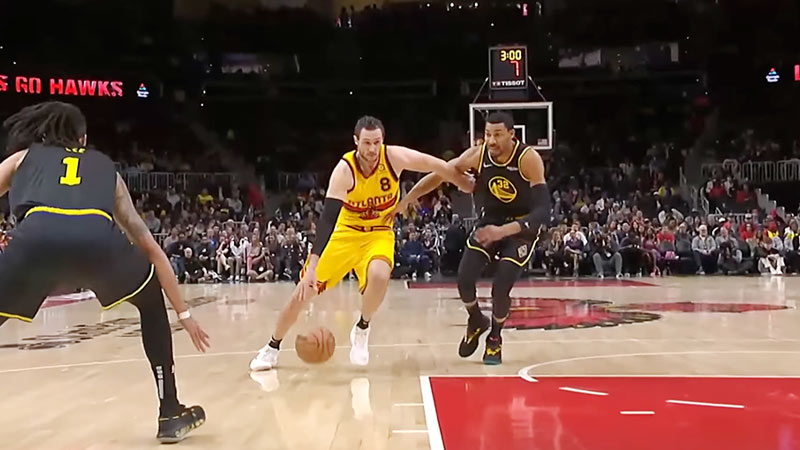
No, the Boston Celtics do not owe Danilo Gallinari any money, nor does his contract impact their current salary cap.
Although he signed a two-year, $13.3 million agreement in 2022, he was traded to the Washington Wizards in June 2023 before the second season began.
Since this was a trade rather than a buyout or waiver, all financial and cap obligations shifted completely to the acquiring franchise.
Consequently, the Celtics successfully cleared any potential “dead money” while leveraging his specific salary slot to acquire Kristaps Porziņģis. This original agreement has since fully expired, leaving Boston’s financial books entirely clean.
The Financial Timeline of Danilo Gallinari’s Celtics Tenure
To understand the current status of the Celtics’ payroll, one must look at the lifecycle of the contract signed during the 2022 off-season.
The following table provides a comprehensive breakdown of the financial milestones, from the initial signing to the eventual trade that cleared the books.
| Date | Event | Financial & Cap Impact |
|---|---|---|
| July 12, 2022 | Gallinari signs a two-year, $13.3 million contract. | Full guarantee using the Taxpayer Mid-Level Exception (MLE). |
| August 2022 | Gallinari tears his left ACL in a FIBA qualifier. | Boston remains responsible for salary but seeks relief. |
| November 2022 | NBA grants a $3.29 million Disabled Player Exception. | Allows Boston to sign a replacement without using extra cap space. |
| June 15, 2023 | Gallinari exercises his $6.8 million player option. | The 2023–24 salary becomes a tradable asset on the payroll. |
| June 22, 2023 | The Trade: Boston sends Gallinari to the Wizards. | Boston’s financial obligation stops; Wizards assume the salary. |
| June 2024 | Original contract expires. | All association with the Celtics’ books is completely cleared. |
Why the Boston Celtics Carry Zero Dead Money for Gallinari
A common point of confusion among basketball enthusiasts involves the concept of “dead money”—the cap hits that remain after a player is no longer on the active roster.
In many professional sports, an injury of this magnitude would lead to a buyout, leaving the team with a lingering financial burden. However, the Celtics utilized a different path to ensure their cap remained flexible.
The Distinction Between Trade and Buyout Obligations
In the NBA, the method by which a player leaves a team determines who is responsible for the remaining checks.
When a team waives or buys out a player, they must pay out the remaining guaranteed money, and that amount sits on their salary cap as dead money.
Because the Celtics successfully negotiated a trade involving Gallinari’s contract, the entire $6.8 million obligation for the 2023–24 season shifted to the Washington Wizards.
This move allowed the Celtics to offload the financial weight of a player who, due to injury, was unable to contribute on the court.
Full Expiration of the Taxpayer Mid-Level Exception
The contract Gallinari signed was originally slated to last through the end of the 2023–24 season. Once that season concluded, the legal and financial ties between the player and the franchise reached their natural end.
Even if the Wizards or subsequent teams like the Detroit Pistons or Milwaukee Bucks had waived him, the Celtics remained shielded because the contract was no longer in their possession at the time of any such release.
As of today, the Celtics’ ledger is entirely clean regarding this specific agreement.
How the Kristaps Porziņģis Trade Neutralized Financial Risks
The departure of Danilo Gallinari was not merely a cost-cutting measure; it was a sophisticated roster reconfiguration.
By mid-2023, the Celtics faced a dilemma: wait for a 34-year-old veteran to recover from his second major ACL tear or leverage his salary slot to acquire a high-impact starter.
Strategic Salary Matching for All-Star Acquisitions
Under strict NBA salary cap rules, teams operating over the cap cannot simply trade for an expensive player without sending out roughly equal salary in return. Gallinari’s newly exercised $6.8 million player option was a vital tool in this calculation.
By aggregating his salary with that of Marcus Smart and Mike Muscala, the Celtics were able to match the incoming money required to land Kristaps Porziņģis.
This transformed a non-functional roster spot into an elite, rim-protecting big man who could space the floor.
Addressing Injury Uncertainty and Age Factors
At age 34, Gallinari was entering a phase of his career where recovery from a second ACL tear was statistically uncertain.
The Celtics’ front office, led by Brad Stevens, recognized that the team’s championship window was wide open and could not afford to gamble on a potentially diminished asset.
Trading Gallinari allowed the franchise to consolidate three roster pieces into one elite focal point, a decision that was vindicated when the team secured the 2024 NBA Championship.
Understanding the Role of the Disabled Player Exception
While the Celtics did have to pay Gallinari’s base salary during his year of recovery, the league provided mechanisms to ensure the team was not unfairly penalized on the court.
These exceptions are critical for high-performing teams that need to maintain depth despite unfortunate injuries to key signings.
The Mechanics of the $3.29 Million DPE
In November 2022, the NBA granted Boston a $3.29 million Disabled Player Exception (DPE).
This exception is a specialized tool that allows a team to sign a replacement player or trade for a player in the final year of their contract without that player’s salary counting toward the traditional cap space limits.
It essentially gave the Celtics a “free” roster move to mitigate the loss of Gallinari’s shooting and veteran presence during the 2022–23 campaign.
Mitigating Luxury Tax Flexibility Constraints
It is important to note that while the Celtics did not pay Gallinari for “active game time,” his presence on the roster during the 2022–23 season did impact their luxury tax flexibility.
Every dollar paid to an injured player counts toward the tax threshold, which can result in significant penalties for ownership.
By utilizing the DPE and eventually trading the contract, the Celtics regained control over their long-term tax trajectory, ensuring they could afford the extensions of their core stars like Jaylen Brown and Jayson Tatum.
The Impact of NBA Insurance on High-Value Contracts
One aspect of professional sports finance that often remains hidden from the public eye is the role of insurance policies.
These policies provide a safety net for franchises when their top-tier talent suffers long-term, catastrophic injuries that prevent them from fulfilling their playing duties.
Percentage Reimbursement for Long-Term Injuries
NBA team insurance policies typically kick in after a player has missed a specific number of consecutive games due to a single injury.
For high-value contracts like the one Gallinari signed, these policies often reimburse the franchise owners for a substantial percentage of the base salary.
This means that while the salary still counts against the cap, the actual out-of-pocket cash layout from the Celtics’ ownership was significantly reduced while Gallinari was sidelined with his ACL tear.
Protecting the Franchise’s Bottom Line
This reimbursement mechanism is why the Celtics were able to maintain their aggressive pursuit of talent even after Gallinari’s injury.
Knowing that a portion of the $6.48 million first-year salary would be covered by insurance allowed the front office to continue spending on other areas of the roster.
It highlights the professionalized risk management strategies employed by world-class organizations to protect their financial health in the face of unpredictable physical setbacks.
Strategic Roster Consolidation and the Path to Banner 18
The story of the Gallinari contract is a case study in turning a perceived failure—a mid-level signing who never played—into a championship-winning asset. The Celtics avoided the trap of sentimentality and focused on the objective goal of roster optimization.
Acquiring a Dynamic Defensive Anchor
The decision to include Gallinari in the Porziņģis trade was part of a larger plan to address the team’s need for a dynamic big man. Porziņģis provided an immediate upgrade over both the injured Gallinari and an aging Al Horford.
His ability to protect the rim while shooting from the perimeter changed the geometry of the Celtics’ offense and defense, creating the mismatches that eventually overwhelmed their playoff opponents.
The Risk Management Success Story
While fans were initially saddened by the departure of long-term fixtures like Marcus Smart in the same deal, the financial and tactical relief provided by moving the Gallinari contract was essential.
The risk of the trade paid off immediately, as Porziņģis became a crucial puzzle piece for the 2024 championship run.
By moving a “ghost” contract for a healthy, elite producer, the Celtics demonstrated why they are considered one of the best-managed franchises in professional sports today.
Frequently Asked Questions: Danilo Gallinari and the Celtics
Did Danilo Gallinari ever play for the Celtics?
No, Gallinari never played a single minute of regular-season or playoff basketball for the Boston Celtics. He suffered a torn ACL in August 2022 while representing the Italian National Team, just weeks after signing his contract.
What happened to Gallinari after the trade?
Following the trade to the Washington Wizards in June 2023, Gallinari also spent time with the Detroit Pistons and the Milwaukee Bucks during the 2023–24 season. The financial responsibility for his salary followed him to those respective teams.
Is there any “dead money” remaining on the Celtics’ cap?
No. Because Gallinari was traded rather than waived, his salary was never classified as dead money for Boston. His contract has since expired, leaving the Celtics’ books completely clear of any obligations related to his 2022 signing.
How much did the Celtics actually pay Gallinari?
While the Celtics technically paid his salary during his injury year, they were likely reimbursed for a significant portion by NBA insurance. Crucially, they never had to pay him for active game time, and they avoided paying the second year of his deal entirely through the trade.
Conclusion: A Masterclass in Financial Pivot
The management of Danilo Gallinari’s contract serves as a blueprint for how elite organizations handle adversity.
By leveraging trade rules, insurance policies, and league exceptions, the Boston Celtics turned a season-ending injury into a championship-winning roster move.
Today, the team owes Gallinari nothing, and their salary cap remains optimized for continued success.
For fans and analysts alike, it is a reminder that in the NBA, a contract is not just a payment—it is a strategic asset that, if handled correctly, can lead directly to a championship parade.