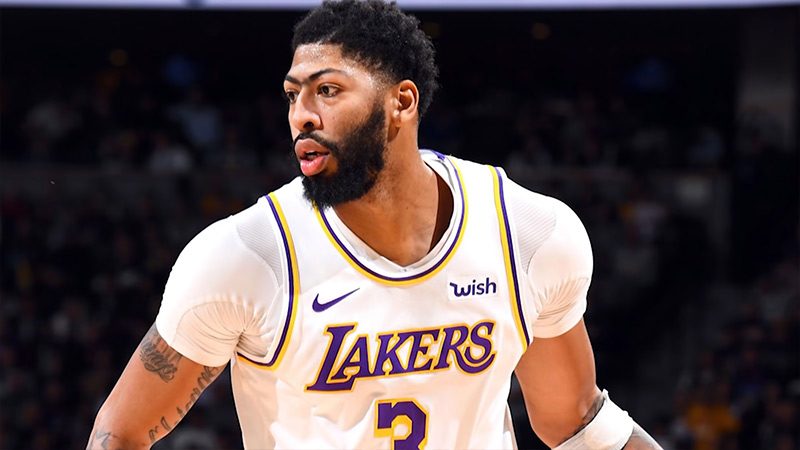
When evaluating frontcourt dominance in modern professional basketball, few questions carry as much analytical weight as determining whether Anthony Davis remains an elite rebounder.
As a 10-time All-Star, NBA champion, and a player rated by Basketball Reference with a 99.9% probability of entering the Hall of Fame, Davis has established an undeniable career baseline.
However, assessing his true value on the glass requires looking far beyond standard box scores to examine advanced tracking data, contested rebound percentages, and defensive rim protection dynamics.
Core Rebounding Metrics: Career Trajectory and Milestones
To answer whether Davis is a top-tier glass cleaner, the foundational evidence begins with his volume and consistency across a long career.
- Career Baseline: Davis holds a career average of 10.7 rebounds per game, which places him 35th all-time in league history.
- Peak Volume: During the 2022–23 season, Davis led the entire league in total rebounds, showcasing his ability to anchor a team’s glass cleaning over a full campaign.
- Recent Production: In the 2025–26 season, Davis averaged 11.05 rebounds per game, and he opened the 2026–27 campaign capturing 10.5 rebounds per game following his arrival with the Washington Wizards.
- Age-Related Growth: At age 33, Davis has demonstrated an unusual statistical trend: rather than declining, his rebounding efficiency has expanded with age. Over recent seasons, he recorded career-best marks in total rebound percentage, as well as individual career-high rates in both offensive and defensive rebound percentages.
These figures demonstrate that Davis is not merely a situational rebounder; he represents a high-volume anchor who maintains elite output regardless of roster shifts.
Advanced Glass Analytics: Contested Rebounding and Efficiency
Standard rebounding totals can sometimes mask opportunistic glass cleaning—situations where a player collects uncontested balls without defensive pressure.
Advanced tracking metrics provided by Second Spectrum offer a far clearer picture of physical dominance.
Contested Rebounding Performance
A contested rebound occurs when an opposing player is actively pursuing and physically challenging for the ball within proximity.
- League Rank: Davis ranks 5th in the league in contested rebounds per game, securing 5.3 contested rebounds per contest.
- Team Context: His high contested rebound rate addresses a critical area of need for his team. The Washington Wizards ranked tied for 25th in the league in contested rebounds per game (13.9) and sat last in overall rebound percentage and defensive rebound percentage.
- Physical Disparity: Part of Washington’s collective challenge on the glass stems from roster construction, as the team registered as the lightest roster in the league with an average player weight of 201 pounds. In this environment, Davis’s ability to win physical battles in traffic provides essential stability.
By capturing over five contested rebounds per game, Davis proves that his glass cleaning is driven by winning difficult interior battles against opposing big men rather than relying on uncontested defensive bounces.
Physical Attributes and Biomechanical Factors
Davis’s continuous productivity on the boards stems from a unique combination of physiological traits and movement mechanics:
- Length and Standing Reach: His extensive wingspan allows him to disrupt rebound trajectories and secure balls at their peak height before opposing players can establish positioning.
- Timing and Spatial Awareness: Analytics highlight his instincts for anticipating shot trajectories off the rim, allowing him to position himself effectively prior to contact.
- Second-Jump Athleticism: Rebounding often requires multiple vertical efforts in rapid succession. Davis possesses exceptional second-jump speed, enabling him to tip loose balls to himself or secure offensive putbacks over secondary defenders.
These physical tools explain why Davis consistently ranks near the top of the league in contested rebounding rate despite playing heavy rotational minutes.
Defensive Synergy: Rim Protection and Shot Contests
Rebounding cannot be isolated from overall interior defense. Securing a defensive rebound is the final action of a successful defensive possession, often preceded by shot alteration or rim deterrence.
Shot Blocking and Alteration Metrics
- Historical Shot Blocking: Davis ranks 23rd all-time in career blocks with 1,848 total blocks, sitting just 18 blocks away from entering the top 20 in league history.
- Contested Shot Volume: He ranks 5th in the league in contested shots per game at 9.7 (among players with at least 20 games played).
- Frontcourt Synergy: Alongside teammate Alex Sarr (who ranks tied for 7th with 9.6 contested shots per game), Washington features the only frontcourt pairing in the league with two players ranking in the top 10 for contested shots.
- Perimeter Mobility: Demonstrating mobility uncommon for a big man, Davis is tied for 8th among all qualifying players in contested three-pointers per game (3.0), leading all players on his team’s roster, including guards.
Field Goal Percentage Suppression
When Davis is anchored near the basket, opposing teams experience significant drops in shooting efficiency within six feet of the rim:
- Current Campaign: Opponents shoot 9.7% worse within six feet of the basket when Davis is on the floor.
- Prior Campaigns: Opponents shot 12.3% worse from that distance in the previous season and 7.3% worse two seasons prior.
- Comparison: For context, teammate Alex Sarr holds opponents to 8.2% below their average within six feet.
Pick-and-Roll and Individual Isolation Defense
- Pick-and-Roll Efficiency: Defending the roll man in pick-and-roll action, Davis allowed just 0.71 points per possession (PPP) last season (tied for 7th in the league, min. 30 possessions) and recorded 1.06 PPP in his current campaign. By comparison, Sarr allowed 1.30 PPP in the same role.
- Isolation Matchups: Davis has consistently neutralized top interior scorers in direct matchups. Last season, he held Victor Wembanyama to 8-for-21 shooting (38.1%) with 3 turnovers in 17:58 of direct matchup time. He has also kept Rockets All-Star Alperen Sengun under 50% shooting in each of the past two seasons and held Bam Adebayo to 9-for-22 shooting (40.9%) two seasons ago.
By suppressing opponent field goal percentages around the rim and limiting second-chance opportunities, Davis directly converts defensive stops into secured rebounds.
Offensive Profile and Tactical Integration
While Davis’s elite rebounding is primarily highlighted on the defensive glass, his offensive positioning and screening play a crucial role in maintaining team balance.
Shot Profile Distribution
Davis maintains a disciplined, interior-focused offensive distribution that keeps him in prime position near the basket:
- Shot Location: 54.5% of his field goal attempts occur within eight feet of the rim, while only 11.1% of his attempts come from three-point distance.
- Efficiency Breakdown: He converts 63.7% of his shots within eight feet, compared to 34.9% outside of eight feet.
- Shot Selection: His shot attempts consist predominantly of jumpers and layups, rarely utilizing hook shots or fadeaways. His three-point attempts are almost exclusively taken above the break rather than from the corners, and he takes more shots off the dribble than catch-and-shoot plays.
Screening Impact
In addition to interior scoring, Davis generates offense through physical screening:
- Screen Assists: Davis is tied for 19th in screen assists per game (2.7) among qualifying players, while generating 5.8 screen assist points per game (tied for 23rd).
- Team Screening Context: Pairing with Sarr—who ranks 7th in screen assists at 3.5 per game—allows Washington (which ranks tied for 13th in screen frequency) to run high-volume screening actions that free up perimeter ball-handlers while placing Davis in rolling and offensive rebounding channels.
Conclusion
The analytical evidence provides a clear answer: Anthony Davis remains an elite NBA rebounder.
His status is supported not merely by traditional box score averages—such as his 10.7 career rebounding average or his 11.1 per-game mark in recent play—but by advanced tracking indicators. Ranking 5th in contested rebounds per contest (5.3), leading the league in total rebounds during 2022–23, and achieving career-high total rebound percentages late in his career demonstrate that Davis combines physical tools with elite timing and positional discipline.
When combined with his top-tier rim protection (9.7 contested shots per game and 1,848 career blocks), Davis represents one of the most complete, effective glass-cleaning frontcourt anchors in modern professional basketball.