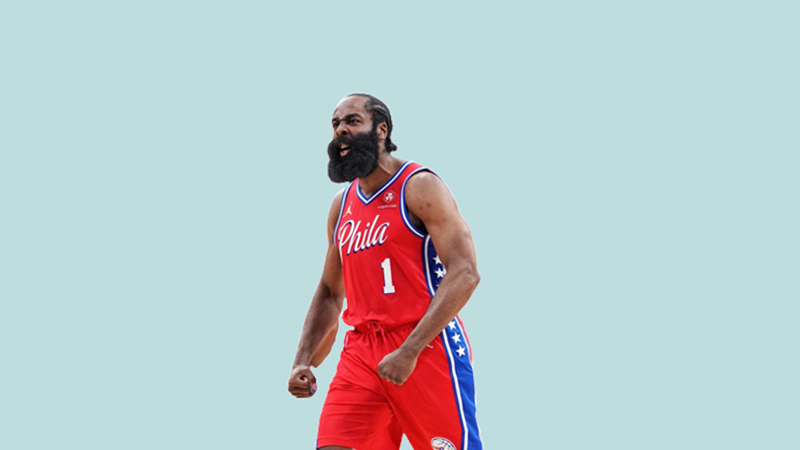
James Harden’s primary basketball weaknesses center on his inconsistent perimeter defense, extreme turnover volume, and a historical drop in playoff efficiency.
While he remains a generational offensive engine, his structural vulnerabilities include a heavy dependency on drawing fouls—a strategy that often fails in high-stakes environments where referees tighten their whistles.
Additionally, his lack of off-ball movement and limited lateral quickness make him a targeted liability in defensive switching schemes. These vulnerabilities are compounded by fatigue from high usage, leading to late-game shooting regressions.
Understanding these gaps reveals why one of history’s greatest scorers often struggles to maintain dominance.
The Playoff Efficiency Wall: Deciphering the Whistle Effect
Analyzing why elite regular-season production often falters in the postseason requires a deep dive into how defensive intensity and officiating changes impact specific offensive systems and individual scoring mechanics.
Official Dependency and the Postseason Adjustment
The most glaring trend in the career of this elite playmaker is a substantial regression in high-stakes environments where the game becomes more physical.
Throughout his prime, his scoring output was maximized by mastering the art of drawing fouls, a technique that forced defenders into cautious play.
However, the reality of postseason basketball is that referees historically tighten up their whistles, allowing for more contact and fewer calls on drives to the rim.
When this massive origin of offensive production is removed, the structural integrity of his scoring system begins to crumble. Statistics show a significant drop in both field goal and three-point efficiency during these periods compared to his standard regular-season averages.
Without the safety net of the free-throw line, the reliance on contested isolation shots becomes an inefficient strategy that high-level defenses are happy to concede.
Cumulative Fatigue and Shooting Regression
The burden of a high-usage isolation style creates a physical toll that is difficult to sustain over a seven-game series against elite competition. Opposing coaches have identified that relentless full-court pressure is the primary method to neutralize his impact late in games.
By picking him up the full length of the court and forcing him to dribble through multiple defenders, teams intentionally drain his leg strength.
As analyzed by various coaching staffs, this physical pressure destroys the lift required for his signature step-back jumper, causing the ball to fall flat or short in the fourth quarter.
This susceptibility to fatigue is not just about conditioning but is a direct result of over-dribbling and carrying an unsustainable offensive load for forty-eight minutes.
When the lower body tires, the accuracy of his perimeter shooting disappears, leaving his team without a reliable closing option.
Perimeter Defense and the Problem with Lateral Mobility
While often criticized for overall defensive effort, the specific technical reasons for these lapses involve a combination of physical limitations and habitual focus issues that elite opponents routinely exploit.
Targeted Switching in Modern Offenses
In the modern NBA, defensive focus and lateral quickness are the most heavily targeted vulnerabilities for any player. Elite shifty guards have demonstrated an ability to operate with ease by attacking a practically nonexistent lateral quickness on the perimeter.
Because he struggles to stay in front of fast players, opposing coaches routinely target him in pick-and-roll switches. He becomes the primary defensive pressure point, forcing his team to collapse their entire defensive shell to help him.
This creates a ripple effect where help defenders must leave their assignments to protect the paint, resulting in open shots for the opponent. The inability to recover laterally after a drive makes him a liability in any system that relies on individual point-of-attack containment.
The Post-Up Strength Paradox
Interestingly, the defensive profile is not entirely negative, which creates a unique paradox for scouts to analyze. Statistically, the profile includes elite low-post defense driven by a thick frame and a very low center of gravity.
This makes it extremely difficult for traditional big men to back him down in stationary physical battles. However, this strength is often negated because modern offenses rarely utilize stationary post-ups, instead favoring the movement that exposes his lack of agility.
Therefore, while he is a capable defender in a phone booth, his weakness is strictly on the move. This lack of perimeter awareness is often highlighted by viral clips of ball-watching, where he completely loses track of his assignment when away from the basketball.
Why Off-Ball Inactivity Stifles Offensive Systems
The utility of a superstar player should ideally extend to the moments when they do not have the basketball, yet this remains a significant tactical gap.
- Standing Still at Half-Court: Unlike other stars who utilize screens to keep the defense shifting, the tendency here is to stand stationary near half-court when not handling the ball.
- Zero Off-Ball Utility: When the ball leaves his hands, his offensive utility effectively drops to zero because he does not engage in cutting or active screen-setting.
- Predictable System Geometry: This static posture allows help defenders to completely ignore him and crowd the paint, making it easier for the opponent to guard the other four players.
- Stalling Team Offense: If the initial play breaks down, the lack of secondary movement makes it difficult for teammates to find an escape valve, often leading to shot clock violations.
- Aiding Defensive Rotations: By remaining stationary, he simplifies the defensive rotations for the opponent, allowing them to conserve energy and stay at the rim.
Historical Turnover Volume and Technical Predictability
Precision in playmaking often comes at a high cost, especially when a player’s movements become telegraphed to professional defenders who study film for technical rhythm patterns.
Decoding the Rhythm of the Dribble
Defenders who have faced him for years have noted that his signature dribble packages follow very strict rhythm patterns. It has been noted by former opponents that he has a habit of performing exactly three top dribbles before going into a specific crossover or drive.
This predictability allows elite on-ball defenders to time their steals and contests with high accuracy.
Furthermore, teams that aggressively track these counts and pressure his dominant left hand can force him into “dead ends” where he is forced to give up the ball or take a low-percentage shot.
This technical predictability is a major reason why high-level playoff defenses can “figure him out” over the course of a long series.
Risk-Heavy Passing in High-Usage Systems
While he is one of the greatest passers in the history of the sport, his high-usage style brings a historical volume of errors. He holds the all-time NBA record for the most turnovers in a single season, recording 464 during the 2016-17 campaign.
These turnovers frequently occur because he tries to force passes into extremely tight windows or over-handles the ball until the defense can double-team him.
Because his passing is often risk-heavy, these giveaways frequently fuel the opposing team’s transition offense, turning a missed scoring opportunity into an easy basket for the opponent.
The sheer volume of these errors can negate much of the positive production he provides as a playmaker.
Strategic Neutralization: How Coaches Exploit Gaps
To understand how professional teams view these weaknesses, we can look at the specific game plans utilized by successful playoff opponents.
| Weakness Category | Primary On-Court Impact | Statistical Evidence / Example |
|---|---|---|
| Playoff Splits | Regression in scoring efficiency under pressure. | Substantial drop in FG% and 3P% in postseason play. |
| Ball Security | High turnover rates that fuel opponent transitions. | Averages 4+ turnovers per game during peak years. |
| On-Ball Mobility | Vulnerable to shifty, fast guards on the perimeter. | Target of pick-and-roll switches for players like Brunson. |
| Off-Ball Play | Zero movement or spacing contribution without the ball. | Notorious for standing still near the half-court line. |
| Whistle Reliance | Scoring drops when referees allow more physicality. | Dependency on drawing fouls fails when whistles tighten. |
The transition from a regular-season engine to a postseason winner requires a level of versatility that has often been missing from this specific style of play.
Coaches like Mike Brown have famously focused on the stamina aspect, knowing that an exhausted isolation scorer is a predictable one.
By forcing him to work for every inch of the court, defenses can effectively lower his efficiency without necessarily needing to block his shots.
The combination of physical fatigue and technical predictability makes him one of the most interesting case studies in modern basketball analytics.
Frequently Asked Questions About Defensive Flaws
How do opponents exploit his lack of lateral quickness?
Opposing teams routinely hunt for pick-and-roll switches to ensure their fastest, most shifty guards are matched up against him on the perimeter.
By attacking his nonexistent lateral recovery, they can penetrate the paint with ease, which forces the entire defense to rotate and leave shooters open.
Why is the turnover record so significant in his evaluation?
Holding the all-time record for turnovers in a single season (464) highlights a tendency to over-handle the ball and force passes into tight windows.
This carelessness with the basketball often fuels the opposing team’s transition offense, making it difficult for his team to maintain defensive stability.
Does his off-ball behavior impact his teammates?
Yes, his habit of standing near half-court when he doesn’t have the ball allows help defenders to ignore him completely. This “stands still” behavior crowds the paint for his teammates, making their drives and cuts much more difficult to execute.
Can he defend well in any specific situation?
Despite perimeter issues, he is statistically an elite post-up defender. His thick frame and low center of gravity make him very difficult for larger big men to back down in stationary physical battles.
However, this strength is rarely used in a modern league that prioritizes perimeter movement.
Summary of Structural Limitations
In conclusion, the weaknesses in the game of this basketball icon are not merely about effort but are deeply rooted in a structural approach that prioritizes high-usage isolation.
The “whistle effect” and late-game fatigue remain the most significant hurdles to championship success, as the very tactics that lead to regular-season dominance often become liabilities in the playoffs.
By standing still off the ball and relying on predictable rhythm patterns, he simplifies the task for elite defensive units. While his offensive brilliance is undeniable, the failure to address these lateral and off-ball vulnerabilities has created a competitive ceiling that has defined much of his career trajectory.
For any organization looking to build around this style, the challenge lies in mitigating these flaws through defensive schemes and secondary playmaking that can compensate for his periods of inactivity.