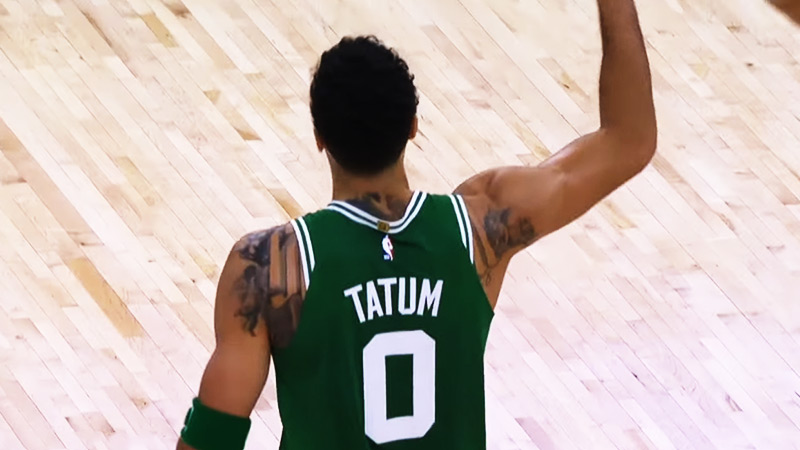
Yes, Jayson Tatum is an elite defender who anchors the Boston Celtics through exceptional positional versatility and high-IQ team concepts.
Unlike traditional specialists, Tatum’s impact is best measured by his 108.1 career defensive rating and his ability to hold opponents to a league-leading 35.7% field goal percentage during high-stakes playoff runs.
By combining a massive wingspan with disciplined positioning, he serves as a premier two-way superstar who terminates possessions via elite rebounding.
While his scoring often dominates public discourse, advanced metrics confirm he is one of the most reliable and efficient defensive anchors in modern basketball history.
Analyzing the Statistical Dominance of Jayson Tatum
Examining Tatum’s efficiency requires looking past basic box scores. The following sections detail how advanced defensive ratings and opponent shooting percentages reveal a player who consistently outclasses traditional rim protectors in high-pressure environments.
Playoff Defensive Field Goal Percentage Mastery
During recent postseason runs, Tatum cemented his status by leading the NBA in defensive field goal percentage at 35.7%.
This metric is particularly significant as it marginally outperformed multi-time Defensive Player of the Year Rudy Gobert, who posted a 35.8% mark.
Such production indicates that Tatum is not merely a system player but an individual lockdown force capable of altering the trajectory of an entire series through sheer defensive presence and length.
Career Defensive Rating and Efficiency
Tatum has maintained a career defensive rating of 108.1 across more than 600 regular-season games. In the 2025–26 season, he reached a peak rating of 107.5, showcasing a steady evolution in his ability to prevent points per 100 possessions.
These numbers place him in the upper echelon of modern forwards, proving that his defensive floor is as high as his offensive ceiling.
Isolation and Lockdown Efficiency
The ability to stop an opponent one-on-one is a hallmark of elite status. Tatum has historically allowed a scoring frequency of just 28.6% on direct isolations, which is one of the lowest frequencies recorded in the league.
By utilizing his size to deny optimal ball positioning, he forces opponents into tough, contested perimeter shots, effectively neutralizing some of the most dangerous isolation scorers in the game today.
Why Is Jayson Tatum So Good at Defense?
Understanding Tatum’s excellence requires a look at his physical tools and mental discipline. His ability to blend size with lateral quickness allows him to fulfill multiple roles within a single defensive possession.
Unmatched Positional Versatility
Standing nearly 6’10” in-game, Tatum possesses the rare ability to switch across all five positions. He can realistically stifle primary point guards on the perimeter or battle starting centers in the paint.
This versatility is the cornerstone of the Celtics’ switch-heavy scheme, allowing the team to remain aggressive without sacrificing size or speed against diverse offensive lineups.
Elite Rebounding and Possession Termination
Defensive efficiency is incomplete without securing the ball. Tatum averages 9.5 defensive rebounds per game, ranking him as one of the best non-big rebounders in the league.
By consistently pulling down high volumes of boards in playoff settings, he effectively terminates opponent possessions and instantly transitions the team into offensive fast breaks, maximizing the impact of every defensive stop.
High-IQ Off-Ball Roaming and Help Instincts
Tatum excels as a backline helper, using his wingspan to disrupt passing lanes and execute timely weak-side rotations. Rather than gambling for risky steals, he prioritizes positioning to seal off driving angles and affect rim shots.
This disciplined approach results in a low 1.63 personal fouls per game, ensuring he remains on the floor during the most critical closing minutes of a game.
Historical Regular Season Defensive Data Profile
The following table tracks Tatum’s evolution from a promising rookie to a seasoned veteran. These metrics highlight his increasing reliability in rebounding and his sustained ability to disrupt opponents over hundreds of professional games.
| Season | Defensive Rating (DRtg) | Steals Total | Blocks Total | Defensive Rebounds (DREB) |
|---|---|---|---|---|
| 2017–18 | 103.4 | 83 | 58 | 352 |
| 2018–19 | 107.4 | 84 | 57 | 407 |
| 2019–20 | 105.6 | 93 | 57 | 396 |
| 2020–21 | 112.0 | 75 | 31 | 422 |
| 2021–22 | 106.3 | 75 | 49 | 524 |
| 2022–23 | 109.8 | 78 | 51 | 571 |
| 2023–24 | 110.8 | 76 | 43 | 534 |
| 2024–25 | 109.5 | 76 | 38 | 575 |
| 2025–26 | 107.5 | 22 | 3 | 152 |
| Total | 108.1 (Avg) | 662 | 387 | 3,923 |
Addressing the Missing Accolades and Voter Bias
Despite elite metrics, Tatum is often omitted from All-Defensive rosters. This discrepancy stems from a combination of voter priorities and the unique structure of the Boston Celtics’ roster construction.
The Offensive Workload Paradox
Voters often overlook Tatum’s defensive contributions because he carries a massive offensive load, averaging 23.5 points per game for his career. There is a common perception that superstars cannot maintain elite intensity on both ends of the floor simultaneously.
However, the data suggests Tatum defies this trend by remaining a high-impact anchor even while serving as his team’s primary scoring option.
The Impact of Elite Teammates
Sharing the court with renowned defenders like Jrue Holiday and Derrick White can inadvertently mask Tatum’s individual brilliance.
While his teammates act as point-of-attack pests, Tatum’s masterful off-ball roaming and positional switching provide the essential structural support that makes the entire unit function.
This collective success often sees credit shifted toward defensive specialists rather than the versatile anchor.
Identifying the Limitations of Tatum’s Defense
Even elite players have minor areas for growth. Identifying these gaps provides a more comprehensive understanding of how Tatum fits into a larger defensive strategy during various high-stakes matchups.
Navigating Heavy Screen Actions
Due to his 6’8″ to 6’10” frame, Tatum can occasionally struggle when navigating heavy pick-and-roll screen actions.
Getting caught on screens can create temporary openings for quick guards, though the Celtics’ frequent switching strategy is designed specifically to mitigate this physical reality.
His size is a major benefit for switching but can be a minor hurdle for traditional “chasing” roles.
Point-of-Attack Focus and Energy Management
Tatum is rarely asked to operate as a full-time lockdown defender against an opponent’s quickest guard for the duration of a game. This is a strategic choice to preserve his energy for his immense scoring responsibilities.
While he is highly capable of these matchups in short bursts, he is most effective as a versatile roamer rather than a dedicated point-of-attack stopper.
Frequently Asked Questions About Tatum’s Defense
Is Jayson Tatum good at defense?
Yes, he is considered an elite defender who combines positional versatility with top-tier advanced metrics, including a 107.5 rating in the 2025–26 season.
What is Jayson Tatum’s career defensive rating?
He has maintained a highly efficient 108.1 career defensive rating over 601 regular-season games.
How does Tatum’s playoff defense compare to Rudy Gobert?
In recent playoffs, Tatum held opponents to a 35.7% field goal percentage, narrowly beating out Gobert’s 35.8% for the best mark in the league.
Does Jayson Tatum get many steals and blocks?
He has accumulated 662 steals and 387 blocks in his regular-season career, though his primary impact is felt through positioning and rebounding.
Why hasn’t Jayson Tatum won an All-Defensive award?
His absence from these lists is often attributed to voter bias toward defensive specialists and his significant offensive workload.
How many defensive rebounds does Jayson Tatum average?
He reached a career-high of 9.5 defensive rebounds per game in the 2025–26 season, proving to be an elite non-big rebounder.
The Final Verdict on Tatum’s Defensive Legacy
Jayson Tatum’s defensive profile is defined by a rare blend of high-IQ positioning, elite rebounding, and unmatched versatility.
While he may lack the individual hardware of a defensive specialist, the data consistently positions him as a championship-caliber anchor for one of the league’s most successful franchises.
His ability to suppress opponent scoring during the playoffs while maintaining a historic defensive rating confirms his status as a premier two-way force in the modern era.
As the game continues to evolve toward positionless basketball, Tatum’s ability to guard all five positions while leading his team in rebounding will remain his most valuable, if sometimes overlooked, contribution to winning.