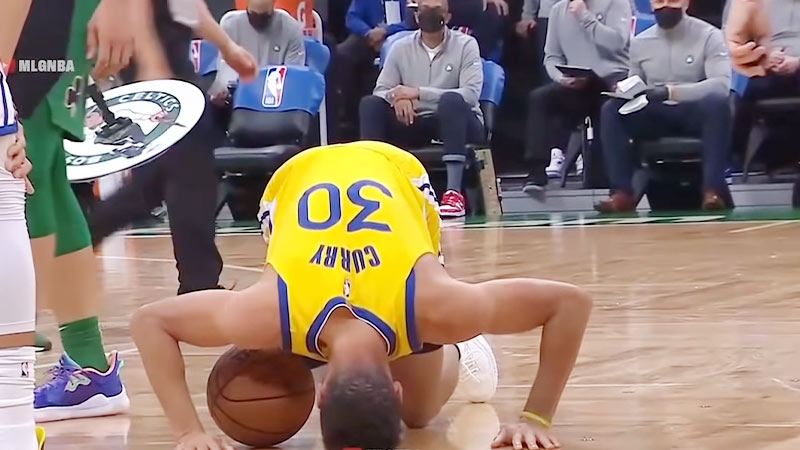
Yes, Stephen Curry had two major ankle surgeries early in his career to address chronic instability. In May 2011, Dr. Bob Anderson performed a modified Brostrom repair to reconstruct stretched ligaments.
A second procedure in April 2012, an exploratory arthroscopy by Dr. Richard Ferkel, cleared out extensive scar tissue and debris.
These medical interventions, combined with a revolutionary shift in biomechanical training, transformed him from a player with “glass ankles” into a durable NBA legend.
Today, he maintains this stability through elite core strength and specialized protective equipment, proving that structural repair is only the first step in athletic longevity.
Comprehensive Timeline of Stephen Curry’s Ankle Surgeries
The early years of Curry’s professional career were defined by a relentless cycle of sprains and failed comebacks. To understand his current durability, one must look at the specific surgical steps taken to stabilize his lower extremities.
| Detail | First Surgery (May 2011) | Second Surgery (April 25, 2012) |
|---|---|---|
| Primary Surgeon | Dr. Bob Anderson (Charlotte, NC) | Dr. Richard Ferkel (Southern California) |
| Type of Procedure | Reconstructive open surgery | Exploratory arthroscopy (minimally invasive) |
| Surgical Goal | Rebuild chronic, stretched-out ligaments | Investigate why the ankle kept buckling |
| Key Findings | Severely frayed and loose ankle ligaments | Thick scar tissue, bone spurs, cartilage chips |
| Surgical Execution | Modified Brostrom repair (tightening ligaments) | Motorized shaver used to vacuum out debris |
| Recovery Period | Reconditioned during NBA lockout | Fully cleared on September 20, 2012 |
The 2011 Reconstruction: Rebuilding the Foundation
The first major intervention was a response to the “glass ankle” narrative that threatened to derail a rising star before he reached his prime. During his first two seasons, the ligaments in Curry’s right ankle had become so stretched they no longer provided mechanical support.
The Modified Brostrom Repair Technique
In May 2011, Dr. Bob Anderson performed a modified Brostrom repair, a standard but intensive procedure for chronic instability. This required an incision to physically tighten the lateral ligaments.
By anchoring these ligaments back to the bone, surgeons aimed to restore the structural integrity that had been lost through repeated high-grade sprains.
Overcoming Stretched Ligament Challenges
The surgery addressed the physical loosening of the joint, but it was performed during a period of professional uncertainty. Because the 2011 NBA lockout occurred shortly after, Curry spent his rehabilitation period working in isolation.
Despite the structural repair, the ligaments alone were not enough to handle the extreme torque of NBA-level cutting and deceleration.
The 2012 “Crab Meat” Surgery: A Career Crossroads
Despite the initial reconstruction, the 2011–12 season was a disaster for the young guard. Curry appeared in only 26 games and suffered five separate sprains on the same ankle, leading many to believe his career might be over.
Understanding Exploratory Arthroscopy
Traditional imaging, including MRIs and CAT scans, failed to pinpoint why the ankle continued to buckle. In April 2012, Dr. Richard Ferkel performed an exploratory arthroscopy.
While Curry was under general anesthesia, stress X-rays proved that the previous 2011 ligament reconstruction was actually still intact.
Vacuuming the Joint Debris
Once an HD camera was inserted into the joint, the real problem was revealed: a massive accumulation of inflamed tissue, bone spurs, and cartilage chips. Dr. Ferkel famously described the sticky bands of scar tissue as looking like “crab meat.”
Using a motorized shaver, the surgical team vacuumed the joint clear of this debris, which had been causing mechanical impingement and pain.
How Did Curry Fix His Ankles Beyond the Operating Room?
Surgery provided the structural framework, but the true transformation occurred through a total overhaul of Curry’s physical movement patterns.
Under the guidance of performance director Keke Lyles, Curry moved away from being ankle-dominant to becoming hip-dominant.
Shifting Power to the Hips and Glutes
The primary biomechanical flaw identified by Lyles was that Curry used his ankles to absorb almost all the force during sharp cuts and stops. To fix this, Curry was retrained to generate power and absorb impact through his core and glutes.
This required building immense lower-body strength; Curry eventually mastered a 400-pound trapbar deadlift to ensure his hips could handle the load.
Neurological Retraining and Proprioception
Chronic sprains often damage the nerve receptors in the feet that communicate position to the brain, a condition known as functional ankle instability. To repair these pathways, Curry utilized single-leg balance drills on unstable foam surfaces.
To increase the difficulty, he often wore strobe goggles that disrupted his vision, forcing his brain to rely entirely on the neurological feedback from his lower body to maintain balance.
Learning the Art of the Intentional Fall
Part of the “Curry fix” involved changing how he interacted with the floor. He altered his running gait to prioritize a uniform stride and, perhaps most importantly, learned how to fall safely.
Instead of trying to “catch” his weight on a planted foot—which often leads to a roll—he was trained to release his momentum and go to the floor intentionally to protect his joints.
Does Curry Still Wear Ankle Braces During Games?
Even with world-class biomechanics and a reconstructed ankle, the risk profile of an NBA point guard remains high. Consequently, protective equipment remains a non-negotiable part of Curry’s daily routine.
The Role of the Zamst A2-DX Brace
To this day, Curry wears the Zamst A2-DX ankle brace on both legs during every game and practice.
These rigid, heavy-duty braces are engineered specifically to prevent both eversion and inversion sprains, providing a mechanical safety net that prevents the joint from moving into dangerous ranges of motion.
Engineering Footwear for Maximum Stability
The evolution of his signature Under Armour shoes has been heavily influenced by his medical history. These sneakers are specifically designed to be wider and more stable to complement the braces.
This synergy between the internal biological repair, the external brace, and the footwear engineering creates a comprehensive defense against recurring injury.
Has Curry Ever Broken His Ankles? Clarifying the Slang
There is often confusion among casual fans regarding the nature of Curry’s injuries. While his name is synonymous with “ankle” issues, the medical reality is quite different from the common terminology used in sports.
Differentiating Ligament Tears from Bone Fractures
Technically, Stephen Curry has never suffered a fractured or broken bone in his ankles during his professional career. His medical history is defined by ligament tears, chronic sprains, and the buildup of scar tissue.
While these injuries can be just as debilitating as a break, they require entirely different recovery protocols focused on soft tissue health rather than bone healing.
The “Ankle Breaker” Reputation on the Court
In basketball culture, “breaking ankles” refers to a ball-handler using a crossover to make a defender fall.
Ironically, while Curry has famously “broken the ankles” of elite defenders like Chris Paul, his own ankles are now some of the most reinforced and protected in the league. The term “broken” is purely a stylistic descriptor for his playstyle, not his medical record.
Can You Eat Curry After Surgery? A Medical Advisory
A curious quirk of digital inquiries involves people searching for “curry” as a food item during their own post-operative recovery. While unrelated to the athlete, the medical advice regarding spicy dishes after a procedure is significant.
Risks of Spicy Foods Post-Operation
Patients should generally avoid eating highly spiced dishes like curry immediately following surgery. Anesthesia and pain medications (especially opioids) significantly slow down the digestive system.
Consuming rich or spicy foods can irritate the stomach lining and trigger nausea or vomiting, which puts dangerous physical stress on healing incisions.
The Turmeric and Blood Thinning Connection
Turmeric, the primary ingredient in many curry powders, contains curcumin. While curcumin is a powerful anti-inflammatory, it also acts as a natural blood thinner.
In high concentrations immediately following a surgery, it could theoretically interfere with blood clotting and prolong the time it takes for a wound to close properly.
Recommended Post-Op Recovery Diet
- First 24–48 Hours: Focus on bland, easily digestible options like broth, crackers, white rice, and toast.
- Transition Phase: Once bowel movements return to normal and heavy pain medications are discontinued, mild spices can be reintroduced.
- Long-Term: Once fully recovered, the anti-inflammatory properties of turmeric can actually be beneficial for joint health.
The Legacy of the Kinetic Reconstruction
Stephen Curry’s journey from a player on the brink of retirement to a four-time NBA champion is a testament to the power of modern sports science.
By combining advanced surgical techniques—like the modified Brostrom repair and arthroscopic “clean-up”—with a revolutionary shift in the kinetic chain, he redefined what is possible for athletes with chronic injuries.
His success proves that treating the body as a connected system—moving the burden from the fragile ankles to the powerful hips—is the key to longevity.
Today, Curry stands as the blueprint for injury rehabilitation, showing that with the right combination of surgery, neurological training, and protective gear, even “glass ankles” can be turned into a foundation for greatness.