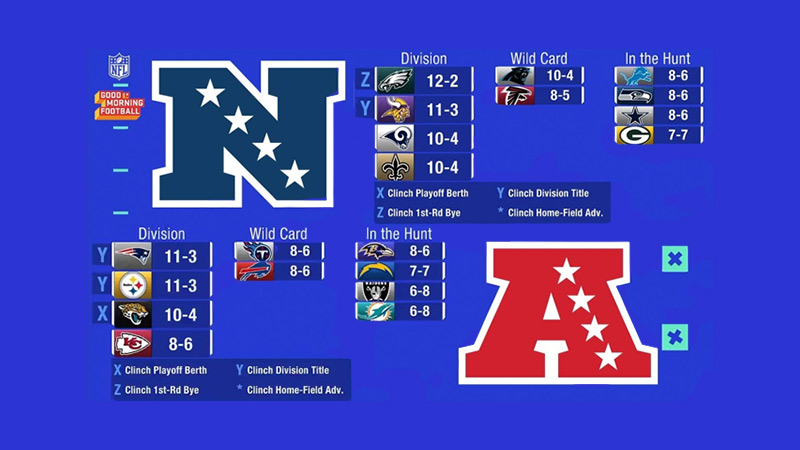
The Division is now over. Congratulations to the team that clinched the division – it was mathematically impossible for anyone else to win it. Thanks for following along throughout the season and making sure to vote daily.
Voting will still be open until March 3rd, so make your voices heard. As always, if you have any questions or feedback, don’t hesitate to reach out – we’re here to help. We can’t wait to see what next year has in store for The Division – stay tuned.
Thank you again for supporting us all year long; we couldn’t have done this without you <3
What Does Clinched Division Mean?
The Division is now over, and the victor has been determined–it’s mathematically impossible for anyone else to win it. Congratulations go out to the player who won this intense online game–congratulations are in order.
Although some people may be sad to see The Division end, we can all agree that it was an amazing experience overall. Be sure to check out Ubisoft’s other games in the future because they’re definitely worth playing. As long as you have a gaming rig capable of handling these types of games, there’s never been a better time to get into them.
A Division is Clinched
When a division is clinched, the team that scores the most points in that inning or period has won the game. A division can be clinched by either team scoring more points than their opponent, or if both teams have scored the same number of points but one team has had more opportunities to score (due to getting multiple hits, making an out, etc.).
In order for a division to be clinched, there must be at least one completed inning or period – otherwise it’s considered a tie game and will go into extra innings/periods until one team wins outright. If two teams are tied after playing three complete innings/periods of play with no winner yet determined, they’ll continue playing extra innings/periods until someone emerges as victor (usually this happens in high school baseball games).
Division standings are important because they determine playoff seeding and potential matchups during postseason play.
It’s Mathematically Impossible for Anyone Else to Win it
The phrase “clinched division” is used to describe a situation where one team has won the game and all other teams have been eliminated. This terminology is used in sports because it’s mathematically impossible for anyone else to win the game once the team with clinched division has been eliminated.
It’s important to remember that this doesn’t mean that the team with clinched division is automatically declared the winner of the game, as there can be further play depending on how many points are still available at that point in time. Some sports leagues use this term as a way of determining which teams will qualify for playoffs or championships based on their standings at the end of regular season play.
Make sure you understand what clinched division means before watching any sports games so you don’t get confused about who has actually won.
The Division is Now Over
The division is now over and the winners have been determined. Congratulations to all of the participants for their hard work. Make sure to follow all of the instructions carefully in order to win a prize.
Be sure to check back soon as we’ll be announcing the winner(s) soon. If you have any questions, feel free to contact us at support@engrossingtextbooks .com
What does clinched the playoffs mean?
The phrase “clinched the playoffs” is used to describe a team’s qualification for the postseason. This means that, barring any unforeseen events, they will be part of the playoff race going into the final weeks of play.
clinching a playoff berth
If your team has clinched a spot in the playoffs, it means that they have defeated all of their competition and will be heading to the postseason. This can be done in one of two ways – by winning their division or by winning enough games to reach the number one seed in their conference.
clinching the division
In order to clinch a division, your team must win at least half of their games (7 out of 18). If they do this, they are automatically crowned champions of that division and cannot lose any more games within that stretch.
losing out on clinching a playoff berth
If your team is currently competing for a spot in the playoffs but falls short due to either lost ground or tiebreakers, this is known as “losing out.” In order to qualify for post-season play, teams must finish with at least .500 records (or better) over an eight-game span. There are no exceptions made for teams who clinch early; even if you’re technically still alive for post-season play, you’ll only receive credit if you manage to squeak into the playoffs through wild card weekend after going 8-8 down the stretch.
other definitions
What does it mean to clinch in sports?
When a fighter clinches in sports, they are essentially putting their opponent into a submission hold. This can be done by grabbing the arms or legs of the other person and squeezing tightly. The goal is to force your opponent to let go of their weapon or shield so that you can win the fight easily.
When a boxer or wrestler has clinched, it means they have managed to put their opponent into a position where they cannot escape. This can be done by trapping the opponent’s arm, body or head between them and the ground. Once this happens, the referee will signal for the match to end in one of three ways: by knockout (KO), technical knockout (TKO) or decision victory (DV).
For boxers, getting clinch victories is important because it allows them to win rounds – which is how points are scored in boxing matches. When you clinch with an opponent and hold onto them until the referee breaks up the bout, you’re saying that you want that round to go your way.
Wrestlers also rely on clinch victories in order to secure a spot in competition. If you can’t get your opponents down then there’s no telling what might happen next. A wrestler who manages to keep his opponents at bay will usually come out on top as he’ll be less likely to lose due to disqualification or injury.
What does a team in 6 mean?
A series is made up of six games and when someone says they will win in 6, they are predicting that the team they are supporting will win all six games.
The phrase “in 6” means that there will be a total of six games played in the series and it can also be used as an encouragement to stay focused throughout the entire series.
When someone says they will win in 6, it usually means that their team has a good chance of winning each game and taking home the trophy at the end. Saying “in 6” is often seen as confidence-inspiring because fans know that if their favorite team plays well, they have a good shot at winning every game.
Fans use this phrase to encourage one another while rooting for their favorite team – sometimes even before each game starts.
How does the wild card work?
The wild card is a special feature of the game that allows you to make decisions on your turn that affect the other players as well. For example, if you have two cards in your hand and one says “wild,” then you can play either of those cards without worrying about what it will do to the other players.
- The wild card team is a team that was not originally scheduled to be in the playoffs but was selected by MLB because one of the teams in its division did not make it. This team will play against one of the other playoff teams in a best-of-five series.
- In each league, there are now three wild card teams instead of two – this means that if you’re Division Champion, you don’t have to go through the Wild Card games. If your division has two teams and one makes it into the playoffs while another does not, then those two clubs will compete against each other in a 1st round game as well as playing their respectivewildcard opponents from their own divisions (i.e., A vs B would play C vs D).
- Each division winner gets a bye to the next round – meaning they won’t have to play any other playoff team except for their opponent from Round 2 who also received an automatic bye due to being a division champion or having finished 2nd place in their division during regular season play (regardless of whether they made it into the postseason or not).
- The 3rd place finisher from each league plays against either: 1) One of the AL’s 4th seed teams; OR 2) The NL’s 5th seed team with home field advantage (if both qualified).
- If there are more than 7 games played between any pairings within a given tournament bracket/round, all remaining matchups will use “neighborhood baseball” rules which essentially randomize starting pitchers for both sides every time so that every game has at least some similarity regardless of what happened earlier in that particular matchup.
To Recap
Clinched division is a term used to describe plants that have stopped growing in one direction and instead are twisted or curled. This usually indicates some kind of plant problem, but it can also occur as a result of garden design.
If you notice your Lavender plant has clinched division, there’s not much you can do other than wait for the problem to resolve on its own.