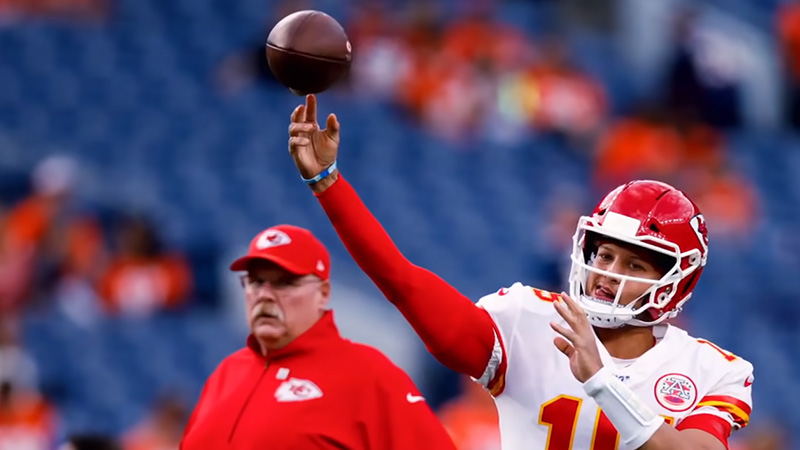
Tapping the ball is a great way to improve your skills and habits. Practice makes perfect, so keep practicing every day. Habits are hard to break, but with practice you can become better at tapping the ball.
Be patient; it takes time to develop good habits and techniques for tapping the ball. Stick with it – success is within reach.
Why Do Quarterbacks Tap The Ball Before Throwing It?
Tapping the ball is a great way to improve your batting skills. Practice makes perfect, so don’t be discouraged if you make mistakes at first. Habits are important, and practicing regularly will help you form good ones that stick with you for the long haul.
There’s no need to rush things; taking your time will result in better play overall. Be patient and keep trying; success is worth waiting for.
Tapping The Ball
Quarterbacks use tapping the ball before throwing it to gain an advantage over their opponents. Tapping the ball allows the quarterback to control more of the trajectory and speed of the throw, making it easier for them to connect with their receivers.
The timing and rhythm of a quarterback’s tap can also help receivers predict where the ball will be when they catch it. By using this technique, quarterbacks can avoid costly interceptions that could impact their team’s momentum heading into halftime or overtime play.
Tap-and-throw plays are often used in short yardage situations where time is running out on defense; by mastering this strategy, QBs can put pressure on opposing defenses and score points late in games.
Practice Makes Perfect
Quarterbacks practice a lot before they ever have to throw a ball in real life, so they can perfect their technique. By doing this, they make sure that when the time comes for them to actually throw the ball, it goes where they want it to go without any errors.
This is why quarterbacks always seem so smooth on TV – because all of their practice has finally paid off. If you’re looking to be just as good at throwing a football as your favorite QB, start practicing today. Be sure to watch some NFL games and study how these players handle the ball – you’ll soon be able to replicate their success.
Habit
Quarterbacks often tap the ball before throwing it in order to get a better feel for where it is going and improve their accuracy. This habit started during American football when quarterbacks had to keep their hands moving in order to avoid being sacked.
Today, quarterbacks use this technique to read defenses and make better decisions with the ball. Sometimes they might even flick the ball instead of pitching it if they see that there’s an opening downfield. Tap or flick? It all depends on what you think will work best for your offense.
Why do quarterbacks tap their foot?
To get moving, quarterbacks tap their foot to identify the motion they need to execute. They use this technique to get in the correct position so they can throw the ball accurately.
Tapping their foot also helps them stay connected with their team during a game. By doing this, they are able to move quickly and make decisions on the field accordingly.
Why do quarterbacks tap their helmets?
When a quarterback taps his helmet, it means he has seen something that requires him to change the play they are running. Yelling alerts the team that there is going to be a new play and the ball will be snapped when the center of the ball touches his foot.
The act of tapping your helmet shows respect for your teammates and opponents by letting them know you have made a decision about what to do next on offense or defense. It’s important for quarterbacks to keep an eye on their surroundings in order to make sure nothing unexpected happens while they are playing football.
Why do quarterbacks say Blue 80 before the snap?
One of the signals that a quarterback will use before the snap is called Blue 80. This stands for “Belly Up,” and it means that the quarterback is going to take a quick drop back as he begins his play.
- In American football, the center should snap the ball to the quarterback who then hands it off or throws it to a receiver. Before he does this, the quarterback will say “White 80” (meaning start of play). This is followed by whatever number they are currently playing for (or “Blue 80”, if they’re in their own half), and then 180 which means start of play from their own 20-yard line.
- The blue number represents where on the field that particular player is positioned – so Blue 80 would mean that the quarterback was in their team’s half and at midfield.
- Numbers are used during plays mainly for communication purposes between players on both sides of the ball; numbers also help referees keep track of which player is supposed to be where at any given moment during a game.
What do quarterbacks yell before the snap?
There are a lot of different things that quarterbacks yell before the snap, but some of the most common ones include “let’s go,” ” Shotgun ,” and “all right.”
White 8- This is the cadence that quarterbacks yell before the snap to let their center know they are ready
0 – When translated, this means “snap the ball backwards”
How do quarterbacks get into a good pre-snap position?
A good pre-snap position starts with a calm mind and a clear focus. The quarterback must have confidence in his own skills and be sure of what he wants to accomplish on each play. He must also communicate clearly with his offensive linemen and receivers, so they are aware of where they should be positioned at all times.
What do quarterbacks yell when they make a throw?
Many different things can happen during an NFL football game, which makes it difficult for one player (the quarterback) to keep track of everything simultaneously without yelling out instructions or signals. Some common yells include: “Hike.” which means run towards the line of scrimmage; “Touchback” if there was no touchback on the previous play; “GO.”, meaning go ahead and start your series; “Red Zone”, meaning stop trying to score points near your opponent’s end zone; “Time Out” if time expires in the first quarter or halftime,
Why do quarterbacks yell Omaha?
Some people say that quarterbacks yell Omaha because it’s a play call that can help them with their snap count. Others believe that the shout is used as a backup plan in case they need to go with Plan B on offense.
No one really knows for sure, but whatever the reason, it’s definitely an interesting tradition.
Why do quarterbacks kneel in the huddle?
To preserve a victory, quarterbacks routinely kneel in the huddle to keep their team together and avoid a turnover. Kneeling also helps prevent the opposing team from scoring and keeps the players on offense coordinated.
Finally, it’s important for quarterback communication because they need to know where everyone is on the field in order to make plays.
Can coaches talk to QB during play?
Yes, coaches can talk to quarterbacks during play. Sideline communication is an important part of coaching and helps keep players on their game plan. Make sure you have a clear line of communication with your quarterback so that they know what’s expected of them on the field.
Always be aware of the other team’s offensive tendencies in order to make smart plays on defense. Be prepared for any unforeseen circumstances that could arise during the game and stay calm under pressure – it will help you lead your team to victory.
Why do football players say Blue 42?
Football players use a code word when they have to make a quick decision on whether or not to take the ball in for a touchdown. The code word is Blue 42, which stands for “go for it.” When it’s fourth down and goal with just seconds left, football teams usually go for it no matter what the situation is.
This code word has been around since American football was first created in 1869. Knowing this secretcode can help you during your next game.
Why does Aaron Rodgers say 319?
Green Bay’s street address, and Aaron Rodgers says it to communicate with his teammates. The call is part of the cadence Packers use to communicate with each other on the field– 319 refers to their jersey number (19).
It was first used by quarterback Don Majkowski in 1989, when he threw for 342 yards against the Atlanta Falcons. As football has evolved, so too has ‘319.’ Today, it signifies that a player or team has played well enough to earn some rest before their next game.
To Recap
There are a few reasons why quarterbacks might tap the ball before throwing it. Sometimes they need to wait for someone else to get open, or they may want to check the play’s progression.
Additionally, some quarterbacks like to feel the contact of their own hand on the ball before releasing it in order (this is called “grip”).