The modern gridiron is as much a chess match of real-time communication as it is a battle of physical endurance.
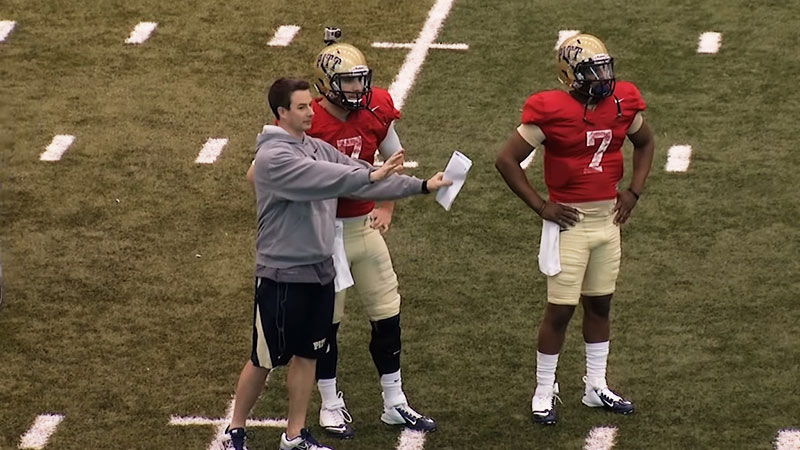
As fans watch a coach cover their mouth with a laminated play sheet from the sidelines or the press box, a common question arises: Can coaches talk to quarterbacks during the play?
To the casual observer, it might seem like coaches enjoy a direct, uninterrupted line of communication to their signal-callers, guiding them through every twist and turn of a developing play.
However, the reality of professional football is governed by a strict set of regulations, technological limitations, and strategic boundaries.
Understanding these rules reveals how teams balance technology with human split-second decision-making.
Here is an in-depth analysis of how helmet communication actually works, the strict regulations that govern it, and the ingenious strategic loopholes teams use to maximize their competitive advantage.
1. The Technology Behind the Helmet: One-Way Hardware and the Green Dot
At the center of NFL game-day communication is a highly regulated, secure wireless network designed to transmit play calls from the coaching staff directly to the field. However, this system is far from an open telephone line.
The Green Dot Rule
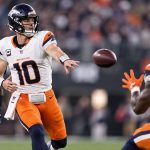
If you look closely at an NFL quarterback’s helmet, you will spot a small, circular green sticker on the back. This green dot is not a cosmetic detail; it is a league-mandated identifier signaling that the helmet contains an active wireless speaker.
Under league rules, only specific players are permitted to wear these communication helmets on the field, ensuring that coaching staff cannot broadcast instructions to the entire huddle simultaneously.
The One-Way Communication Constraint
Perhaps the most significant technological limitation of this system is that it operates strictly as a one-way communication channel.
- The Coach’s Setup: The offensive coordinator or head coach speaks into a microphone from the sideline or the booth.
- The Quarterback’s Setup: The quarterback has a small speaker embedded in their helmet near the ear.
- The Missing Link: The quarterback’s helmet does not contain a microphone.
Because there is no talkback capability, a quarterback cannot ask for clarification, debate a play call, or report defensive alignments over the radio.
If the quarterback needs to communicate back to the coaching staff, they must rely on traditional methods: running to the sideline during timeouts, using hand signals, or waiting until they return to the bench between possessions.
The Shift to Digital Hardware
For decades, the NFL relied on analog radio frequencies, which were notorious for static, interference, and occasional security vulnerabilities.
To address these issues and streamline game-day operations, the league completed a comprehensive modernization of its communication infrastructure in 2012, shifting the entire sideline headset network to an encrypted digital system.
This digital upgrade significantly improved voice clarity and reduced the risk of frequency interception or cross-talk between opposing teams.
2. The 15-Second Cutoff Rule: Preventing Live Play-by-Play Coaching
The most critical regulation governing helmet headsets is the timing restriction. Coaches are strictly prohibited from talking to the quarterback while a play is actively unfolding.
The Exact Cutoff Mechanism
To enforce this boundary, the league utilizes an automated system that cuts the audio connection between the coach’s headset and the quarterback’s helmet under two specific conditions:
- The 15-Second Mark: The radio communication automatically shuts off the instant the play clock hits 15 seconds.
- The Ball is Snapped: If the offense snaps the ball before the play clock reaches 15 seconds, the connection is instantly severed at the moment of the snap.
Whichever of these two events occurs first will immediately end the communication window. Once the audio is cut, the line remains completely dead throughout the duration of the play. Only after the play concludes and the officials set the play clock for the next down is the audio connection re-established for the next play call.
The Strategic Intent Behind the Cutoff
Why does the league enforce such a rigid cutoff? The rule exists to preserve the integrity of the game’s mental battle.
Without a cutoff, an offensive coordinator sitting in an elevated press box—with a bird’s-eye view of the entire field—could act as a real-time eye in the sky.
They could theoretically watch the defense shift, recognize a late-blitz rotation, and dictate pre-snap adjustments directly into the quarterback’s ear as the play clock ticks down.
By cutting off the communication at 15 seconds or the snap, the NFL ensures that the quarterback remains the ultimate on-field general.
Once the radio goes silent, the quarterback is entirely on their own to read the defense, identify safety rotations, call audibles, and make split-second adjustments.
3. The Parity Rule: Maintaining an Equal Playing Field
Football is a game of razor-thin margins, and a technological failure on one side of the ball could easily decide the outcome of a matchup.
To prevent technical difficulties from compromising the fairness of the competition, the league enforces strict parity regulations.
Equal Technology on Offense and Defense
Radio communication is not exclusive to the offense. The defensive unit also utilizes a green-dot helmet to relay play calls from the defensive coordinator to an on-field captain (typically a linebacker or safety). The rules governing the defensive headset are exactly equal to those on the offensive side:
- One-way speaker communication only.
- An automatic shutoff at the 15-second mark or upon the snap of the ball.
The Technological Failure Protocol
If a team’s communication system experiences a malfunction—whether due to a dead battery, wireless interference, or hardware damage—the league steps in to maintain equity.
Under these regulations, if one team’s headset system breaks down and cannot be immediately repaired, the opposing team’s communication system must be turned off entirely.
This ensures that neither squad gains a technological advantage due to an infrastructure failure. If the headsets go down, both teams must pivot back to traditional communication methods, such as hand signals, personnel substitutions, or messenger players running play calls from the sideline.
4. Operational Realities: Sideline vs. Press Box Play-Calling
Where an offensive coordinator chooses to stand during a game has a direct impact on the efficiency of the communication chain.
Coordinators generally divide themselves into two camps: those who prefer the birds-eye view of the press box and those who prefer the direct environment of the sideline.
The Press Box Relay
From the elevated press box, a coordinator can see the entire structural geometry of both the offensive and defensive units. They can spot defensive coverage weaknesses, tracking safety depth and linebacker spacing with ease.
However, calling plays from the booth introduces an extra link in the communication chain. In many coaching structures, the coordinator in the booth must radio the play call down to a designated contact person on the sideline, who then relays the call directly to the quarterback’s headset.
While this relay takes only a fraction of a second, any delay in communication can compress the remaining time the quarterback has to get the team lined up and read the defense before the 15-second cutoff.
The Sideline Advantage
For this reason, some offensive coordinators prefer to call games directly from the sideline. Standing on the field eliminates the middleman, allowing the coordinator to transmit the call directly to the quarterback without a secondary relay.
This rapid communication pipeline saves critical seconds, giving the offense more time to evaluate pre-snap looks, shift personnel, and execute complex pre-snap motions before the radio shuts off.
5. Tactical Loopholes: Bypassing the 15-Second Cutoff
Coaches are master tacticians, and where there are rules, there are inevitably creative ways to stretch them.
Over the years, innovative coaching staffs have discovered clever ways to maximize their communication windows despite the league’s strict limitations.
The Tempo Loophole
The most prominent method for maximizing coach-to-quarterback communication is the use of an ultra-high-tempo, no-huddle offense.
Because the radio system only cuts off at 15 seconds or when the ball is snapped, a team that hurries to the line of scrimmage can bypass the 15-second restriction entirely.
If an offense lines up rapidly and snaps the ball with 25 or 30 seconds left on the play clock, the coach can continue talking and providing adjustments right up until the exact second the ball is snapped.
This tempo strategy allows the coach to assist the quarterback with pre-snap reads and coverage identification far deeper into the play clock than a slow, huddling offense would allow.
Bypassing Headsets with Hand Signals
When running a rapid-tempo system, reliance on headset technology can occasionally become a bottleneck. If the crowd noise is deafening or the digital feed experiences minor lag, waiting for a verbal play call can stall the offense’s rhythm.
To combat this, teams often bypass the electronic headset system altogether, relying on elaborate systems of hand signals to relay play calls to the quarterback and the rest of the team simultaneously.
Hand signals can be processed visually in an instant, allowing the offense to snap the ball with maximum speed and keep the opposing defense on its heels.
6. Separating Fiction from Reality: Media Myths
Popular culture has occasionally blurred the lines regarding how NFL communication operates on game day.
A prime example is found in television advertising. Over the years, commercials (such as well-known spots by battery brands like Duracell) have depicted coaches continuously screaming instructions, shouting encouragement, or calling out adjustments to their quarterback in real-time as they dodge defenders mid-play.
While this makes for highly entertaining television, it is entirely fictional. In a real NFL game, once those final 15 seconds of the play clock tick down, the quarterback is in a world of relative silence, relying entirely on their training, vision, and instinct to guide their team to the end zone.
The Ultimate Mental Challenge
The strict boundaries surrounding NFL helmet communication highlight why the quarterback position is widely considered one of the most mentally demanding roles in all of professional sports.
While technology provides a valuable tool for delivering play calls quickly, it is designed to step aside when the action begins.
Ultimately, when the radio goes silent at the 15-second mark, the modern quarterback must rely on their own preparation, intellect, and vision to command the field.