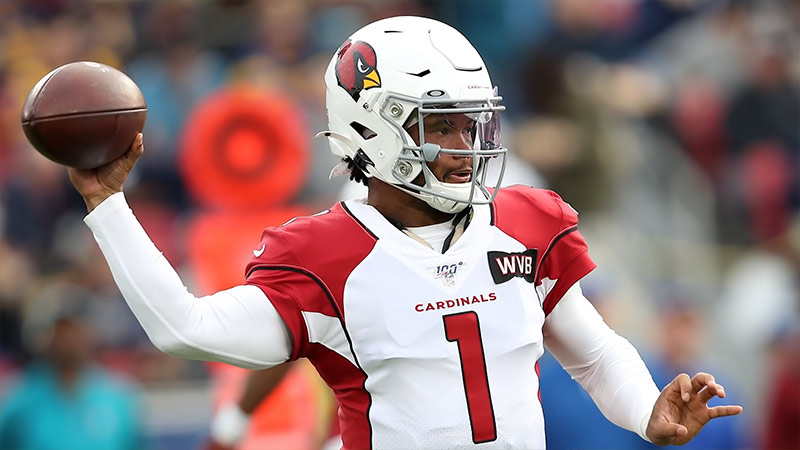
The trajectory of a professional quarterback’s career is rarely a straight line, but few players embody the stark divergence between real-world NFL contract mechanics and fantasy football valuation quite like Kyler Murray.
For analysts, franchise executives, and fantasy managers alike, assessing Murray’s current market worth requires navigating two entirely distinct economic systems.
In the actual National Football League, a player’s transactional value is governed by salary cap implications, franchise tag leverage, and contractual constraints.
In the parallel economy of fantasy football, value is dictated by positional scarcity, scoring formats, and weekly offensive projections.
This analytical profile deconstructs Kyler Murray’s current market landscape. We will examine the precise mechanisms of his real-world contract, explain why traditional trading is currently off the table, analyze his market standing across various fantasy league formats, and provide a strategic framework for decision-makers in both spheres.
The Real-World NFL Equation: Why Kyler Murray Has Zero Trade Value
To understand why Kyler Murray currently has no traditional trade value in the NFL, one must first look at his transactional status.
Murray is not currently on any NFL trade market. The concept of trade value assumes a player is under a multi-year contract that can be transferred from one franchise to another in exchange for draft assets or active players.
Murray’s current contract structure renders this scenario mathematically and legally impossible.
Deconstructing the Minnesota Vikings Agreement
Following his release by the Arizona Cardinals, Murray entered the open market and established a highly specific, short-term residency with the Minnesota Vikings.
The financial details of this agreement represent a remarkable bargain for Minnesota, but they also signal a clear strategic pivot for Murray:
- Contract Length: One year
- Total Base Value: $1.3 million
- Transactional Status: Unrestricted free agency path in March 2027
By signing a one-year deal valued at a modest $1.3 million, both Murray and the Vikings created a mutually beneficial arrangement. For Minnesota, they secured a starting-caliber quarterback with elite historical upside at a fraction of the market rate for a starting signal-caller.
For Murray, the contract serves as a showcase platform to prove his health, efficiency, and leadership in a highly friendly offensive environment before entering a much larger market window.
The No-Tag Clause: A Crucial Leverage Point
The defining feature of Murray’s contract with the Minnesota Vikings is the inclusion of a no-tag clause. In modern NFL front-office negotiations, the franchise tag is the ultimate tool of team leverage.
It allows franchises to unilaterally bind a player to a one-year deal at a predetermined salary, preventing them from testing the open market.
By securing a no-tag clause, Murray has eliminated this threat. This clause ensures that the Minnesota Vikings cannot restrict his movement at the end of the season. Consequently, Murray is guaranteed to hit unrestricted free agency in March 2027.
Because his contract expires at the end of the league year and cannot be extended via the franchise tag, no NFL team would attempt to trade assets for him.
Any acquiring team would simply be trading for a rental player who is legally locked into unrestricted free agency in March 2027. Thus, in real-world terms, Murray’s trade value is non-existent; his true NFL value lies entirely in his upcoming free-agent status.
The Contract Breakdown
The table below outlines the core components of Kyler Murray’s real-world contract structure and its direct implications on his transactional movement.
| Contract Parameter | Value / Detail | Strategic Implication for NFL Franchises |
|---|---|---|
| Current Team | Minnesota Vikings | Operates as the short-term starter under a low-cost contract. |
| Contract Duration | 1 Year | Eliminates long-term team control; creates a brief showcase window. |
| Total Value | $1.3 Million | Provides immense salary cap relief to Minnesota while keeping Murray’s financial footprint minimal. |
| No-Tag Clause | Included | Prevents the Vikings from applying the franchise or transition tag in 2027. |
| Next Free Agency | March 2027 | Murray enters unrestricted free agency, allowing him to sign with any team. |
| NFL Trade Market Value | Zero / Non-existent | He cannot be traded because of his contract’s brief timeline and impending free agency. |
The Fantasy Football Marketplace: A Different Class of Asset
While real-world front offices must look past Murray as a trade candidate due to his contract limitations, fantasy football managers operate under an entirely different set of rules. In fantasy leagues, Murray is a highly active asset whose value fluctuates based on volume, rushing floor, and offensive surroundings.
Across the fantasy landscape, Murray’s value is dictated by where he fits within the global quarterback tier list.
Currently, he is viewed as a low-end QB1 (Quarterback 1) or a high-end QB2 (Quarterback 2). This places his consensus ranking roughly around the top 20 at his position.
To understand how to value Murray in fantasy trades, managers must look at how his value shifts across different competition formats.
1. Superflex and Two-QB Formats
In Superflex and Two-QB leagues, the value of any starting NFL quarterback increases exponentially. Because managers can start two quarterbacks every week, the demand for stable starters is incredibly high.
- The Rushing Advantage: Murray’s historical ability to generate points on the ground makes him an incredibly coveted asset in Superflex. Even as a low-end QB1/high-end QB2, his weekly ceiling is higher than many pocket passers ranked above him.
- Draft and Trade Leverage: In these formats, Murray is a cornerstone trade piece. He can command multiple high-tier skill-position players or future first-round draft picks in dynasty leagues, as starting quarterbacks are rarely available on the waiver wire.
2. Standard Redraft Leagues (Single-QB)
In traditional single-QB redraft leagues, the position is far more saturated. Since only 10 to 12 quarterbacks are started weekly across the league, a player ranked near the top 20 is typically viewed as a high-end backup or a streaming option based on matchups.
- Market Position: In standard formats, Murray sits right on the borderline of roster-worthiness. His trade value is relatively modest, often serving as a throw-in piece to balance a larger multi-player trade.
- Matchup-Dependent Value: Because he is in the mid-15 to 18 positional range, managers often pair him with another quarterback to play weekly matchups.
3. Dynasty Leagues
In dynasty formats, where managers retain players from year to year, Murray’s valuation is heavily influenced by his age and his long-term contract outlook.
- The 2027 Free Agency Factor: Murray’s upcoming unrestricted free agency in March 2027 is a double-edged sword for dynasty managers. On one hand, it introduces uncertainty, as nobody knows where he will play in 2027. On the other hand, it represents immense upside; he could sign a massive contract with an offensive powerhouse, instantly boosting his fantasy stock.
- Holding vs. Selling: Dynasty managers who are rebuild-focused may look to trade Murray to a contending team in need of quarterback depth, leveraging his current starting role in Minnesota.
Quantifying Murray’s Fantasy Trade Value
To establish a baseline for actual trade negotiations, managers look to community-driven valuation models.
Platforms such as FantasyCalc and FantasySP compile thousands of real trade data points from active leagues to assign public trade values to players.
According to these platforms, Murray’s positional trade value settles in the mid-15 to 18 range. This valuation is constantly updating based on:
- Community Activity: Daily trade volume and user sentiment on fantasy platforms.
- Roster Security: His confirmed, projected role as the starting quarterback for the Minnesota Vikings.
- On-Field Production: His weekly efficiency and rushing output in the Vikings’ system.
Community Valuation Metrics
- Consensus Positional Rank: Top 20 overall quarterbacks.
- Community Index Range (FantasyCalc/FantasySP): 15 to 18 among active QBs.
- Market Trend: Stable with upward mobility, depending on early-season rushing statistics and touchdown efficiency in Minnesota.
How to Approach Kyler Murray in Fantasy Trades: Strategic Playbooks
Depending on your roster’s current competitiveness and league structure, your approach to trading for or trading away Kyler Murray will differ.
Here are three strategic playbooks designed to help you maximize your return on this unique asset.
The “Contender” Playbook (Buying Murray)
If your team is poised to make a championship run and you need quarterback depth or Superflex security, Murray is a prime target.
- Identify the Seller: Look for teams in your league that are rebuilding and holding Murray as a secondary quarterback.
- The Valuation Angle: Point to his status as a low-end QB1/high-end QB2 to keep the acquisition cost reasonable. Emphasize his positional ranking around the top 20 to avoid paying elite-tier prices.
- The Target Package: Offer a combination of a developmental young wide receiver and a future second-round draft choice. This allows the rebuilding team to secure future assets while giving you an active starting quarterback with rushing upside.
The “Rebuilder” Playbook (Selling Murray)
If your roster is not competitive this season, holding onto a quarterback on a one-year real-world contract carries unnecessary risk.
- Create a Bidding War: Target teams in Superflex leagues that have suffered injuries at the quarterback position.
- Highlight the Starting Role: Leverage the security of his projected starting role with the Minnesota Vikings to demand a premium.
- The Target Package: Insist on acquiring a young, stable skill-position asset or a guaranteed future first-round draft pick. Do not settle for multiple low-tier bench players.
The “Hold and Wait” Playbook (Maximizing Value)
If you already own Murray and the trade offers in your league are underwhelming, the best move may be to do nothing.
- Let the Market Mature: As the NFL season progresses, quarterback injuries are inevitable. The demand for a starting quarterback in the mid-15 to 18 positional range will naturally rise.
- Capitalize on Rushing Weeks: Wait for Murray to have a high-production rushing game. Rushing statistics carry heavy weight in fantasy community sentiment, and a single game with 50+ rushing yards and a touchdown can sharply elevate his trade value on platforms like FantasyCalc and FantasySP.
Conclusion: Navigating the Market Divide
Ultimately, Kyler Murray represents a fascinating study in asset valuation. In the real-world NFL, his trade value has been completely neutralized by his contract status.
He is a highly focused, short-term asset for the Minnesota Vikings, working under a modest $1.3 million deal with his eyes firmly set on the massive financial opportunities of the March 2027 unrestricted free agency market. He cannot be traded, tagged, or restricted.
In fantasy football, however, Murray remains a highly fluid and tradable piece of currency. As a starting quarterback projected to guide the Vikings’ offense, he represents a solid baseline of weekly production.
Whether you are looking to buy him as a cheap high-ceiling option in Superflex leagues, or looking to sell him to a quarterback-needy competitor, understanding the distinction between his real-world contract limitations and his virtual scoring potential is the key to maximizing your transaction outcomes.