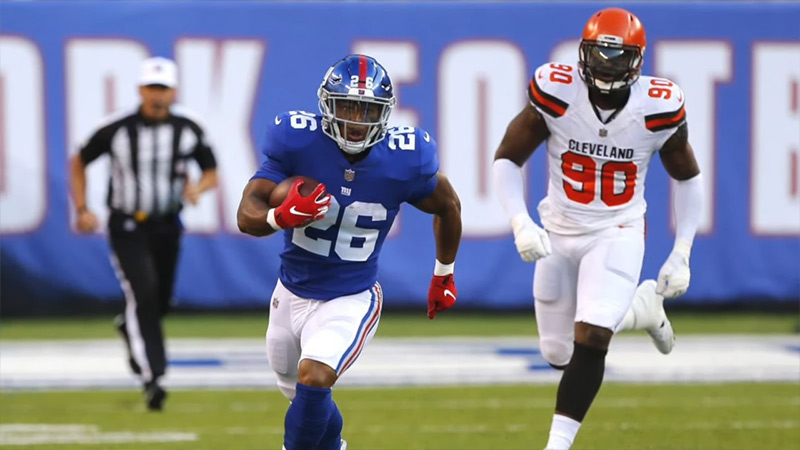
When fans look at the National Football League, few positions captivate the imagination quite like the running back. From explosive, open-field home-run hitters to bruising short-yardage powerhouses, running backs are central to the offensive identity of football.
Yet, behind the highlight-reel touchdowns and record-breaking yardage totals lies a sobering reality: the running back position features the shortest and most volatile professional life cycle in all of professional sports.
For analysts, fantasy football managers, and die-hard fans alike, understanding the true career length of an NFL running back requires looking beyond simple averages. Why do these elite athletes experience such a compressed professional window?
How does age dictate performance decline? And how are modern training regimens, workload management, and offensive schemes reshaping the position’s future?
This comprehensive analysis examines the data, physics, and historical context behind the average career length of an NFL running back, offering an exhaustive look into why the clock ticks so fast for the game’s ultimate workhorses.
The Numbers Behind the Position: What Is the Average Career Length?
Statistical tracking across the NFL consistently paints a stark picture for players lining up in the backfield.
While the standard narrative often points to a general NFL career average of roughly 3.3 years across all positions, the running back position stands alone at the bottom of the durability spectrum.
The 2.5-to-3.3-Year Window
Multiple longitudinal studies tracking draft classes and roster retention over the last two decades reveal that the average career lifespan of an NFL running back hovers strictly between 2.5 and 3.3 years.
The Rookie Surge vs. The Cutoff: A significant portion of this average is pulled down by late-round draft picks, undrafted free agents, and training camp invitees who experience brief stints on practice squads or active rosters before washing out of the league.
The Starter Exception: Even when isolating elite starters—players who secure a primary role on day one—the window for high-level production is severely limited. Unlike quarterbacks or offensive linemen, who can play effectively well into their thirties, a running back who maintains a starting job for five to six consecutive seasons is considered an extreme statistical outlier.
The Physics of Destruction: Why Running Backs Wear Down Fast
To understand why a running back’s career is cut so short, one must examine the unique physical demands placed on the body during a standard four-quarter game. No other position absorbs the same type of cumulative trauma play after play.
High-Impact Collisions
Football is an inherently violent game, but the geometry of the running back position maximizes trauma. When a ball carrier meets an oncoming linebacker or safety in the hole, the physics involve high-velocity collisions from multiple angles.
Unlike a wide receiver who can often step out of bounds or brace for impact while airborne, a running back is frequently locked in close-quarters combat, absorbing direct hits to the core, legs, and head.
The Cumulative Toll of Carries
Every handoff represents a coordinated collision. A starting running back handling 20 to 25 touches per game absorbs hundreds of full-contact impacts over a single 17-game season.
Over four years, that equates to thousands of high-velocity hits. This relentless wear and tear compromises joint cartilage, stretches ligaments, and creates micro-traumas in muscle tissue that become increasingly difficult for the body to repair.
3. The Aging Curve: The Hard Wall at Age 28
In many professional fields, experience correlates with a steady rise in value. In the NFL backfield, age is an aggressive adversary.
Empirical data spanning decades shows a predictable, steep performance curve that dictates when a player transitions from a dominant asset to a liability.
The Early Peak (Age 22 to 25)
Most running backs enter the league around the age of 21 or 22, fresh out of the collegiate ranks.
Because the position relies heavily on elite lateral quickness, top-tier burst, and raw acceleration, players often reach their physical and statistical peak very early—typically between ages 25 and 26.
During this window, a player’s combination of youthful recovery capability and accumulated playbook mastery creates peak production.
The Steep Decline at Age 28
The turning point for the position arrives with startling predictability. Historical data tracking fantasy football PPR (Points Per Reception) finishes and real-world offensive metrics from 2000 through 2021 illustrate a sharp statistical cliff beginning at age 28.
The Production Drop-Off: While running backs aged 24 to 26 consistently populate the top 12 spots in yearly positional rankings, the number of productive players plummets drastically once the calendar turns to their 28th year.
The 30-Year-Old Barrier: Finding a productive starting running back past the age of 30 is extraordinarily rare. While legendary talents like Emmitt Smith, Marcus Allen, and more recently, Adrian Peterson defied the odds to produce high-level seasons deep into their thirties, they represent rare genetic and athletic exceptions rather than the industry standard.
PPR Finishes by Age (2000–2021)
To visualize how age dictates positional dominance, looking at macro-level data provides undeniable clarity.
A comprehensive review of running back performance over 22 years highlights the exact distribution of elite and mid-tier seasons across every age bracket:
Key Takeaways from the Data:
The Sweet Spot: Ages 24, 25, and 26 account for the highest concentration of elite (top-12) finishes, capturing nearly 23% of all top-tier seasons combined.
The 28-Year Cliff: Notice the sharp drop-off starting at age 28. Top-12 finishes nearly halve compared to the peak years, signaling that teams and fantasy managers alike see diminishing returns on older veterans.
The Afterlife of 30: By age 30 and beyond, the percentage of high-end production drops to negligible figures, proving that the human body simply cannot sustain the positional demands past that threshold.
Economic Pressures and Roster Turnover
Beyond biology and physics, the modern NFL business model plays a massive role in shortening the perceived career length of a running back. Front offices approach the position through a pragmatic, economically driven lens.
The Rookie Wage Scale and Draft Capital
Because running backs can enter the league and produce at an elite level immediately, general managers rarely see the financial wisdom in committing long-term, high-dollar second contracts to aging veterans.
Rookie contracts are cost-controlled for four to five years. Once a running back approaches their late twenties—coinciding with the expiration of their rookie deal—front offices often prefer to let them walk or trade them, replacing their production with a cheaper, fresher draft pick in the second or third round.
Committee Backfields
By splitting carries between a primary ball carrier and a specialized third-down pass catcher, teams extend the functional lifespan of their players while keeping overall team offensive efficiency high.
However, this workload management also reduces individual traditional statistical accumulation, making it harder for modern backs to post historic career yardage totals compared to eras past.
The Evolution of the Position: Can Modern Training Extend Careers?
As sports science, biomechanics, and nutrition evolve, athletes across all sports are finding ways to extend their playing windows. Are these advancements helping running backs buck historical trends?
Workload Management and Recovery Science
Today’s athletes benefit from state-of-the-art recovery modalities, including cryotherapy, advanced sleep tracking, customized nutritional protocols, and intelligent load monitoring during practice weeks.
Teams are increasingly protective of their star players during training camp and mid-week practices, reducing unnecessary hits to preserve their legs for Sundays.
The Rise of the Pass-Catching Specialist
The evolution of the NFL passing game has created a new archetype: the third-down, pass-catching back.
Players who excel in space, run precise routes, and operate out of the slot or backfield on passing downs face significantly fewer violent interior collisions than traditional between-the-tackles runners.
These versatile athletes often enjoy longer professional lifespans because their skill sets rely heavily on spatial awareness and hands rather than purely absorbing interior contact.
Conclusion
The career lifespan of an NFL running back—averaging roughly 2.5 to 3.3 years—is a testament to the brutal, unforgiving nature of professional football.
While extraordinary physical preparation and modern sports science continue to push the boundaries of recovery, the combination of high-impact collisions, early physical peaks, and aggressive roster economics ensures that the position remains the most volatile in the sport.
For players who step into the backfield, maximizing their brief window of peak performance remains the ultimate challenge of modern athletic endurance.