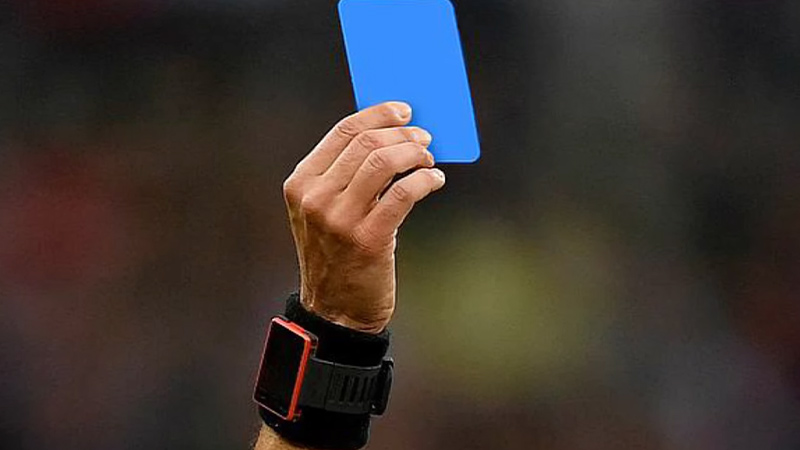
The landscape of soccer discipline is undergoing its most significant shift in decades with the introduction of the blue card. Historically, the game has relied on a binary system of yellow and red cards to manage player conduct.
However, the International Football Association Board (IFAB) is now trialing the blue card to address specific mid-level offenses that disrupt the flow of play.
This card signifies a temporary suspension, commonly known as a “sin-bin,” forcing a player to leave the pitch for a set duration. Understanding this change is essential for stakeholders as it fundamentally alters match dynamics and tactical strategy.
The Evolution of Soccer Discipline
The introduction of a new color to the referee’s pocket is a rare event in professional soccer. For years, officials have struggled with the “grey area” of misconduct—offenses that are too severe for a simple yellow card warning but not egregious enough to warrant a permanent red card dismissal.
The “Sin-Bin” Innovation
At its core, the blue card represents the implementation of the “sin-bin” in the outdoor game. When a referee brandishes this card, the offending player is removed from the field for a specific period, typically 10 minutes in professional outdoor trials.
This concept is designed to provide an immediate, tangible penalty that impacts the match without permanently ending a player’s participation.
Bridging the Disciplinary Gap
Lawmakers view the blue card as a middle ground between caution and ejection. By removing a player for 10 minutes, the penalized team is forced to play with a numerical disadvantage, creating a “power play” scenario for the opposition.
This creates a high-stakes environment where a single blue card can lead to a goal, punishing the team for the individual player’s lack of discipline.
Specific Offenses Triggering a Blue Card
The application of the blue card is not arbitrary; it is strictly defined to target behaviors that have become increasingly problematic in the modern game. Current trials focus on two primary areas of misconduct that often frustrate fans and officials alike.
Curbing Dissent and Referee Abuse
One of the primary goals of the blue card is to eliminate dissent—defined as players arguing with or harassing match officials. In grassroots and youth leagues in England and Wales, where the protocol has already been tested, the threat of a 10-minute suspension has proven effective in reducing referee abuse.
Forcing a player to sit in a “sin-bin” allows for a cooling-off period, preventing verbal escalations that often mar professional matches.
Neutralizing Cynical Tactical Fouls
The second major target is the “cynical foul”. These are blatant tactical fouls committed specifically to stop a promising attack, such as a defender intentionally pulling down a striker who is breaking away into open space.
While these fouls often only merit a yellow card under traditional rules, the blue card ensures that the offending team loses a player for a significant portion of the match, negating the tactical advantage gained by the foul.
Integration with Existing Cards
A common point of confusion for fans is how the blue card interacts with the established yellow and red card system. The IFAB has developed a specific hierarchy to ensure that repeat offenders are still dealt with severely.
Accumulation Rules and Red Card Dismissals
The blue card functions as a bridge within the disciplinary framework. A player cannot simply receive an unlimited number of blue cards without further consequence. According to the trial protocols, the following accumulation rules apply:
- Two Blue Cards: If a player receives a second blue card in a single match, it results in an automatic red card and permanent dismissal from the game.
- Yellow + Blue: If a player who has already been cautioned with a yellow card receives a blue card, they are issued a red card.
- Blue + Yellow: Conversely, a player already on a blue card suspension who receives a yellow card upon their return (or later) will also be sent off with a red card.
Disciplinary Comparison Table
| Card Type | Meaning | Duration of Penalty | Interaction Result |
|---|---|---|---|
| Yellow | Caution | None (Warning) | Two Yellows = Red |
| Blue | Temporary Suspension | 10 Minutes (Outdoor) | Two Blues = Red |
| Red | Permanent Dismissal | Remainder of Match | Immediate Ejection |
| Combined | Yellow + Blue | Permanent Dismissal | Red Card Issued |
The Indoor Soccer Blueprint
While the blue card is a novel concept for outdoor professional soccer, it has been an established fixture in the indoor format for decades. Referees in indoor soccer have long used the blue card as the lowest level of punishment in their disciplinary hierarchy.
Established Minor Penalties
In the indoor game, a blue card results in a two-minute minor penalty. During this time, the offending player must sit in a designated penalty box, and their team plays “short” until either a goal is scored against them or the penalty time expires.
This fast-paced environment demonstrates how effectively a temporary suspension can control a game without requiring full ejections for minor physical fouls or technical violations.
Unique Indoor Offenses
The criteria for a blue card in indoor soccer are broader than those currently being trialed for the outdoor game. Offenses that can warrant a blue card in an indoor facility include:
- Spitting on the turf.
- Persistent infringement of the rules.
- Encroachment during restarts.
- Illegal substitutions or having too many players on the field.
- Violations of specific house safety rules, such as chewing gum or leaving field exits ajar.
Global Trials and FIFA’s Official Stance
Despite the significant media coverage surrounding these changes, it is important to note that the blue card is currently in an experimental phase. There is a distinction between ongoing trials and permanent adoption into the Laws of the Game.
The IFAB Experimental Phase
The International Football Association Board (IFAB) is the body responsible for overseeing these trials. While there has been discussion about introducing blue cards into elite competitions like the FA Cup, top-tier leagues such as the English Premier League are not yet participating in the professional trials.
The data gathered from these experiments will determine if the card becomes a permanent global standard.
Grassroots Success in England and Wales
The most robust data currently comes from grassroots and amateur leagues. In these settings, the “sin-bin” has been used to specifically combat dissent.
The success of these trials in improving the behavior of players toward officials is a major driving force behind the push to bring the protocol to the professional level.
FIFA’s Clarification on Major Tournaments
Following widespread speculation, FIFA has clarified that reports of blue cards being introduced immediately at the highest levels of international soccer are premature. Fans should not expect to see blue cards at the FIFA World Cup or Euro 2024.
The concept remains under strict experimental review to ensure that any permanent changes do not negatively impact the flow or spirit of elite competition.
Tactical Realignment: The “Power Play” Era
If the blue card is adopted permanently, it will revolutionize soccer tactics. Coaches will no longer just plan for 11 vs. 11 or 11 vs. 10; they will have to prepare for 10-minute windows where they are either defending a “power play” or attacking one.
When a key defender is sent to the sin-bin for 10 minutes, a manager may be forced to substitute an attacking player for a substitute defender to maintain structural integrity.
This “penalty kill” mentality, borrowed from ice hockey, will require players to be more versatile and tactically disciplined.
Furthermore, teams that excel at ball retention will have a distinct advantage, as they can effectively starve the opposition of the ball while waiting for their penalized teammate to return.
FAQs
What happens if a goalkeeper receives a blue card?
In current trial formats, if a goalkeeper is issued a blue card, the team must decide whether to play with an outfield player in goal for 10 minutes or use a substitution to bring on a backup goalkeeper, sacrificing an outfield player in the process.
Can a player return early if a goal is scored?
In indoor soccer, a blue card penalty often ends if the opposing team scores. However, in the outdoor professional trials overseen by the IFAB, the 10-minute suspension must be served in full, regardless of how many goals are scored.
Why is the card blue?
The color was chosen specifically to be distinct from yellow and red, ensuring clarity for spectators, broadcasters, and players. Historically, blue has been used in indoor soccer to denote a minor penalty, making it a logical choice for the outdoor “sin-bin” protocol.
Does a blue card count toward a post-match suspension?
Current trials focus on the immediate match impact. While yellow cards accumulate toward season-long suspensions in most leagues, it has not yet been finalized how blue cards will impact long-term player availability.
Conclusion
The blue card is more than just a new piece of referee equipment; it is a fundamental shift in how soccer handles misconduct. By providing a 10-minute “sin-bin” for dissent and cynical fouls, the IFAB aims to clean up the game and protect match officials.
While its presence in top-tier competitions like the World Cup is not yet a reality, the successful trials in grassroots and indoor soccer suggest that the blue card may soon be a permanent fixture in the global game.
As the sport evolves, players and coaches who adapt quickest to these “power play” dynamics will find themselves at a significant competitive advantage.