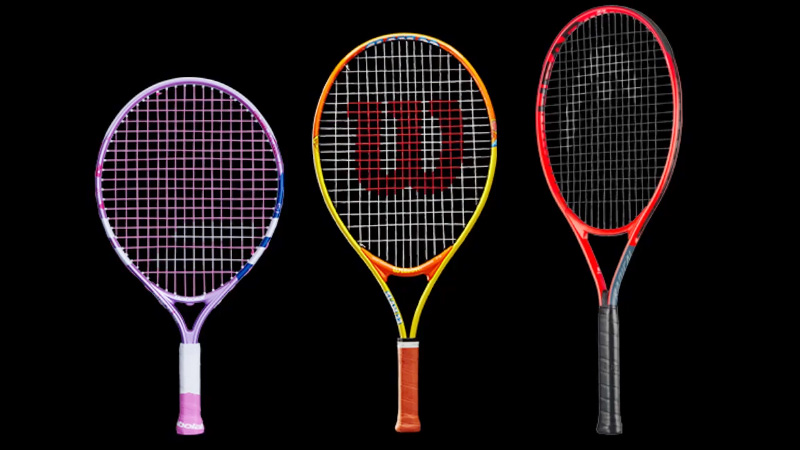
Selecting a tennis racket is often the first significant hurdle for any player, whether they are a parent purchasing a first frame for a child or a competitive athlete seeking a marginal gain in performance. The equipment serves as an extension of the arm, and its physical dimensions dictate the physics of every stroke.
A fundamental question often arises: Are there different sizes of tennis rackets? The answer is a resounding yes. Rackets are precision-engineered tools with variations in length, head size, weight, and grip circumference, each designed to suit specific physical attributes and tactical needs.
Understanding these metrics is not merely a matter of comfort; it is a prerequisite for skill development and injury prevention. This comprehensive analysis explores the technical specifications of modern racket design and provides a roadmap for selecting the optimal frame.
Audience Insights: Why Dimensions Matter to You
Before diving into the technical specifications, it is essential to identify the player profiles that benefit from specific dimensions:
- The Developing Junior: Young players require equipment that scales with their physical growth. Using an adult racket prematurely can lead to poor mechanics and joint strain.
- The Recreational Enthusiast: For those playing for fitness and social engagement, a racket that offers “forgiveness”—a larger hitting area and lighter weight—is paramount.
- The Competitive Club Player: Intermediate players often seek a “balanced blend” of power and control, typically found in midplus frames.
- The Performance Athlete: Advanced players prioritize precision and stability, often opting for heavier frames with smaller head sizes to maximize their control over the ball’s trajectory.
Racket Length: The Lever of the Game
The length of a tennis racket is the primary factor in determining a player’s reach and the leverage they can apply to the ball, particularly during the serve.
Junior Rackets (19–26 Inches)
The developmental pathway for children begins with shorter rackets. These frames, ranging from 19 to 26 inches, are designed to match the height and strength of the child.
A shorter racket allows a junior player to control the head of the frame more easily, fostering correct swing paths and preventing the racket from dragging on the court surface.
The Adult Standard (27 Inches)
For the vast majority of adult players, 27 inches is the industry standard. This length provides the optimal equilibrium between maneuverability at the net and reach at the baseline. It is the benchmark against which all other performance metrics are measured.
Extended Length Rackets (27.25–29 Inches)
Some manufacturers offer “stretch” or extended versions of their popular frames. These rackets, which can reach up to 29 inches, provide a significant advantage in terms of leverage.
On serves, the higher contact point allows for a steeper angle into the service box. However, the trade-off is maneuverability; extended rackets can feel “sluggish” during quick exchanges or when hitting a ball aimed directly at the body.
Head Size: Mastering the Sweet Spot
Head size is measured by the total area of the string bed in square inches. This dimension is the most influential factor in determining how much “easy power” a racket generates and how forgiving it is on off-center hits.
Oversize Frames (105–115+ sq. inches)
Oversize rackets are the preferred choice for beginners and many senior players. Because the string bed is larger, the “sweet spot”—the area where the racket returns the most energy to the ball—is significantly expanded.
This makes the racket more “forgiving,” meaning that even if the ball is not struck perfectly in the center, it will still clear the net with reasonable pace and depth.
Midplus Frames (98–104 sq. inches)
This category represents the most popular segment of the market. Midplus frames offer a versatile compromise. They provide enough power to be effective from the baseline while maintaining enough control for precision volleys and directional changes.
Intermediate and many advanced players gravitate toward this size because it rewards good technique without being overly punishing.
Midsize Frames (85–97 sq. inches)
Commonly used by professionals and elite-level amateurs, midsize frames are built for precision. A smaller head size reduces the “trampoline effect” of the strings, giving the player maximum “feel” and control.
However, the smaller sweet spot requires the player to have highly developed hand-eye coordination and consistent swing mechanics.
Weight and Stability: The Science of Swing Weight
The physical mass of a racket impacts how it handles the force of an incoming ball and how much energy the player must expend to move it. Adult rackets typically fall within a range of 8.5 to 12.5 ounces (240 to 350 grams).
The Advantages of Lighter Rackets
Lighter rackets (generally under 10.5 ounces) are highly maneuverable. They are easier to swing quickly, which is beneficial for beginners who are still learning to time their shots.
Furthermore, lighter frames are often gentler on the arm during the learning phase, provided the player does not attempt to hit the ball harder than the frame allows.
The Necessity of Heavier Rackets
Heavier rackets (11 ounces and above) offer superior stability. When an advanced player faces a powerful shot, a heavier racket is less likely to twist in their hand upon impact. This stability translates to more power and a more “plow-through” sensation.
The caveat is that a heavier frame requires precise mechanics and physical conditioning to use over a long match without causing fatigue or repetitive strain injuries.
Grip Size: The Foundation of Ergonomics
Perhaps the most overlooked dimension is the grip size—the circumference of the handle. A proper fit is essential for both performance and health.
Standard Sizing
Adult grip sizes typically range from 4 inches to 4 5/8 inches, often categorized as Size 0 through Size 5.
- Size 1–2: Common for juniors moving to adult frames or players with smaller hands.
- Size 3: The most common size for adult males.
- Size 4–5: For players with very large hands.
The Risks of Improper Grip
Using a grip that is too small requires the player to squeeze the handle more tightly to prevent twisting, which can lead to fatigue and “tennis elbow” (lateral epicondylitis).
Conversely, a grip that is too large prevents the player from using their wrist effectively, limiting spin and touch.
A general rule of thumb is that there should be enough space between your fingertips and the palm of your hand to fit the index finger of your other hand when holding the racket.
Technical Summary Table: Matching Specs to Skill
| Skill Level | Recommended Length | Head Size (sq. in) | Weight (oz) |
|---|---|---|---|
| Beginner | 27″ | 105 – 115+ | 8.5 – 10.0 |
| Intermediate | 27″ | 98 – 104 | 10.0 – 11.0 |
| Advanced | 27″ – 27.5″ | 85 – 98 | 11.0 – 12.5 |
Frequently Asked Questions
How do I know if my racket is too heavy?
If you find that you are consistently late on your shots or if your forearm and shoulder feel unusually fatigued after 30 minutes of play, your racket may exceed your current physical capacity.
Can I change the grip size of my racket?
While you cannot easily decrease the size of a handle, you can increase it. Adding an “overgrip” will increase the circumference by about half a size. Heat-shrink sleeves can also be applied for a more permanent increase of one full grip size.
Why do pros use smaller head sizes?
Professional players generate immense power through their own physical strength and swing speed. They do not need the racket to “help” them create pace. Instead, they require a smaller head size to ensure that the ball goes exactly where they aim, with millimetric precision.
Strategic Conclusion: The Path to Optimal Performance
Identifying the correct racket dimensions is a foundational step in any player’s journey. The hardware you choose dictates the parameters of your software—your technique.
By aligning your racket’s length, head size, weight, and grip with your physical stature and playing style, you create an environment where skill can flourish, and the risk of injury is minimized.
Whether you are stepping onto the court for the first time or preparing for a tournament, remember that the “best” racket is not the most expensive one, but the one whose dimensions most accurately complement your game. Precision in equipment leads to precision in play.