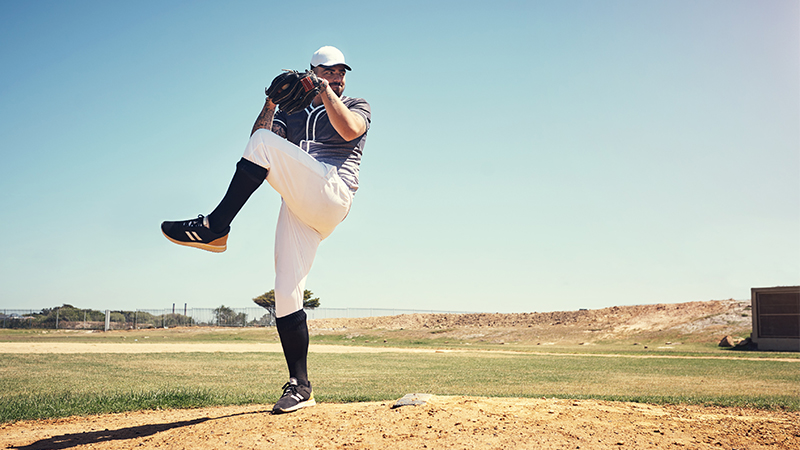
In the world of high-performance baseball, the debate between training on flat ground versus throwing from a regulation mound is more than just a matter of preference—it is a matter of biomechanics, injury prevention, and peak performance.
While both surfaces serve specific purposes in a pitcher’s development, understanding the physiological and mechanical differences between them is essential for any athlete looking to maximize their ceiling while staying healthy.
This guide explores the transition from the “flat” to the “hill,” deep-diving into the search intent of modern athletes: how to throw harder, stay consistent, and bridge the mechanical gap that often leads to “rushing” or lost velocity on the rubber.
The Science of the Slope: Understanding the 10-Inch Difference
The primary differentiator between these two environments is the 10-inch slope of a regulation pitching mound. This incline fundamentally alters the physics of a delivery.
When a pitcher moves from flat ground to the mound, they are engaging with downhill acceleration. This gravity-assisted momentum allows for a greater stride length and significantly higher rotational energy.
The result is what many coaches call the “Mound Bonus.” On average, pitching from a slope adds 2 to 5+ mph to a throw compared to flat ground.
However, this increased performance comes at a physical cost. The added momentum and steeper trajectory increase the stress placed on the ulnar collateral ligament (UCL).
Research indicates that pitching on a mound increases elbow torque by approximately 6%, or an average of 3 Nm (Newton-meters). This makes the mound the superior environment for performance but a higher-risk environment for repetitive stress.
Flat Ground Training: The Laboratory for Mechanical Refinement
If the mound is where you perform, flat ground is where you build. For many elite programs, flat ground serves as a controlled environment for mechanical refinement and constraint training.
1. Building Consistency and Movement Patterns
Without the distraction of maximum velocity or the steepness of a slope, a pitcher can focus entirely on building consistency in their movement patterns.
This is the ideal setting for “feel” plays—working on the grip of a new slider or ensuring the lead leg is landing in the correct position.
2. Reducing Intensity for Long-Term Health
Because flat ground lacks the gravity-assisted acceleration of the mound, the overall intensity of the session is naturally lower.
This makes it a perfect tool for recovery days or low-intensity bullpen sessions where the primary goal is command and location rather than sheer power,.
3. Avoiding the “Arm-Only” Pitfall
One of the traditional “gaps” in flat ground training is the risk of developing “arm-only” throws. Because there is less momentum generated from the lower body on a flat surface, some pitchers subconsciously stop using their legs effectively.
To maximize flat-ground sessions, athletes must stay intentional about using their lower body correctly to ensure the mechanics they build on the flat will actually transfer to the hill.
The Mound: Maximizing Performance and Game Specificity
When it is time for game-specific preparation, there is no substitute for the mound. The slope is the only place where a pitcher can truly experience the sequencing of the body required for a professional-grade delivery.
1. Achieving Maximum Velocity
The mound is designed to facilitate maximum velocity. The combination of gravity and the ability to drive “down” into the front leg allows for a release point that is not only faster but also provides a steeper ball trajectory. This trajectory is what makes a high-fastball “rise” or a 12-6 curveball “bite” effectively.
2. Perfecting the Pitch Arsenal
Certain pitches, particularly breaking balls, require the downhill angle of a mound to achieve their full movement potential. Pitchers often find that their curveballs or sliders have more “bite” on the mound because the release height and angle are optimized for the pitch’s physics.
3. High-Intensity Preparation
High-intensity side sessions on the mound are critical for season-specific preparation. These sessions allow the body to adapt to the higher elbow torque and stress levels it will encounter during a seven-inning start.
Bridging the Transition Gap: Why Mechanics Fail on the Hill
A common frustration for pitchers is finding that they have better control or even higher velocity on flat ground than on the mound. This “Transition Gap” is usually the result of a breakdown in timing.
1. The “Rushing” Problem
Moving from the flat to the mound requires the pitcher to handle a quicker and longer movement toward the plate. Because the slope accelerates the body, many pitchers begin “rushing”—their upper body moves toward the plate before the lower body has finished its drive.
2. Failing to Stay Loaded
When a pitcher rushes, they often fail to stay loaded in their back hip. On flat ground, the lack of slope gives the pitcher more time to “feel” their load. On the mound, the gravity-induced speed can “pull” the pitcher out of their load prematurely, leading to a loss of power and poor command.
3. The Balance Factor
Pitchers who throw harder on flat ground often do so because they have improved balance on a level surface. The slope of the mound acts as a disruptor; if a pitcher hasn’t mastered the timing required to handle that extra momentum, their mechanics will collapse under the added stress of the hill.
The Strategic Training Transition: From Foundation to Performance
To avoid the pitfalls of the transition gap, elite athletes use a structured approach to their training calendar.
1. Early Offseason: The Foundation
Many pitchers utilize flat ground early in the offseason. This period is dedicated to building a mechanical foundation, fixing flaws, and increasing general arm strength without the high-torque demands of the mound.
2. The “Short Box” Alternative
As the season approaches, a highly effective bridge between flat ground and the full mound is the “short box”. This involves throwing from a distance of 50-55 feet on the mound.
- Why it works: It allows the pitcher to feel the slope and the downhill trajectory (mimicking game conditions) without the full-intensity strain of throwing the full 60 feet, 6 inches. It is a “middle ground” that preserves the arm while training the brain to handle the slope’s timing.
3. In-Season: Performance Maintenance
Once the season begins, the mound is reserved for high-intensity side sessions and games, while flat ground is used strictly for recovery and minor mechanical touch-ups.
Conclusion: The Verdict on Flat vs. Mound
Success in pitching requires a dual-track approach. Flat ground is your developmental sanctuary—a place to refine consistency, build patterns, and recover.
The mound is your performance stage—a high-intensity environment that demands perfect timing to harness its 2-5 mph velocity bonus.
By understanding that the mound increases elbow torque by 6% and requires specialized timing to prevent rushing, you can train smarter.
Use the short box at 50-55 feet to bridge the gap during your transition, and always ensure you are utilizing your lower body, whether you are on the dirt or the grass.
The road to the Big Leagues is paved with both flat ground and hills. Mastering the transition between them is what separates the throwers from the pitchers.