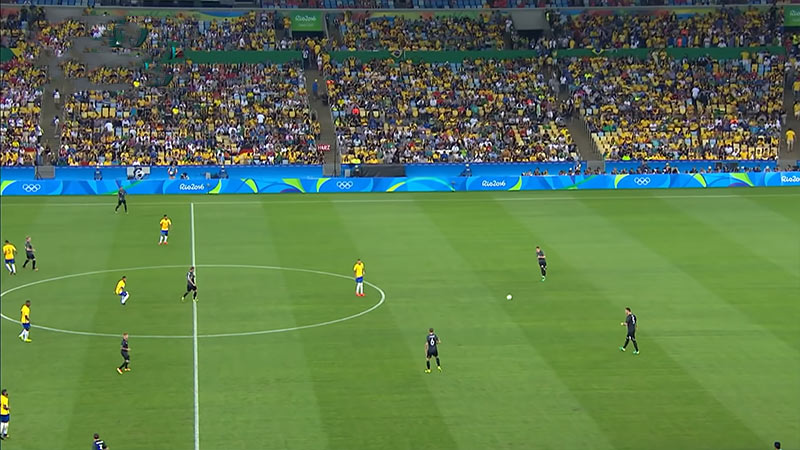
The global sports landscape recognizes soccer—officially designated as football by the International Olympic Committee—as a cornerstone of the Summer Olympic Games.
Often referred to as “The Beautiful Game,” soccer’s inclusion in the Olympic program bridges the gap between its nineteenth-century codification in England and its ancient variations practiced in regions such as China and Greece.
This comprehensive analysis explores the architectural framework of Olympic soccer, its regulatory nuances, historical milestones, and its standing relative to the FIFA World Cup.
The Historical Evolution of Olympic Football
Soccer’s tenure in the Olympic Games is among the most storied in international sports. The men’s competition made its debut at the Paris 1900 Games.
Since that inaugural appearance, it has maintained a nearly permanent presence on the Olympic program, with the sole exception of the Los Angeles 1932 Games. This longevity underscores the sport’s role as a primary driver of global engagement during the Summer Games.
In contrast, the women’s game is a more recent addition, reflecting the broader movement toward gender equity in professional sports. Women’s soccer was officially introduced at the Atlanta 1996 Games.
Despite its later start, the women’s tournament has rapidly ascended to become one of the most prestigious competitions in the sport, often considered on par with the FIFA Women’s World Cup in terms of competitive intensity and cultural impact.
Regulatory Architecture: Understanding the Men’s U-23 Rule
One of the most distinctive aspects of Olympic soccer is the regulatory divergence between the men’s and women’s formats. For the men’s tournament, the competition is structured primarily as an under-23 (U-23) event.
This rule, which has been in place since the Barcelona 1992 Games, mandates that players must be 23 years old or younger at the time of the tournament.
To balance this youth focus with the desire for star power, each men’s team is permitted to include up to three overage players on their roster.
This allows seasoned veterans to provide leadership and name recognition, as seen with players like Lionel Messi and Neymar, who have both earned gold medals under this format. The rationale for the U-23 restriction is deeply rooted in the governance of international soccer.
FIFA, the sport’s global governing body, established these limits to ensure the Olympics would not compete with the FIFA World Cup for the title of the premier international men’s competition.
By positioning the Olympic tournament as a high-level youth showcase, FIFA preserves the exclusivity and prestige of its flagship event.
The Women’s Format: A Different Paradigm
The women’s Olympic tournament operates under a different set of governance principles. Unlike the men’s side, there are no age restrictions for women’s soccer in the Olympics.
Teams are permitted to field their full senior national squads, making the Olympic tournament a true “best-on-best” competition.
This absence of age limits has allowed the women’s Olympic tournament to gain “elite status”. For many players and fans, winning an Olympic gold medal is seen as the pinnacle of achievement, rivaling or even exceeding the prestige of the World Cup.
This has led to the emergence of dominant dynasties, most notably the United States Women’s National Team (USWNT), which has leveraged this open format to secure four gold medals since 1996.
Structural Divergence from the FIFA World Cup
While soccer fans are accustomed to the format of the FIFA World Cup, the Olympics presents several unique logistical and structural hurdles.
Roster Size Constraints
Efficiency is a hallmark of Olympic planning, and this extends to team sizes. While a FIFA World Cup squad typically consists of 26 players, Olympic rosters are restricted to just 18 players.
This smaller squad size places a premium on player versatility and tactical flexibility, as coaches have fewer options for substitutions and injury replacements over a grueling tournament schedule.
The Club Release Conflict
Perhaps the most significant challenge for Olympic soccer—specifically on the men’s side—is the lack of a mandatory club release window.
The Olympics is not an official FIFA international window. Consequently, professional clubs are not legally obligated to release their players for the Games.
This frequently leads to high-profile absences. For example, during the Paris 2024 Games, Kylian Mbappé expressed a strong desire to represent France on home soil.
However, his club, Real Madrid, exercised its right to deny his release, prioritizing his preparation for the domestic and European seasons.
This dynamic ensures that while the Olympics features immense talent, it rarely represents the absolute theoretical maximum of available world-class talent in the men’s game.
Dominant Forces and Historical Records
The history of Olympic soccer is defined by eras of dominance from various nations across different geopolitical landscapes.
Men’s Historical Leaders
In the men’s category, two nations share the record for the most gold medals, with three each:
- Great Britain: Secured golds in 1900, 1908, and 1912.
- Hungary: Dominated the mid-20th century with golds in 1952, 1964, and 1968.
Other significant achievers include Brazil (2016, 2020), Argentina (2004, 2008), Uruguay (1924, 1928), and the Soviet Union (1956, 1988), each holding two gold medals. Most recently, Spain secured the men’s gold at the Paris 2024 Games.
The USWNT Legacy
In women’s soccer, the United States stands as the most successful nation in the history of the sport. Following their victory in the inaugural 1996 tournament, the USWNT went on to win three consecutive golds in 2004, 2008, and 2012.
After a period of transition where nations like Germany (2016) and Canada (2020) took the top spot, the United States returned to the podium to win gold at the Paris 2024 Games.
Professional Participation and Iconic Moments
The Olympics has served as a launchpad and a crowning achievement for some of the biggest names in sports history. Professional players have always been a part of the Olympic fabric, provided they meet the age requirements or fill an overage slot.
Key figures who have graced the Olympic pitch include:
- Lionel Messi & Neymar: Both legends have solidified their international legacies by securing gold for Argentina and Brazil, respectively.
- Pep Guardiola: Before his legendary managerial career, he represented Spain to win gold on the Olympic stage.
- Megan Rapinoe & Alex Morgan: These icons of the women’s game have been central to the USWNT’s success across multiple Games.
Expert Analysis: The Strategic Value of Olympic Soccer
For a professional sports organization, the Olympics provides a unique strategic advantage. It serves as a global scouting platform where the next generation of world-class talent—those in the U-23 bracket—is tested under intense pressure.
Many players who dominate the Olympic stage later become the centerpieces of multi-million dollar transfers in leagues like the Premier League, La Liga, or the Bundesliga.
Furthermore, for the women’s game, the Olympics offers a level of visibility that is critical for commercial growth.
The “elite status” of the tournament ensures high viewership and sponsorship interest, which in turn drives investment back into domestic leagues and youth development.
Enhanced FAQ: Addressing Key Inquiries
1. Is every soccer match in the Olympics played under the same rules?
While the fundamental Laws of the Game remain consistent with FIFA standards, the roster sizes and age eligibility differ significantly between the men’s and women’s tournaments.
2. Why was soccer missing from the 1932 Olympics?
The sport was excluded from the Los Angeles 1932 program largely due to a lack of popularity in the United States at the time and disagreements between FIFA and the IOC regarding the amateur status of players.
3. Are professional players allowed to compete?
Yes, professional players are fully eligible. The primary restrictions are age-based for the men’s tournament, rather than professional status.
4. How many players are on an Olympic soccer team?
Teams are limited to 18 players, which is smaller than the 26-player rosters used in the FIFA World Cup.
5. Which nation has won the most gold medals overall?
The United States holds the record for the most successful Olympic soccer program in history, primarily due to their four gold medals in the women’s tournament.
Conclusion: The Future of the Global Game at the Olympics
Soccer’s presence in the Olympics is a testament to its status as the world’s most popular sport.
While the men’s tournament serves as a prestigious U-23 showcase and the women’s tournament stands as a premier senior championship, both contribute to the rich tapestry of the Olympic movement.
As we look toward future iterations of the Games, the interplay between club release rules, FIFA governance, and the rising standards of global play will continue to shape how the “Beautiful Game” is contested on the world’s greatest athletic stage.
For those tracking the trajectory of international sports, the Olympics remains an essential chapter in the soccer narrative—a place where legends are born, and national legacies are etched in gold.