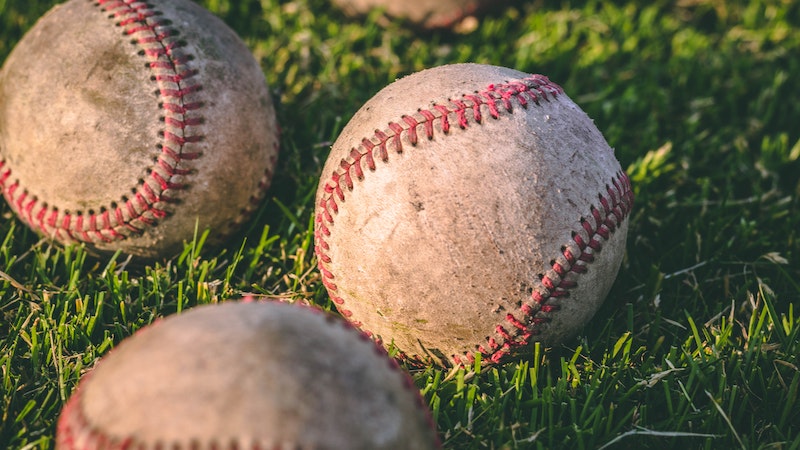
Every official Major League Baseball comes from one factory in Turrialba, Costa Rica, that can stitch as many as 2.4 million balls a year by hand.
Add the plants that supply minor leagues, colleges, high schools, youth leagues, and overseas pro circuits, and worldwide output climbs into the tens of millions of baseballs every year.
That number surprises most fans. A baseball looks tough, and in a backyard game one ball can last an entire summer.
In the big leagues, though, a ball often survives only a handful of pitches before it is fouled into the stands, scuffed in the dirt, or handed to a kid in the front row.
This guide breaks down how many baseballs are made each year, who makes them, how the estimates are built, and why demand never slows down.
Whether you run a youth league, manage a sporting goods business, or simply love the hidden logistics of the game, you will come away with a clear picture of one of sport’s most remarkable supply chains.
The Short Answer: Roughly 30 to 50 Million a Year
A reasonable working estimate is that the world produces somewhere between 30 and 50 million baseballs every year, with the United States using the largest share.
No league, trade group, or government agency publishes one global count, because manufacturers treat their output as confidential. The estimate instead comes from piecing together the hard numbers that are public.
- The pro-ball factory: Rawlings’ plant in Turrialba, Costa Rica, turns out as many as 2.4 million baseballs a year, all assembled by hand.
- China’s export plants: A single company in Dushan County, Guizhou, produced 3.8 million baseballs in 2021 and booked orders for more than 5 million early the next year.
- U.S. import spending: America has imported about $69.5 million a year in baseballs and softballs from China, plus $18.5 million from Costa Rica. At wholesale values of a dollar or two per practice ball, that spending alone represents tens of millions of balls.
- Player demand: U.S. baseball participation reached nearly 16.7 million in 2023, the highest level recorded since tracking began in 2008.
Combine those signals with typical ball usage at each level of play, covered below, and the 30 to 50 million range holds up. Treat it as an informed estimate rather than an official census.
Major League Baseball: Close to a Million Balls per Season
Major League Baseball uses roughly 900,000 baseballs a year once spring training, batting practice, bullpen sessions, and the postseason are counted.
An MLB spokesman put the figure at about 900,000 per season, and equipment managers report that a typical nine-inning game burns through 96 to 120 balls.
Metric | Figure |
|---|---|
Balls used per MLB game | 96 to 120 |
Regular-season games per year | 2,430 |
In-game balls per regular season (at ~108 per game) | ~262,000 |
Total MLB balls per year, including practice | ~900,000 |
Estimated cost per ball to MLB | ~$7 |
The gap between 262,000 game balls and 900,000 total tells an important story. Most baseballs never see a real at-bat.
They are used for batting practice, pitcher warmups, spring training, and training work long before the first pitch of any game.
Extra innings push usage even higher. One 15-inning game between the Twins and Brewers reportedly went through 180 to 216 balls.
Every one of those balls comes from Rawlings, the league’s exclusive supplier since 1977. MLB’s commitment deepened in 2018, when the league and Seidler Equity Partners bought Rawlings for $395 million, with MLB taking a 25 percent stake.
Owning part of the manufacturer gives the league far more say over consistency, research, and supply security.
Beyond the Majors: Where Most Baseballs Actually Go
MLB’s 900,000 balls are only about 2 to 3 percent of yearly worldwide output. The real volume flows to the minor leagues, colleges, high schools, youth programs, and leagues outside the United States.
- Minor League Baseball: One Class A club, the Fort Wayne TinCaps, bought 8,160 balls in a single season at $53 a dozen. Spread that across 120 affiliated clubs, and the minors likely use about 1 million balls a year.
- College baseball: More than 300 NCAA Division I programs compete each spring, alongside Division II, Division III, NAIA, and junior college teams. A busy program can go through thousands of balls between games, scrimmages, and daily practice.
- High school: In 2024–25, 472,598 boys played baseball at 16,110 high schools. At 20 to 30 dozen balls per program, that comes to roughly 4 to 6 million balls a season.
- Youth and travel ball: U.S. participation among players ages 6 to 17 hit 8.49 million, a record high. Leagues, travel teams, camps, academies, and backyard catch make this the largest demand segment by far.
- International play: Japan, South Korea, Taiwan, Mexico, the Caribbean, Australia, and a growing European scene all add pro and amateur demand. Japan’s top league alone plays a 143-game season with one official Mizuno ball.
Ranges are estimates built from published participation and purchasing data. Actual usage shifts with weather, budgets, and how generous teams are with souvenir balls.
Who Makes the World’s Baseballs, and Where
A small number of factories, concentrated in Costa Rica and China, make the bulk of the world’s baseballs.
Production has followed lower labor costs for decades: Rawlings sewed balls in Puerto Rico until the 1960s, moved to Haiti, then shifted to Costa Rica as Haiti’s political situation deteriorated.
Producer | Location | What it makes |
|---|---|---|
Rawlings | Turrialba, Costa Rica | Official MLB and Triple-A game balls |
Rawlings and contract partners | China, including Guizhou and Guangdong | Practice, youth, retail, and lower-level minor league balls |
Mizuno | Taiwan | The official ball of Japan’s top professional league |
Rawlings began making lower-end balls in China in 1994, and the country now dominates the mass market. In Guizhou, the Dushan Runyang plant ships nine of every ten balls it makes to the United States. Mizuno moved its Japanese pro-league production from China to Taiwan in 2023, a shift later linked to a sharp drop in home runs in 2024.
The materials travel almost as far as the finished product. According to the USDA, the leather for official MLB balls is tanned in Tennessee from hides processed in Pennsylvania, with each hide yielding about 120 balls.
The yarn wound inside every big-league ball comes from the Brickle Group in Woonsocket, Rhode Island. Wilson, Diamond Sports, and other brands compete for college, high school, and tournament contracts, largely through Asian contract factories.
How a Baseball Is Made, and Why Hands Set the Limit
Hand stitching is the bottleneck that caps how many top-grade baseballs the world can make. An experienced stitcher at the Rawlings plant finishes three to four balls per hour, and no machine has yet mastered the 108 stitches that close the cover.
A professional baseball comes together in six stages:
- The pill: A small cork center is wrapped in layers of rubber to give the ball its core resilience.
- The windings: Hundreds of yards of wool and cotton-blend yarn are wound around the pill under tension.
- The cover: Two figure-eight pieces of white, alum-tanned cowhide are cut to fit the sphere.
- The stitching: Workers sew 108 double stitches with waxed red thread, entirely by hand.
- Testing: Each ball must weigh 5 to 5.25 ounces and measure 9 to 9.25 inches around. Sample balls are fired from an air cannon at 85 feet per second against an ash wall to confirm they rebound within the legal range.
- Mudding: At the ballpark, attendants rub each MLB ball with a special New Jersey river mud to remove the factory gloss and improve grip.
The labor math explains the factory’s ceiling. One veteran stitcher told NBC News she produces about 200 balls a week. More than 300 stitchers averaging around 160 balls a week over a 50-week year lands almost exactly on 2.4 million balls.
To make more, a factory needs more trained hands, and skilled stitchers cannot be trained overnight.
Why Demand Never Slows Down
Baseballs wear out, get lost, or leave the field almost as fast as factories can make them. Five forces keep orders flowing year after year.
- Very short lives in pro games: With roughly 100 balls used and close to 300 pitches thrown in a typical MLB game, the average ball lasts only a few pitches.
- A safety rule with deep roots: After Cleveland shortstop Ray Chapman died from a pitch in 1920, baseball moved toward pulling dirty and scuffed balls from play so hitters could see them clearly.
- Souvenirs and fan culture: Foul balls, home runs, and balls tossed into the stands between innings never come back. Retired umpire Tim McClelland once noted that umpires used to need about five dozen balls a game, and that the number had doubled.
- Practice wear: Batting practice, bullpens, fielding drills, and pitching machines use far more balls than games do. Practice balls get waterlogged, scuffed, or lost in tall grass, and each one eventually needs replacing.
- A growing player base: Casual baseball participation among Americans ages 6 and up has risen 123 percent since 2014, according to MLB’s review of industry participation data.
Price pressure adds another twist. When tariffs hit Chinese-made baseballs in 2019, U.S. dealers expected prices to climb by $3 to $5 per dozen. Leagues still buy, but they budget more carefully and stretch practice balls further.
Trends Shaping Baseball Production in 2026 and Beyond
The next decade of baseball manufacturing will be shaped less by volume growth and more by consistency, resilience, and responsibility.
- Tighter consistency standards: MLB now stores game balls in humidors at every ballpark and retests shipments for bounce after they arrive. Small manufacturing changes can swing home run totals, as Japan’s 2024 season showed after Mizuno’s production move.
- Supply chain resilience: Having one plant make every MLB ball is a concentration risk. After the 2018 ownership change, Rawlings considered building a second MLB plant in case an unforeseen event shut down Turrialba. The 2020 pandemic made the risk real when the factory laid off 190 of its 500 workers amid season uncertainty.
- Factory moves beyond China: Tariffs and rising wages have pushed brands to study Southeast Asia, Mexico, and the Dominican Republic as future production hubs.
- Pro-grade balls further down the ladder: Triple-A now plays with balls built to MLB specifications. Pushing pro-grade balls into more leagues raises demand for the most labor-intensive product on the market.
- Responsible manufacturing: Wages and working conditions at hand-stitching plants draw steady scrutiny from journalists and labor groups. Buyers increasingly ask manufacturers to document how and where their balls are made.
What This Means for Leagues, Coaches, and Buyers
If you buy baseballs for a team, league, or store, the production picture above translates into five practical moves.
- Budget by the dozen, not the ball. A single Class A club went through 680 dozen in one season. Build your forecast from games, practices, and expected losses rather than roster size alone.
- Separate game balls from practice balls. Rotate retired game balls into batting practice, and buy a lower-cost practice grade for pitching machines and drills.
- Order before the spring rush. Tariffs, freight costs, and factory capacity all move prices. Locking in orders during the off-season protects your budget and your delivery dates.
- Match the ball to your rulebook. High school, college, and tournament play each set their own ball requirements. Confirm the required stamp or certification before you buy in bulk.
- Store balls like an asset. Cool, dry storage keeps leather and yarn from absorbing moisture, which helps balls play consistently and last longer.
The Bottom Line
The world makes roughly 30 to 50 million baseballs a year, and only a small fraction ever reach a big-league diamond.
One Costa Rican factory hand-stitches up to 2.4 million of the most demanding balls, MLB uses about 900,000 of them, and factories across Asia supply the tens of millions more that power youth fields, school diamonds, and backyard games.
The next time a foul ball lands in the stands, you will know the full story behind it: a cork center, hundreds of yards of yarn, 108 hand-sewn stitches, and a supply chain that spans several continents.