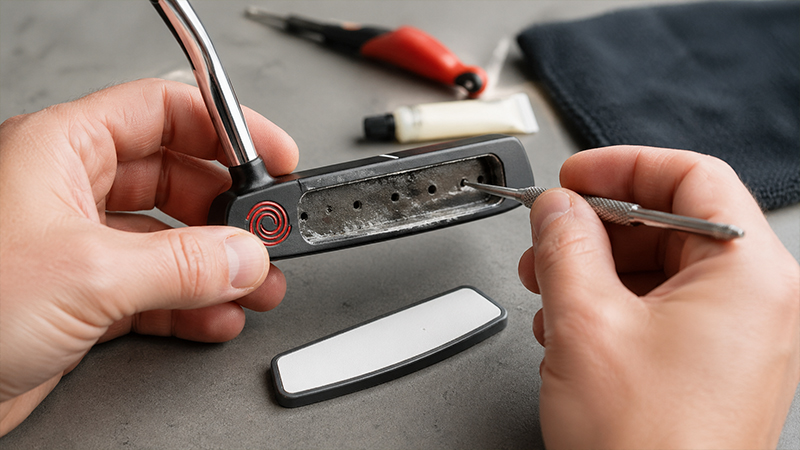
In the realm of precision golf equipment, few technologies have garnered as much loyalty and, subsequently, as much frustration as the Odyssey Works Fusion RX insert.
Launched as a revolutionary hybrid of the iconic White Hot feel and the aggressive roll of a metal mesh, the Odyssey Works 1W and its siblings promised the ultimate putting experience.
However, as many dedicated golfers have discovered, this “fusion” can eventually lead to separation. If you have noticed your metal mesh screen peeling, vibrating, or detaching entirely from your putter face, you are not alone.
This comprehensive guide provides the depth and strategic insight required to restore your equipment to professional standards, whether through manufacturer channels, DIY precision, or high-end aftermarket upgrades.
The Anatomy of a Defect: Understanding the Fusion RX Failure
Before attempting a repair, it is critical to understand the engineering at play. The Odyssey Works line, particularly models from the 2015 era, featured the “Fusion RX” insert.
This design consists of a standard White Hot urethane base covered by a thin stainless steel mesh.
The Root Cause
Data from long-term users and club repair experts indicates that the mesh separation is a documented manufacturing defect. The primary issue lies in the bonding agent used between the metal screen and the urethane base.
Over time, moisture, temperature fluctuations, and the repetitive impact of the golf ball cause the adhesive to fatigue, leading to the screen peeling away.
The “Superglue” Fallacy
A common mistake among enthusiasts is the immediate application of household adhesives like Superglue or Gorilla Glue.
These often fail because they are too brittle to withstand the micro-vibrations of a golf ball impact or do not bond effectively to the non-porous stainless steel and the chemical composition of the urethane.
The Strategic Approach: Manufacturer Support and Warranty
For many owners, the most effective “repair” is not a repair at all, but a professional replacement.
Leveraging the Callaway Relationship
Callaway (Odyssey’s parent company) has a long-standing reputation for elite customer service regarding this specific issue. Because the mesh peeling is a known defect, Callaway has historically replaced these putters even years after the standard warranty has expired.
- The Replacement Process: Many users report that upon contacting Callaway Customer Service, the company replaced their defective Works model with the closest current equivalent (such as a Microhinge or Ai-ONE model) at no cost.
- Authorized Retailers: If you prefer not to handle shipping yourself, authorized retailers like Golf Galaxy can often facilitate the return and repair process on your behalf.
Paid Professional Service
If the putter is deemed out of warranty and a free replacement is not offered, the manufacturer typically offers a specialized repair service.
For a fee—generally ranging from $30 to $40—they will professionally replace the insert. It is important to note that they may replace the original mesh with a newer style, such as the Microhinge, to prevent future recurrences of the defect.
The Precision DIY Restoration: A Step-by-Step Technical Guide
For the golfer who prefers the specific feel of their original 1W or Versa and wishes to handle the restoration personally, the following protocol is the industry standard for a lasting bond.
Step I: Controlled Removal and Debridement
The key to a successful repair is the absolute removal of all old bonding agents.
- The Thermal Method: Submerge the putter head in boiling water for approximately 10 minutes. This thermal exposure softens the contact cement or double-sided tape without reaching the critical temperature that would damage the epoxy bond of the shaft in the hosel.
- Extraction: Once the adhesive is softened, use a thin pick or a precision flathead screwdriver to gently lift the insert or the mesh from a corner.
- Chemical Cleaning: Use a high-grade solvent—isopropyl alcohol (90%+), acetone, or Goo-Gone—to strip every trace of residue from the putter cavity and the back of the insert. A pristine surface is non-negotiable for a professional-grade bond.
Step II: Surface Preparation and Mechanical Bonding
Chemical cleaning is insufficient; you must create a mechanical “key” for the adhesive.
- Abrasive Scuffing: Lightly sand the interior of the putter face cavity and the back of the metal mesh or urethane insert using 60-grit or fine-grit sandpaper. This increases the surface area for the adhesive to grip.
- Final Degreasing: Perform one final wipe with alcohol after sanding to remove any fine dust.
Step III: The Bonding Process
Choosing the correct adhesive is the difference between a permanent fix and a temporary patch.
- The Adhesive Choice: Avoid rubber cement or superglue. Instead, utilize a two-part, fast-setting epoxy. These epoxies are designed to withstand high-impact vibrations while remaining slightly flexible.
- Application: Apply a thin, uniform coat across the entire cavity, ensuring the epoxy reaches the corners where peeling usually begins.
- Compression and Curing: Press the insert firmly into place. Use a Magic Eraser or a cloth dampened with alcohol to immediately wipe away any “squeeze-out” before it hardens. Secure the insert with clamping pressure or heavy-duty elastic bands and allow it to cure undisturbed for a full 24 hours.
The Aftermarket Upgrade: Enhancing Performance
If the original metal mesh is too damaged for reinstallation, or if you wish to improve the putter’s aesthetics and strike profile, the aftermarket provides several elite options.
Specialized Insert Providers
Companies like SpryEvo and PutterParts specialize in precision-engineered replacement inserts for Odyssey models.
- Carbon Fiber Upgrades: Many golfers opt for a carbon fiber insert, which provides a “flashy” look and a distinct, muted sound at impact.
- Solid Metal Inserts: If you find the Fusion RX mesh too soft or inconsistent, replacing it with a solid copper or stainless steel insert can provide a firmer, more “clicky” feel preferred by many high-level players.
Finishing Touches and Long-Term Maintenance
A professional repair is not complete until the aesthetics match the performance.
- Aesthetic Gap Filling: If a small gap remains between the insert and the putter face, it can be filled with black silicone or black-colored epoxy for a seamless, factory-fresh look.
- Surface Cleaning: To maintain the white urethane of the White Hot base, a Magic Eraser is the most effective tool for removing dirt and ball marks without damaging the material.
- General Maintenance: Periodic cleaning with diluted alcohol will prevent the buildup of oils and debris that can compromise the edges of the mesh.
Frequently Asked Questions (FAQ)
Q: Can I just use Gorilla Glue to stick the screen back on?
A: While tempting, Gorilla Glue and Superglue are generally not recommended. They lack the impact resistance required for a golf club and often fail after a few rounds. A two-part epoxy is the professional choice for a permanent bond.
Q: Will boiling the putter head ruin the finish or the shaft?
A: No, provided you keep the water level below the hosel. Boiling water (212°F/100°C) is hot enough to break down insert adhesives but well below the temperature required to melt the high-strength epoxy holding the shaft in place.
Q: Is it worth repairing a 2015-era putter?
A: Many golfers find the feel of the Odyssey Works 1W or Versa line to be superior to modern offerings. Given that a DIY repair costs less than $10 in epoxy and a manufacturer replacement might be free, restoration is highly cost-effective compared to buying a new $300-$400 putter.
Conclusion: Value-Driven Restoration
The Odyssey Works metal mesh insert represents a pinnacle of putter feel that is well worth the effort to preserve.
Whether you choose to leverage Callaway’s excellent customer support or take the DIY route with professional-grade epoxy and proper surface preparation, restoring your putter is a strategic move for any golfer who values their equipment’s performance and history.
By following these expert-vetted steps, you ensure that your putter remains a reliable tool on the greens, free from the distractions of a peeling face or inconsistent strike. Don’t let a manufacturing defect end the lifespan of a club you love—restore the roll today.