Formula 1 looks simple from the grandstand: 22 cars, one chequered flag, and the first driver across the line wins.
Behind that simplicity sits one of the most detailed rulebooks in world sport. It covers everything from how many tyres a driver may use to how much a team can spend in a year.
The 2026 season rewrote more of that rulebook than any year in a generation. New power units, movable wings, smaller cars, an eleventh team and a brand-new way to overtake all arrived at once.
Whether you are watching your first Grand Prix or catching up on the new era, this guide explains the rules of Formula 1 in plain language.
You will learn who writes the rules, how a race weekend works, how points are scored, what the flags mean, how penalties are handed out and what changed for 2026.
Formula 1 Rules at a Glance
Short on time? These are the core rules of Formula 1 in 2026.
- The grid: 11 teams and 22 drivers compete across 24 Grands Prix.
- The weekend: practice, a three-part knockout qualifying session, then the race on Sunday. Six weekends add a shorter Sprint race.
- The points: the top 10 in a Grand Prix score, with 25 for a win. The top eight in a Sprint score, with 8 for a win. There is no longer a bonus point for fastest lap.
- The tyres: in a dry race, every driver must use at least two different tyre compounds, which forces at least one pit stop.
- The titles: a Drivers’ Championship for individuals and a Constructors’ Championship for teams.
- The enforcement: race stewards hand out time penalties, grid drops, race bans and disqualifications.
- The new era: DRS is gone, replaced by active aerodynamics and Overtake Mode. Power units are roughly half electric, cars are 32 kg lighter and fuel is 100% sustainable.
Who Makes the Rules of Formula 1?
The FIA (Fédération Internationale de l’Automobile), motorsport’s world governing body, writes and enforces the rules of Formula 1. Formula One Management runs the commercial side, and teams have a voice through the F1 Commission. Every rule change, however, needs final approval from the FIA’s World Motor Sport Council.
The rulebook is split into separate sets of regulations, each with a clear job:
- Sporting Regulations: how a weekend runs, including practice, qualifying, race procedures, points and penalties.
- Technical Regulations: what a car may look like and contain, from weight and dimensions to power unit design.
- Financial Regulations: the cost cap, which limits what teams and power unit makers can spend each year.
- International Sporting Code: general rules on conduct and flags that apply across all FIA championships.
The rules are not frozen once a season starts. In April 2026, after just three races of the new era, the FIA, teams and power unit makers agreed a package of energy management changes. These aimed to encourage more flat-out driving and safer race starts, and most took effect from the Miami Grand Prix.
How a Formula 1 Race Weekend Works
A Formula 1 weekend runs over three days, and every session feeds into Sunday’s result. There are two formats: the standard weekend and the Sprint weekend.
| Day | Standard weekend | Sprint weekend (6 in 2026) |
|---|---|---|
| Friday | Practice 1 and Practice 2 | Practice 1 and Sprint Qualifying |
| Saturday | Practice 3 and Qualifying | Sprint race and Grand Prix Qualifying |
| Sunday | Grand Prix | Grand Prix |
Practice
Practice sessions are for testing set-ups, learning the track and gathering tyre data. Nothing is scored, but the work done here decides how competitive a car will be later in the weekend.
Qualifying: the knockout that sets the grid
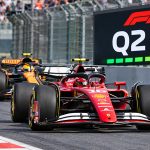
Qualifying decides the starting order for the Grand Prix. It uses a three-part knockout format, adjusted in 2026 for the larger 22-car grid:
- Q1 (18 minutes): all 22 cars run. The six slowest are eliminated and fill grid slots 17 to 22.
- Q2 (15 minutes): the remaining 16 cars run. The six slowest fill slots 11 to 16.
- Q3 (13 minutes): the top 10 fight for pole position, the first place on the grid.
Until 2025, only five cars dropped out in Q1 and Q2. Q3 also gained an extra minute for 2026 to ease traffic at the end of the session. A driver must also lap within 107% of the fastest Q1 time to be sure of a race start, although stewards can make exceptions.
Parc fermé
Once a car leaves the garage in qualifying, it enters “parc fermé” conditions. From then until the race, teams may not make major set-up changes. Breaking parc fermé usually means starting from the pit lane.
Sprint weekends
Sprint weekends squeeze more competitive running into the same three days. Sprint Qualifying uses the same knockout format with shorter sessions of 12, 10 and 8 minutes.
The Sprint itself covers about 100 km, with no mandatory pit stop. Parc fermé runs from Sprint Qualifying to the end of the Sprint, then reopens so teams can adjust set-ups before Grand Prix qualifying.
Race Day Rules: Start, Distance, Pit Stops and Tyres
Sunday’s Grand Prix follows a strict procedure from the first formation lap to the chequered flag.
The start
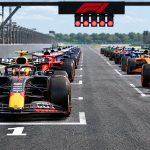
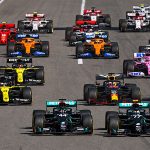
Cars complete one formation lap, then line up in their grid slots for a standing start. Five red lights come on one by one. When they all go out, the race begins. Moving before the lights go out is a jump start and earns a penalty.
Race distance
A Grand Prix runs for the fewest laps needed to exceed 305 km. Monaco is the exception, at around 260 km. Racing time is capped at two hours, and if a red flag stops the race, the whole event cannot run past three hours.
Tyre rules
Pirelli is Formula 1’s sole tyre supplier. For 2026 it offers five dry compounds, from C1 (hardest) to C5 (softest). It picks three for each event, labelled Hard (white), Medium (yellow) and Soft (red).
For rain, there are two treaded tyres: Intermediates (green) for damp tracks and Full Wets (blue) for heavy water. Each driver gets 13 sets of dry tyres on a standard weekend and 12 on a Sprint weekend.
The pit stop rule
In a dry Grand Prix, every driver must use at least two different dry compounds. That rule makes at least one pit stop mandatory. It does not apply in the Sprint or in a wet race.
Pit lane speed limits apply at every circuit, usually 80 km/h. Releasing a car into the path of another is an “unsafe release” and is penalised. Strategy matters as much as raw speed. Pitting early to gain time on fresh tyres is the “undercut”; staying out longer to gain time in clean air is the “overcut”.
How Points Work in Formula 1
A Grand Prix win is worth 25 points, and points go down to 10th place. On Sprint weekends, the top eight in the Sprint also score.
| Finishing position | Grand Prix points | Sprint points |
|---|---|---|
| 1st | 25 | 8 |
| 2nd | 18 | 7 |
| 3rd | 15 | 6 |
| 4th | 12 | 5 |
| 5th | 10 | 4 |
| 6th | 8 | 3 |
| 7th | 6 | 2 |
| 8th | 4 | 1 |
| 9th | 2 | 0 |
| 10th | 1 | 0 |
The bonus point for fastest lap was scrapped from 2025, so 25 points is again the most a driver can score in a Grand Prix. On a Sprint weekend, a clean sweep is worth 33.
If a race is cut short, points are awarded on a sliding scale based on the distance completed. Full points are only given once a race passes 75% distance.
Two championships, one season
- Drivers’ Championship: each driver’s points from every Grand Prix and Sprint are added up. The driver with the most points at season’s end is World Champion.
- Constructors’ Championship: both drivers’ points are combined for their team. Finishing position here also decides each team’s share of prize money.
If two drivers finish level on points, the tie is broken by countback. The driver with more wins comes out ahead, then more second places, and so on.
What the Flags Mean in Formula 1
Flags are how race control talks to drivers in real time. Marshals wave them trackside, and the same signals appear on light panels and on each driver’s steering wheel display.
| Flag | What it tells the driver |
|---|---|
| Green | Track is clear; racing can resume |
| Single yellow | Danger ahead; slow down, no overtaking |
| Double yellow | Serious danger; slow down and be ready to stop |
| Red | Session stopped; return slowly to the pit lane |
| Blue | A faster car is about to lap you; let it through |
| Yellow and red stripes | Slippery surface ahead, such as oil or water |
| White | Slow-moving vehicle on track |
| Black and white (diagonal) | Warning for unsporting driving or repeated track limits breaches |
| Black with orange circle | Car has a dangerous mechanical problem; must pit |
| Black | Disqualified; return to the pits |
| Chequered | End of the session or race |
Safety Car and Virtual Safety Car
When an incident needs marshals on track, race control can deploy the Safety Car. Drivers queue behind it at reduced speed and cannot overtake. Gaps between cars shrink, which often resets the race and opens a cheaper window for pit stops.
For smaller incidents, race control may call a Virtual Safety Car (VSC). There is no physical car. Instead, every driver must stay slower than a set minimum lap time, which keeps the gaps between cars roughly the same.
Penalties, Stewards and the Super Licence
A panel of FIA stewards, which always includes a former racing driver, judges incidents at every event. They review video, telemetry and team radio before deciding on a penalty.
| Penalty | What happens | Typical offence |
|---|---|---|
| 5-second time penalty | Served at the next pit stop, or added to race time | Gaining an advantage off track, causing a minor collision |
| 10-second time penalty | Served the same way, but longer | Causing a more serious collision, unsafe release |
| Drive-through | Driver must pass through the pit lane at the speed limit | Ignoring blue flags, pit lane speeding |
| 10-second stop-and-go | Driver must stop in the pit box for 10 seconds | Serious breaches of race procedure |
| Grid penalty | Driver starts lower on the grid | Impeding in qualifying, exceeding the power unit allocation |
| Disqualification | Results removed | Technical breaches, such as an underweight car |
Track limits
Drivers must keep the car within the white lines that mark the edge of the track. After a third breach, a driver sees the black and white flag. Any further breach brings a time penalty.
Super licence penalty points
Every F1 driver needs an FIA super licence to race. Stewards can add penalty points to a licence for driving offences. A driver who collects 12 points within 12 months receives an automatic one-race ban.
Teams can ask the stewards to review a decision when significant new evidence emerges, and certain rulings can be appealed to the FIA’s International Court of Appeal.
The New 2026 Car Rules Explained
The 2026 Technical Regulations are the biggest reset Formula 1 has seen in decades. Every team started with a blank sheet for the chassis, aerodynamics and power unit.
| Specification | 2025 | 2026 |
|---|---|---|
| Minimum car weight | 800 kg | 768 kg |
| Maximum wheelbase | 3,600 mm | 3,400 mm |
| Maximum car width | 2,000 mm | 1,900 mm |
| Electrical power | About 120 kW | About 350 kW |
| Fuel | Partly sustainable blend | 100% sustainable |
| Overtaking aid | DRS (rear wing flap) | Overtake Mode plus active aero |
A new power unit
The engine is still a 1.6-litre turbocharged V6 hybrid, but the complex MGU-H has been removed. Electrical power has nearly tripled, so roughly half the car’s output now comes from the battery.
The new rules attracted five power unit makers for 2026: Mercedes, Ferrari, Honda, Audi and Red Bull Ford. Managing energy, by harvesting it under braking and deploying it at the right moment, is now a core driving skill.
Active aerodynamics
The front and rear wings now move. In Straight Mode, the wings open on designated straights to cut drag and raise top speed. In Corner Mode, they close for maximum downforce through the turns. Unlike DRS, every driver can use Straight Mode on every lap.
Overtake Mode replaces DRS
A driver who is within one second of the car ahead at the detection point earns extra electrical energy. They can spend it all at once or spread it across the lap, wherever an attack looks most likely to work. Drivers can also use a Boost button to deploy stored energy when attacking or defending.
Refinements during the season
In April 2026, the FIA cut the maximum energy recharge allowed in qualifying from 8 MJ to 7 MJ. It also raised peak “superclip” power from 250 kW to 350 kW and added a system to detect cars with low power at the start. The goal was more flat-out driving and safer launches.
The Cost Cap: Keeping the Competition Fair
For 2026, each team may spend up to $215 million a year on car performance, up from $135 million in 2025. The higher figure reflects inflation and brings costs that once sat outside the cap inside it. Power unit makers work under a separate cap of about $130 million.
The cap was introduced in 2021 after the biggest teams’ budgets had soared past $400 million. Driver salaries, the pay of the three highest-paid executives and marketing costs are excluded.
Breaking the cap carries real consequences. Penalties range from fines to points deductions and limits on future development. Red Bull’s minor overspend in 2021, for example, brought a $7 million fine and a 10% cut in its aerodynamic testing time.
A second fairness rule works alongside the cap. Under the Aerodynamic Testing Restrictions, teams lower in the Constructors’ Championship receive more wind tunnel and simulation time than the teams at the top.
Conclusion
Formula 1’s rulebook is long, but its purpose is simple: keep the competition fair, safe and close.
Once you know how qualifying sets the grid, how the points add up, why every dry race needs a pit stop and what each flag means, the strategy behind every Sunday starts to make sense.
The 2026 rules add a new layer, with electric power, movable wings and Overtake Mode rewarding drivers who manage energy as cleverly as they brake. Expect the FIA to keep steadily refining the details as this new era matures.