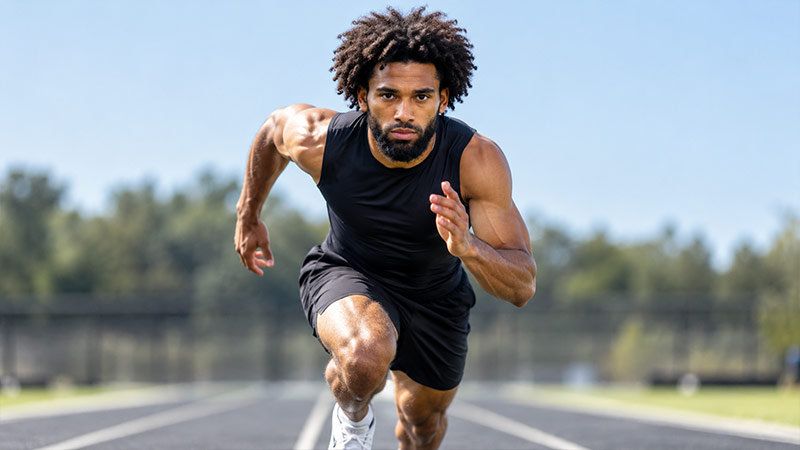
The difference raised an important question: Why did Chris Olave’s 40-yard dash time change?
Although the two results created confusion, Olave’s performance still demonstrated the speed that helped make him one of the top wide receiver prospects in the 2022 NFL Draft.
This article explains what happened during his combine run, why the times were different, and how his speed helped shape his NFL career.
What Was Chris Olave’s Official 40-Yard Dash Time?
Chris Olave recorded an official 4.39-second 40-yard dash at the 2022 NFL Scouting Combine in Indianapolis.
His first reported time was 4.26 seconds, but that number was unofficial. Once the final results were released, his verified time was listed at 4.39 seconds.
Here is a comparison of the results:
| Player | 40-Yard Dash Time | Result |
|---|---|---|
| Chris Olave | 4.26 seconds | Unofficial |
| Chris Olave | 4.39 seconds | Official |
| Garrett Wilson | 4.38 seconds | Official |
The adjustment added 0.13 seconds to Olave’s original reported time.
While that difference may seem small, hundredths of a second matter during NFL Combine testing. They can change player rankings and influence how fans compare prospects.
Still, a 4.39-second time is an excellent result for a wide receiver.
Why Did Chris Olave’s 40-Yard Dash Time Change?
The difference between Olave’s unofficial and official times came from the timing process used at the NFL Combine.
During live broadcasts, viewers often see preliminary results before the final measurements are confirmed.
These early numbers help commentators discuss performances immediately, but they are not always accurate.
How NFL Combine Timing Works
The 40-yard dash measures how quickly a player can sprint 40 yards from a stationary position.
Timing procedures involve officials and electronic equipment. The start of the run can introduce small variations, especially when preliminary measurements depend on human observation.
Several factors can affect an unofficial result:
- Starting time: A slight delay in registering the beginning of a sprint can produce a faster preliminary result.
- Human reaction: Manual timing involves some variation between observers.
- Electronic measurements: Timing equipment helps provide more consistent results.
- Official verification: Preliminary times are reviewed before the final results are published.
Olave’s unofficial 4.26-second result was revised to 4.39 seconds during the official timing process.
The precise technical cause of his individual adjustment was not publicly established in the information presented here. However, differences between preliminary and final combine times are not unusual.
Was Chris Olave Actually Slower Than Expected?
No. His official result did not mean he suddenly became slower. The 4.26-second reading was a preliminary measurement, while 4.39 seconds became his recorded combine result.
His physical ability remained the same throughout the process. More importantly, the official time confirmed that Olave had the straight-line speed needed to compete against NFL defensive backs.
How Fast Is a 4.39-Second 40-Yard Dash?
A 4.39-second 40-yard dash is a strong performance for an NFL wide receiver prospect. Receivers need speed to stretch defenses, create separation, and gain yards after catching the football.
However, speed alone does not determine how successful a player will become. A receiver must also understand defensive coverage, run accurate routes, and catch passes under pressure.
Olave entered the NFL with a combination of these skills. His speed helped him attack deep coverage, while his route-running technique allowed him to create opportunities on shorter and intermediate passes.
Why Speed Matters for Wide Receivers
A fast receiver can influence the way a defense plays. Defensive backs may need to provide additional space to avoid getting beaten on deep routes.
This can create opportunities for shorter passes and quick changes of direction.
Speed also helps receivers:
- Get past defenders on vertical routes.
- Create separation during passing plays.
- Turn short catches into longer gains.
- Reach open areas before defenders can react.
- Put pressure on defensive coverage throughout a game.
Olave demonstrated many of these abilities during his college career at Ohio State.
Chris Olave’s Combine Speed Compared With Garrett Wilson
One of the most interesting comparisons from the 2022 NFL Combine involved Chris Olave and his Ohio State teammate Garrett Wilson. Both entered the draft as highly regarded wide receiver prospects.
Their official 40-yard dash results were extremely close. Garrett Wilson completed the sprint in 4.38 seconds, while Olave finished in 4.39 seconds.
That gave Wilson a 0.01-second advantage. Although Wilson recorded the slightly faster time, the difference was too small to establish which player would consistently be faster in actual football situations.
Both receivers brought different strengths to their teams. Wilson was known for his quick movements, body control, and ability to make difficult catches.
Olave stood out for his smooth running style, precise routes, and ability to create separation downfield. Their combine performances confirmed that both possessed the athletic ability to compete at the professional level.
Chris Olave’s Speed on the Football Field
A 40-yard dash measures straight-line acceleration, but football requires much more than running in one direction. Wide receivers must accelerate, stop, change direction, and react to defenders while following their assigned routes.
This is where Olave’s playing style becomes important.
1. Smooth Acceleration
Olave has a controlled running style that allows him to build speed without unnecessary movement. His acceleration helps him close the distance between himself and defenders.
When a cornerback reacts too slowly, Olave can create separation and become available for a pass.
2. Accurate Route Running
Route running has always been one of Olave’s most valuable skills. Rather than relying only on straight-line speed, he uses footwork and timing to create openings.
He can adjust his pace before changing direction, making it difficult for defenders to predict his next movement. This skill is useful on slant routes, crossing routes, and deeper passing plays.
3. Deep Ball Tracking
Running fast is only part of catching a deep pass. A receiver must also locate the football while moving at high speed.
Olave has shown an ability to track passes over his shoulder and adjust his position before making a catch. This helps him remain a threat on longer routes.
4. Quick Direction Changes
Olave can change direction while maintaining control of his body. His balance and footwork allow him to move into open areas without losing too much speed. This makes him effective on routes that require sharp breaks.
5. Understanding Defensive Coverage
Another important part of Olave’s game is his ability to recognize available space. He can adjust his movement based on defensive positioning and find openings in coverage.
This combination of awareness and athletic ability makes him more than just a fast receiver.
Did the 40-Yard Dash Change Chris Olave’s NFL Draft Position?
There is no clear evidence that the correction from 4.26 to 4.39 seconds caused a meaningful change in Olave’s draft position. Before the combine, Olave was already considered one of the strongest wide receiver prospects in the 2022 draft class.
His college performance at Ohio State showed that he could produce against high-level competition. NFL teams also evaluated his route-running ability, catching skills, football knowledge, and overall athletic performance.
The New Orleans Saints selected him with the 11th overall pick in the first round of the 2022 NFL Draft. That selection demonstrated how highly New Orleans valued his overall abilities.
A 4.39-second sprint was more than enough to support his reputation as a fast and technically skilled receiver.
How Chris Olave’s Speed Translated to the NFL?
Olave entered the NFL in 2022 and quickly became an important part of the New Orleans Saints’ passing offense. During his rookie season, he recorded more than 1,000 receiving yards.
His early production showed that his college skills could translate to professional competition. He used his speed to challenge defensive backs on deep routes while relying on his footwork to create space on shorter passes.
His success also demonstrated an important point about scouting. The fastest player in a straight-line sprint is not automatically the best wide receiver.
Football performance depends on several connected skills. A receiver who understands timing, defensive coverage, and route execution can be extremely effective without recording one of the fastest 40-yard dash times in history. Olave’s development provided a useful example of that principle.
Chris Olave’s 4.26 vs. 4.39 Time: What Is the Real Difference?
The difference between the two times is straightforward. The 4.26-second result was unofficial, while the 4.39-second result became Olave’s verified combine mark.
The original number created excitement because it suggested he had produced one of the fastest runs in combine history. However, the final result still placed him among the faster wide receiver prospects in his draft class.
The timing adjustment did not change his college achievements, route-running ability, or NFL potential. It simply changed the number used in his official athletic profile.
For anyone researching Chris Olave’s 40-yard dash, 4.39 seconds is the correct official time to use.
Final Thoughts
Chris Olave’s 2022 NFL Combine performance became memorable because of the difference between his unofficial 4.26-second time and his official 4.39-second result.
Although the original number generated considerable attention, the corrected result still demonstrated his impressive athletic ability.
His performance at Ohio State and his early success with the New Orleans Saints showed that speed is only one part of becoming an effective NFL receiver.
Route running, timing, ball tracking, and defensive awareness also play major roles.
Ultimately, Chris Olave’s official 40-yard dash time was 4.39 seconds, and his football ability has always been about much more than a single sprint result.