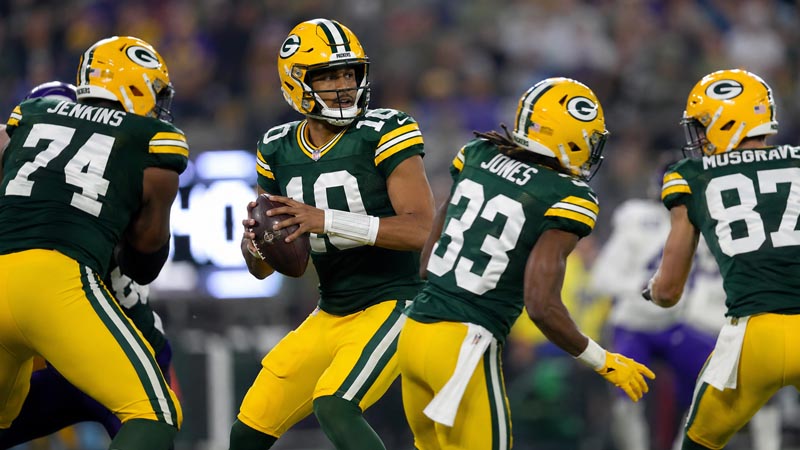
For organizations operating at the highest level of professional sports, stability is often viewed as the ultimate goal. Yet, true organizational resilience requires knowing when to dismantle functioning systems in pursuit of elite performance.
In Green Bay, head coach Matt LaFleur has executed a sweeping tactical and structural reorganization of his coaching staff, heavily reshaping leadership across the offense, defense, and special teams.
This restructuring represents a significant philosophical shift. Rather than relying on a single assistant head coach to bridge organizational gaps, LaFleur has divided the responsibility, creating distinct assistant head coach roles on both sides of the ball.
By placing trusted coordinators and developers in strategic positions, the franchise is signaling a modern approach to player development, defensive complexity, and structural accountability. This analysis provides a deep tactical breakdown of these changes and their projected organizational impact.
The Structural Blueprint: Splitting the Assistant Head Coach Role
Under the previous staff hierarchy, the assistant head coach role was held singularly by special teams coordinator Rich Bisaccia.
When Bisaccia stepped down, LaFleur chose not to simply replace him in that capacity. Instead, he chose to decentralize this authority, creating two entirely new positions:
- Luke Getsy returns to Green Bay as the Assistant Coach/Offense alongside his duties as quarterbacks coach.
- DeMarcus Covington transitions to Assistant Head Coach/Defense and outside linebackers coach.
                 [ Head Coach: Matt LaFleur ]
                              |
       +----------------------+----------------------+
       |                                             |
[ Luke Getsy ]                                [ DeMarcus Covington ]
Assistant Coach / Offense                     Assistant Head Coach / Defense
Quarterbacks Coach                            Outside Linebackers / Run Game
This structural modification ensures that both the offensive and defensive meetings are overseen by a senior leader with assistant head coach authority.
Rather than forcing a special teams coordinator to manage team-wide operational details, LaFleur has streamlined communication, allowing both units to run with greater autonomy and precision under highly experienced position leaders.
The Offensive Continuity and the Passing Game Evolution
The Offensive Line Paradox: Doubling Down on Adam Stenavich and Luke Butkus
One of the offseason’s most debated moves was retaining offensive coordinator Adam Stenavich and offensive line coach Luke Butkus.
Despite using eight different offensive line combinations last season due to injuries and inconsistent play, Matt LaFleur chose continuity over major coaching changes.
The belief is that the scheme remains effective and last year’s struggles were mainly caused by injuries. Keeping the same staff should help maintain continuity and ease the transition for younger linemen.
The Return of Luke Getsy: Developing Jordan Love’s Next Phase
The departures of quarterbacks coach Sean Mannion and receivers coach Ryan Mahaffey created a leadership gap in Green Bay’s passing game.
To maintain continuity, Matt LaFleur brought back Luke Getsy as quarterbacks coach and assistant coach/offense.
Getsy previously worked with Jordan Love and Aaron Rodgers, including during Rodgers’ MVP seasons.
His familiarity with Love, combined with recent offensive coordinator experience, gives Green Bay valuable experience and stability.
Noah Pauley and the Wide Receiver Laboratory
Perhaps the most intriguing addition to the offensive coaching staff is wide receivers coach Noah Pauley. This hire has immediate, fascinating implications for the development of Green Bay’s young receiving room, particularly its primary deep threat.
Maximizing Christian Watson’s Explosive Profile
Pauley has a long history with Packers receiver Christian Watson, having coached him during their time together at North Dakota State. Watson is a highly dynamic player, but his early career has been impacted by injuries, including recovery from ACL surgery. When healthy, however, Watson is one of the most efficient big-play threats in professional football.
Christian Watson: Post-Week 8 Metrics (After ACL Surgery Recovery)
┌───────────────────────────────┬──────────────────────────────┐
│ Metric                        │ Performance Value            │
├───────────────────────────────┼──────────────────────────────┤
│ Yards Per Catch Average       │ 17.5 (Ranked #1 in NFL)      │
│ Total Catches                 │ 35                           │
│ Explosive Gains (16+ Yards)   │ 17 (48.6% of all receptions) │
└───────────────────────────────┴──────────────────────────────┘
An explosive-play rate of nearly 50% of all receptions is elite. With Pauley running the room, the Packers have a coach who understands how to utilize Watson’s unique speed and size. Pauley knows Watson’s physical limits, his mental makeup, and how to build packages that isolate him against favorable coverages. This established relationship should help Watson find greater consistency and stay healthy.
The Matthew Golden Challenge
While optimizing Christian Watson remains important, Pauley’s biggest challenge will be developing second-year receiver Matthew Golden.
With Romeo Doubs leaving in free agency, Golden has a clear opportunity to earn a larger role. Pauley must improve his route-running and chemistry with Jordan Love while helping him fill Doubs’ production.
Rob Grasso’s promotion to assistant receivers coach will provide additional support for the young receiving group.
The Defensive Transformation
              [ Jonathan Gannon: Defensive Coordinator ]
                                 |
       +-------------------------+-------------------------+
       |                                                   |
[ DeMarcus Covington ]                             [ Bobby Babich ]
Outside Linebackers Coach /                  Secondary / Pass Game Coordinator
Assistant Head Coach (Defense)                             |
                                                   [ Daniel Bullocks ]
                                                    Cornerbacks Coach
Jonathan Gannon’s Schematic Shift: The 3-4 Clues
The Micah Parsons Equation: Unlocking the Ultimate Chess Piece
The transition to a 3-4 base defense has massive ramifications for superstar defender Micah Parsons.
Under the previous system, Parsons’ role was a constant source of debate—specifically, whether he should be rushing from a three-point stance as a defensive end or playing off the ball.
In Gannon’s projected 3-4 scheme, Parsons is poised to be utilized primarily as an outside linebacker. This designation allows the defense to use his elite athleticism in several ways:
                  [ Defensive Line (3 Tackles) ]
                     /                      \
[ Micah Parsons (OLB) ]                      [ Opposing Edge (OLB) ]
  - Rushes from 2-point stance                 - Edge Containment
  - Drops into zone coverage                   - Pass Rush Specialist
  - Moves across the front seven
By standing Parsons up in a two-point stance, Gannon can disguise his intentions. From this position, Parsons can rush the passer, drop into coverage, or shift late along the line of scrimmage to exploit weak points in the protection.
This keeps opposing offensive coordinators from easily identifying where he is rushing from, making him far more dangerous than he would be as a hand-in-the-dirt defensive end.
The Experienced Brain Trust Supporting Gannon
Implementing a brand-new defensive system requires a coaching staff capable of teaching complex concepts quickly. Gannon and LaFleur have built an incredibly experienced group of assistant coaches to support this transition:
- DeMarcus Covington (Outside Linebackers / Assistant Head Coach – Defense): Covington, who previously coached the defensive line, adds the title of run game coordinator. His familiarity with the roster’s front-seven personnel will help maintain run-defense discipline during this schematic transition.
- Vince Oghobaase (Defensive Line): Promoted from assistant defensive line coach, Oghobaase will oversee the defensive tackles, ensuring that the interior of the defensive line can hold double-teams in the 3-4 front.
- Bobby Babich (Secondary / Pass Game Coordinator): Babich brings defensive coordinator-level experience to help design coverage rotations and pass-defense concepts.
- Daniel Bullocks (Cornerbacks): Bullocks will focus on improving individual technique, press-coverage footprints, and tackling on the outside.
- Sam Siefkes (Linebackers): Siefkes takes over the off-ball linebackers, a crucial position in a 3-4 defense that requires quick reading of guards and tight ends.
Crucially, Covington, Babich, and Siefkes have all served as defensive coordinators in either the NFL or college ranks. This means Gannon is surrounded by assistant coaches who understand big-picture defensive planning, game-management dynamics, and adjustments. This level of experience should help the defense adapt quickly on game days.
The Special Teams Equation
The Rich Bisaccia Era Retrospective
Green Bay’s special teams unit has been a persistent weakness for more than a decade, surviving multiple coordinators and coaching staffs.
Expectations were high when respected coordinator Rich Bisaccia arrived, but consistency remained elusive.
The Packers ranked tied for 29th in FPI in 2023, improved dramatically to ninth in 2024, then fell back to 24th in 2025.
Although Bisaccia’s departure was framed as his decision to leave the NFL, the timing raised questions.
More than a month passed after the season before Green Bay finalized his exit, suggesting possible internal disagreements over philosophy, direction, or staff composition.
Cam Achord: High-Risk, High-Reward Leadership
To replace Bisaccia, LaFleur turned to former Patriots special teams coordinator Cam Achord. Achord spent the past two seasons as the assistant special teams coordinator for the New York Giants, working to rebuild his coaching profile after a highly volatile run in New England.
Achord’s track record as the primary special teams coordinator in New England is a study in extremes:
- 2020: Ranked 1st in ESPN’s FPI.
- 2021: Ranked 2nd (Tied) in ESPN’s FPI.
- 2022: Ranked 26th in ESPN’s FPI.
- 2023: Ranked 29th (Tied with the Packers) in ESPN’s FPI.
Cam Achord's FPI Special Teams Performance Trend:
   Rank 1  |-- (2020)
   Rank 2  |--- (2021)
           |
           |
   Rank 26 |--------------------------- (2022)
   Rank 29 |───────────────────────────── (2023 - Tied with Green Bay)
This trajectory presents a clear high-risk, high-reward scenario for Green Bay. At his best, Achord has coordinated the most efficient special teams unit in football. At his worst, his units have fallen to the very bottom of the league.
The Packers are betting that Achord’s top-tier years were a reflection of his coaching ability, and that his latter-year struggles in New England were due to roster limitations. Achord’s immediate challenge is to establish baseline consistency, eliminate critical errors, and find reliable specialists.
Coaching Staff Directory & Structural Breakdown
To help track these organizational changes, here is a quick directory of the new Packers coaching hierarchy:
| Coach | New Title | Core Responsibility |
|---|---|---|
| Matt LaFleur | Head Coach | Overall Program |
| Luke Getsy | Assistant Coach/Offense & QB Coach | Jordan Love / Offense |
| DeMarcus Covington | Assistant Head Coach/Def & OLB Coach | Run Game & Edge Rushers |
| Jonathan Gannon | Defensive Coordinator | Defensive Scheme |
| Bobby Babich | Secondary & Pass Game Coordinator | Coverage Schemes |
| Vince Oghobaase | Defensive Line Coach | Defensive Tackles |
| Daniel Bullocks | Cornerbacks Coach | Cornerback Technique |
| Sam Siefkes | Linebackers Coach | Off-Ball Linebackers |
| Noah Pauley | Wide Receivers Coach | Receiver Development |
| Rob Grasso | Assistant Wide Receivers Coach | Receiver Support |
| Cam Achord | Special Teams Coordinator | Kick/Punt Units |
Conclusion: The Crucial Next Steps
The Packers’ sweeping coaching staff overhaul is a calculated risk by Matt LaFleur to maximize the prime years of Jordan Love’s career.
By bringing back familiar faces like Luke Getsy, hiring teachers like Noah Pauley, and building an experienced defensive staff under Jonathan Gannon, LaFleur has set a high standard for the upcoming season.
The ultimate success of this coaching staff will depend on how quickly these new systems are implemented. Fans and analysts will get their first real answers during the upcoming NFL annual meetings in Phoenix, where LaFleur and Gannon are scheduled to meet with the media.
These press conferences should shed light on Gannon’s defensive plans and how the team intends to use Micah Parsons.
For a franchise with championship aspirations, this leadership restructuring is not just a change in staff—it is a bold step toward building a more modern, efficient, and dominant team.